en.Wedoany.com Reported - New Zealand state-owned energy company Meridian Energy has received a draft decision proposing to relax restrictions on accessing emergency hydro storage at Lake Pūkaki in the South Island for a three-year period starting from the winter of 2026.
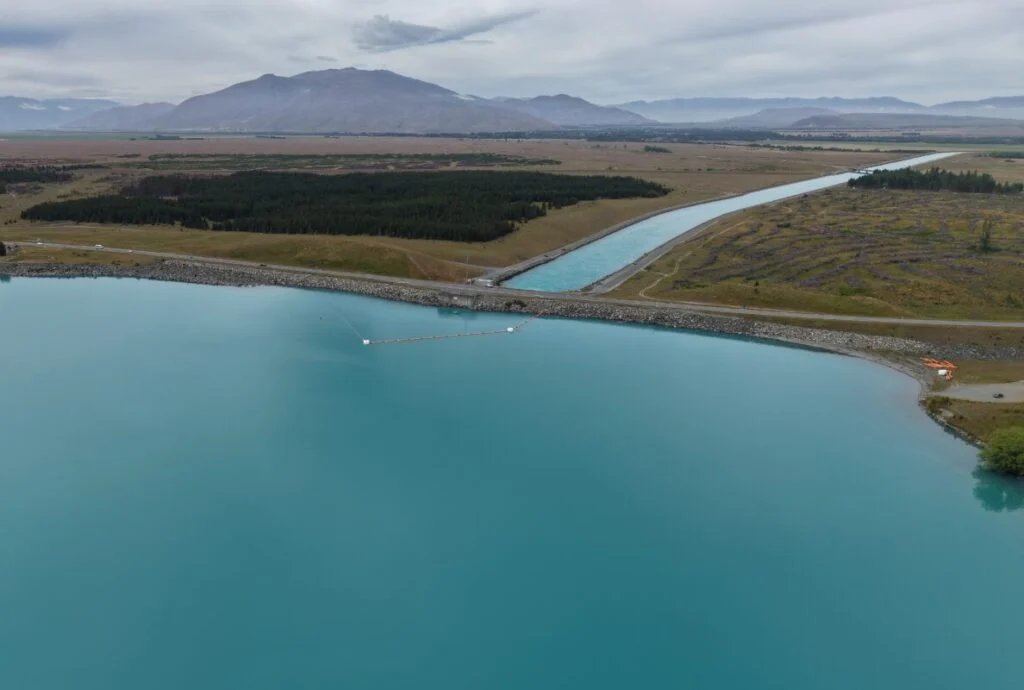
The draft approval covers water stored between elevations of 518 meters and 513 meters, until Transpower estimates the risk of electricity shortage reaches a critical threshold of 4%. Lake Pūkaki is the country's largest electricity reservoir, and this five-meter water level corresponds to a generation capacity of approximately 545 GWh.
Under existing resource consents, Meridian can access the lake's bottom range, but only if Transpower triggers a security alert level. Despite tight market conditions in the winter of 2025, this threshold was not reached, meaning the storage remained unused even as the system was under pressure.
Meridian CEO Mike Roan stated that additional access rights would directly lower wholesale electricity prices. He said that when pressure is as high as it was in the winter of 2024, every extra meter makes a significant difference. Accessing emergency storage will reduce electricity prices traded in the wholesale market by increasing the availability of renewable, low-cost fuel, which will put downward pressure on fixed rates offered by retailers to households and business customers.
Modeling in the fast-track referral document shows this move could release enough energy to power 75,000 homes and reduce wholesale electricity prices by approximately 7% by removing uncertainty over when Meridian can access backup water storage and enabling more efficient generation planning.
The draft decision also allows Meridian to permanently install rock armor on the Pūkaki Dam to prevent wave erosion when the lake operates at low water levels. This is a structural measure to make the expanded storage range operationally feasible while ensuring dam integrity. The expert panel must issue a final decision by July 3, 2026.
The application has faced opposition from multiple stakeholders. Transpower believes relaxing access to emergency storage would remove a key buffer in the electricity system and increase the risk of severe consequences in dry years. Generation and retail company Genesis Energy (which is developing multiple utility-scale battery energy storage systems) opposed the application on similar grounds. Energy Minister Simeon Brown later wrote to the panel expressing reservations, indicating the government does not endorse the proposal.
In contrast, the Electricity Authority supported Meridian's application, viewing it as a pragmatic mechanism to manage potential electricity shortages. Mackenzie District Mayor Scott Aronsen also expressed concerns about recovery times after lake levels drop in dry years.
Acknowledging these concerns, Meridian said it would voluntarily restrict the use of additional storage in 2026. If the draft decision is confirmed, the company proposes treating half of the five-meter emergency storage as accessible only if supply security risks are elevated for the remainder of this year, and plans further discussions with electricity industry stakeholders on managing storage access over the three-year period.
The Waitaki Power Scheme, with Lake Pūkaki as a core component, includes eight hydropower stations with a total installed capacity of 1,761 MW, accounting for approximately 32% of New Zealand's hydroelectric capacity. Pūkaki itself is a modified natural lake managed as part of this scheme and plays a critical role in the flexibility of the national electricity supply.
The approval comes as official forecasts show a deteriorating outlook for New Zealand's energy security. Transpower's draft 2026 Security of Supply Assessment found that even if all committed and agreed projects proceed as planned, New Zealand's national winter energy margin will fall below a low security standard by 2031, equivalent to a shortfall of 698 GWh. Under an "expected future" scenario incorporating lower gas supply forecasts, the shortfall emerges in 2030. The 545 GWh of emergency storage at Lake Pūkaki, if accessible without Transpower's security trigger, could cover most of the projected shortfall in a given winter, provided lake levels are sufficiently high.
While advancing its hydro storage application, Meridian is also progressing battery storage. In May last year, Meridian commissioned New Zealand's first grid-scale battery energy storage system at the Ruakākā site near Whangārei, supplied by Saft using lithium iron phosphate (LFP) chemistry, with a capacity of 100 MW/200 MWh.
This article is compiled by Wedoany. All AI citations must indicate the source as "Wedoany". If there is any infringement or other issues, please notify us promptly, and we will modify or delete it accordingly. Email: news@wedoany.com