China Completes First 24MW Wind-Powered Underwater Data Center with 1.6 Billion Yuan Investment
en.Wedoany.com Reported - China has completed and put into operation the world's first wind-powered underwater data center project. Located in the Lingang New Area of the Shanghai Pilot Free Trade Zone, the project was jointly built by Hi Cloud Technology and China Communications Construction Company, with a total investment of approximately 1.6 billion yuan and a total construction scale of 24 megawatts. It adopts a technical route combining direct green electricity supply from offshore wind power with natural seawater cooling.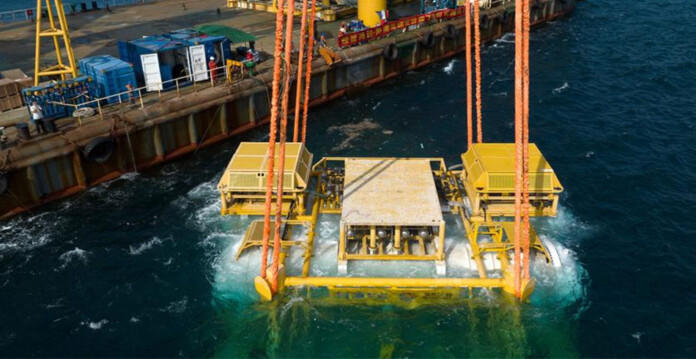
The core value of this underwater data center lies in extending computing infrastructure from land-based server rooms to marine space. Traditional data centers require large amounts of land, electricity, and cooling resources, especially as AI training, inference, cloud computing, and big data services grow rapidly, leading to increasing energy consumption and heat dissipation pressure in server rooms. The Shanghai Lingang project places data cabins on the seabed, utilizing the stable low-temperature seawater environment for natural cooling while connecting to nearby offshore wind power resources for energy supply, forming an integrated solution for server operation, cooling systems, and green electricity. The project is planned to be built in two phases, with the first-phase demonstration project having a construction scale of 2.3 megawatts, mainly including the renovation of the onshore centralized control center, construction of new vertical data cabins, and laying of 35 kV main submarine cables.
The project is designed with a power usage effectiveness not exceeding 1.15 and a green electricity supply rate exceeding 95%.
An underwater data center is not simply about placing servers in the sea; it involves system integration of marine engineering, data centers, communication networks, power systems, and intelligent operations. The data cabins need to possess sealing, corrosion resistance, pressure resistance, heat dissipation, and long-term stable operation capabilities; submarine cables must simultaneously meet power transmission and communication connection requirements; and the onshore centralized control center is responsible for computing resource scheduling, equipment monitoring, fault warning, and remote operations. Compared with ordinary land-based server rooms, underwater data centers have higher maintenance difficulty in later stages, imposing stricter requirements on preliminary design, equipment reliability, and monitoring systems.
For the information and communication industry, the wind-powered underwater data center provides a new engineering model for greening AI computing power. As artificial intelligence business demands for computing resources grow, data center construction is shifting from simply pursuing cabinet scale to focusing on energy efficiency, green electricity ratio, land occupation, and water resource consumption. The combination of offshore wind power and underwater data centers can form a new computing infrastructure model of "offshore power generation, seabed cooling, and onshore dispatching" in coastal areas, driving demand across the industrial chain including servers, submarine cables, data cabins, marine equipment, temperature control systems, power conversion equipment, network transmission, and remote operation platforms.
Subsequent focus will be on the long-term operational performance of the first-phase demonstration project, the expansion progress of the second phase, server maintenance costs, marine environmental impact monitoring, and whether this model can be replicated to more coastal computing hubs. If the project operates stably, the Shanghai Lingang wind-powered underwater data center will provide an important reference for China's green computing infrastructure construction and may also promote new integration directions among offshore new energy, marine engineering, and data center industries. For computing power supply in the AI era, the significance of such projects lies not only in building a new server room but in exploring a digital infrastructure path with lower energy consumption, less land occupation, and a higher green electricity ratio.
This article is compiled by Wedoany. All AI citations must indicate the source as "Wedoany". If there is any infringement or other issues, please notify us promptly, and we will modify or delete it accordingly. Email: news@wedoany.com
Related Products
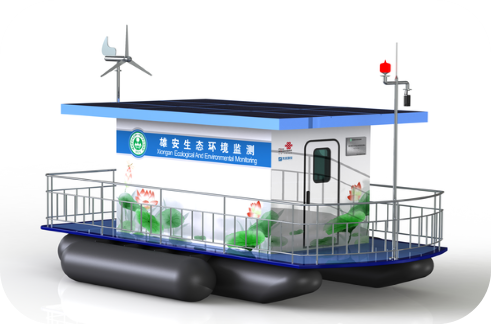

Floating Boat Water Quality Automatic Monitoring System
Hebei Sailhero Environmental Protection High-tech Co., Ltd.
Microcomputer Protection and Substation Automation
Beijing Agent Devote Power Technology Development Co., Ltd.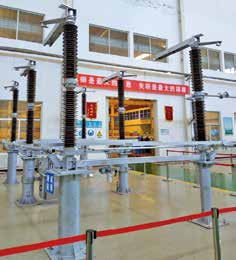
GW4-40.5/72.5/126/145/170/252/363/420 Series Double-column Horizontal Rotary High-voltage AC Disconnect Switch
SHANDONG TAIKAI DISCONNECTORS CO., LTD.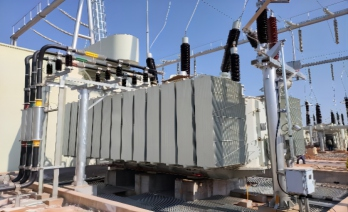
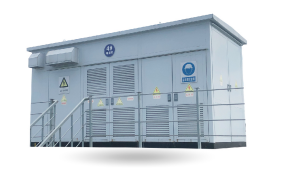
Smart Photovoltaic Prefabricated Substation
Shanghai Jinyou Jinhong Intelligent Electric Co., Ltd.
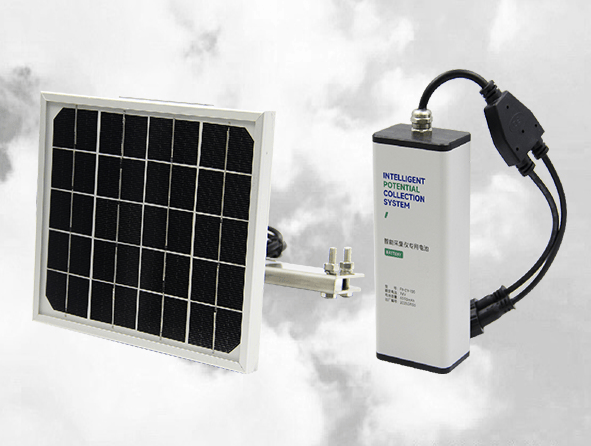
Inductive Power Harvesting Self-Powered Device - Safuneng
SELF ENERGY TECHNOLOGY (SHENZHEN) CO., LTD.