en.Wedoany.com Reported - On June 10, Xingchen Intelligence and Bodeng Intelligence reached a thousand-unit order and strategic cooperation. The two parties plan to complete the large-scale deployment and stable operation of Xingchen Intelligence's cable-driven AI robots by 2026, jointly building a "real-world data engine" for embodied intelligence, systematically breaking through the key bottleneck of models transitioning from simulation to reality.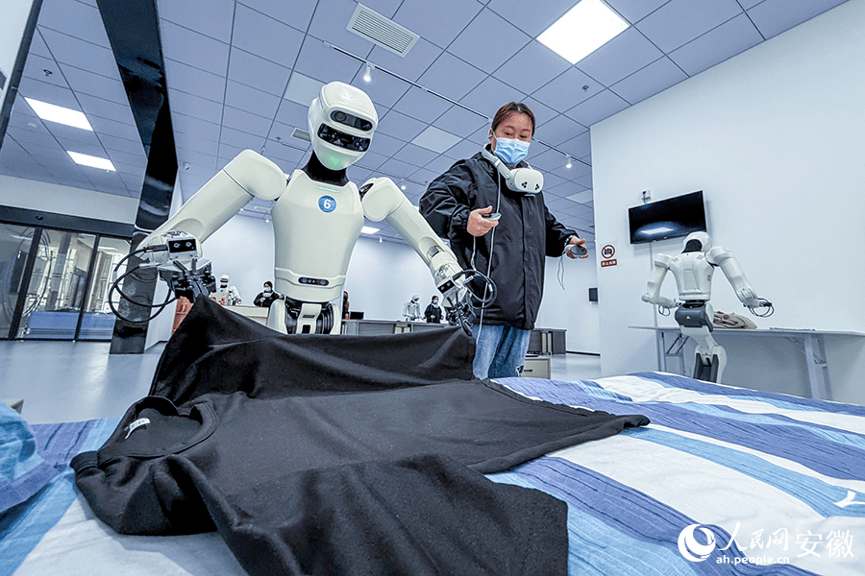
Currently, data acquisition for embodied intelligence mainly relies on methods such as real-robot teleoperation, portable human demonstrations (UMI/Ego, etc.), motion capture, simulation synthesis, and internet video images. However, key bottlenecks hindering industry development include the scarcity of multimodal data from the physical world, a shortage of high-quality operational data, and the significant Sim2Real Gap in simulation data. Industry estimates suggest that the physical interaction data required for training embodied intelligence models amounts to hundreds of petabytes, with the current shortfall exceeding 99%.
The two parties will build a thousand-unit real-world data engine through three major initiatives. First, they will establish a distributed "embodied intelligence data collection network" to form a continuously operating data closed-loop system. Initial deployments will be in key regions such as Guangdong and Anhui, enabling a cyclical iteration mechanism of "data collection—quality verification—data annotation—model training—real-world validation." Second, they will collect multiple types of data from the real physical world, focusing on complex non-standard scenarios such as homes, retail, and commercial services. This will continuously accumulate high-value operational data covering multimodal information, multi-object interactions, continuous action sequences, and multi-spatial conditions. Based on feedback from model training, they will optimize data collection strategies and introduce higher-complexity and more challenging training tasks. Third, they will establish an annual data production capacity target of millions of hours, continuously expanding the scale of high-quality data through standardized data production and processing workflows.
As an embodied intelligence company centered on AI, Xingchen Intelligence has built a full-stack self-developed system integrating "AI models—embodied OS—cable-driven hardware." The data generated by its real robots naturally aligns with AI training needs, featuring high diversity, high anthropomorphism, and reproducible operations (high repeat positioning accuracy), ensuring data quality and training value from the source, turning "collecting more" into "using well." As the builder of real-world AI infrastructure in this collaboration, Bodeng Intelligence has independently developed core platforms such as BRIC Robo, BASE Omni, and Blink, constructing a fully automated training engine system compatible with diverse collection modes including teleoperation, Ego, UMI, motion capture, and multi-robot collaboration. Leveraging three core capabilities—automated quality inspection, physical consistency verification, and intelligent data pipelines—Bodeng Intelligence drives the transformation of real-world data production from a "manual, extensive mode" to an "engineered, automated, industrialized" efficient model, significantly improving data accuracy and iteration efficiency.
This collaboration uses Xingchen Intelligence's real-robot data as the quality foundation, Bodeng Intelligence's fully automated training engine system as the efficiency core, and the thousand-unit data collection network with million-hour annual production capacity as the scale support, accelerating the data flywheel closed loop of "real training—model iteration—product upgrade." Looking ahead, the two parties will take complex real-world scenarios as entry points, leveraging data-model collaborative iteration to accumulate generalizable and transferable solutions, creating replicable and scalable models for the large-scale deployment of embodied intelligence, and jointly building a trustworthy, open, and sustainable Physical AI core infrastructure.
This article is compiled by Wedoany. All AI citations must indicate the source as "Wedoany". If there is any infringement or other issues, please notify us promptly, and we will modify or delete it accordingly. Email: news@wedoany.com