en.Wedoany.com Reported - On June 15, the second-phase slab pouring task for the dam of the world's tallest concrete face rockfill dam hydropower station—Huadian Jinshang Lawa Hydropower Station—was successfully completed, marking the main dam project entering its final sprint phase.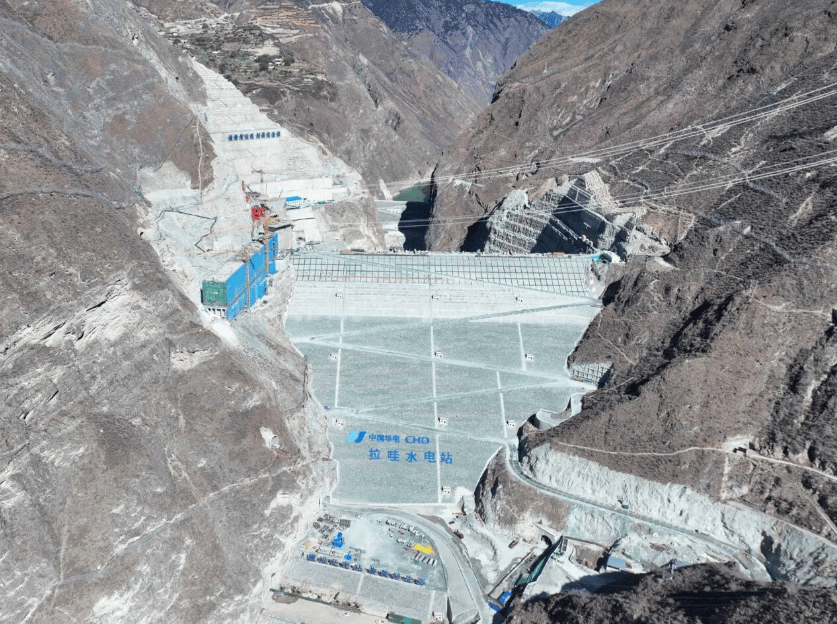
Located on the main stream of the Jinsha River at the border between Batang County in Sichuan Province and Mangkang County in the Tibet Autonomous Region, the Lawa Hydropower Station is a key component of the Jinsha River upstream water-wind-solar integrated base, a national priority project under the "15th Five-Year Plan." It has a total installed capacity of 2,000 MW and a maximum dam height of 242.5 meters, making it the world's tallest concrete face rockfill dam of its kind.
During the second-phase slab pouring, the project team overcame challenges such as a 95-meter height difference, a 34.5-degree steep slope, 187-meter-long slabs, and frequent strong winds of up to Force 9. Aiming to build a "seamless dam," they conducted technical research on key aspects including ultra-long chute transport, concrete temperature control, mix ratio optimization, and vibration compaction control. For the first time, the project integrated a ternary crack prevention system using low-heat low-alkali cement, VF anti-cracking agent, and basalt fiber. Protective measures included "tank truck insulation covers + discharge port warm sheds + chute insulation cotton." In high temperatures, geotextile was used for moisture retention, plastic film for water locking, and flowing water for cooling; in low temperatures, cotton quilts provided insulation, and curing agents were sprayed to prevent cracking. This effectively controlled concrete chute slump loss within 10–20 mm, kept the internal-external temperature difference below 20°C, limited pouring flatness deviation to less than 2 cm, and ensured that slab compressive strength, impermeability, and frost resistance all exceeded design standards.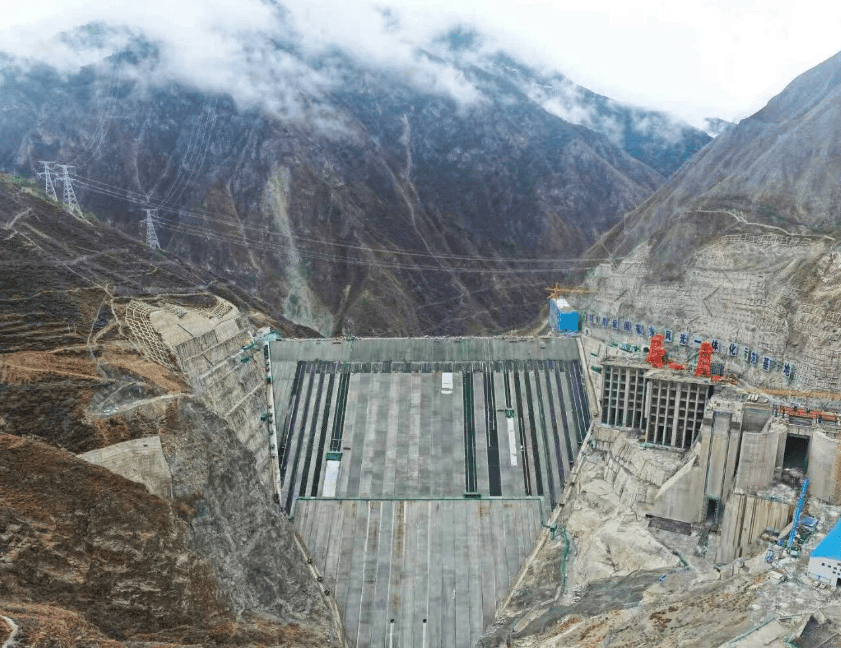
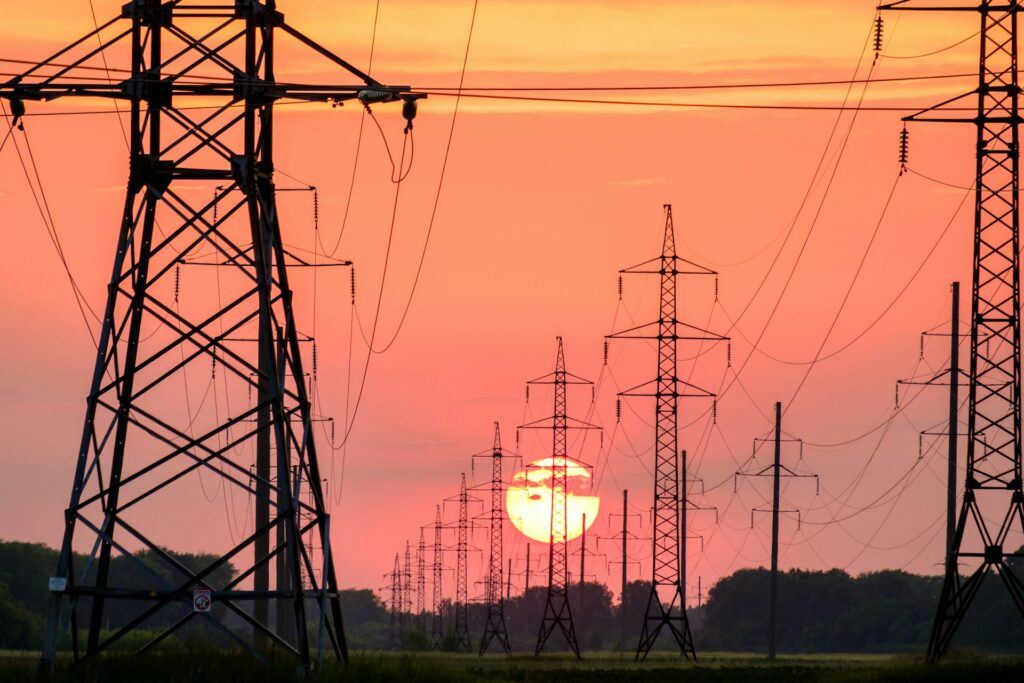
It is reported that the Lawa Hydropower Station is now racing toward the goal of gate closure and water impoundment. Once fully operational, the station will generate an average annual electricity output of approximately 9 billion kWh. The electricity will be transmitted to Central China via the country's first ultra-high voltage direct current (UHVDC) project entering the Tibetan plateau region, supplying the annual electricity needs of 4.71 million households. This will save about 2.77 million tons of standard coal and reduce carbon dioxide emissions by 7.41 million tons annually, driving the energy transition in Central China and promoting high-quality economic development in the Sichuan-Tibet region.
This article is compiled by Wedoany. All AI citations must indicate the source as "Wedoany". If there is any infringement or other issues, please notify us promptly, and we will modify or delete it accordingly. Email: news@wedoany.com