en.Wedoany.com Reported - Thomas Taroni emphasizes that selecting an IT service provider must focus on three key attributes: technical depth, reliability and transparency, and an ecosystem mindset. The CTO of sovereign infrastructure provider Phoeniqs recently elaborated on the selection criteria and technical challenges for high-performance computing and artificial intelligence infrastructure in an interview.
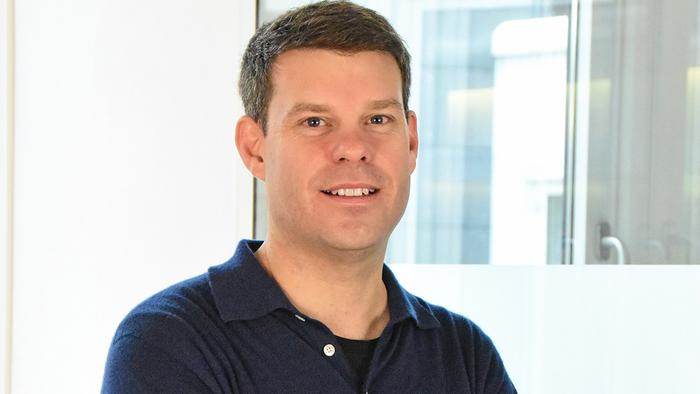
Taroni's work spans the intersection of technology, strategy, and ecosystem building, with daily considerations on how to make high-performance computing, artificial intelligence, and future quantum computing secure and practical for enterprises. Phoeniqs positions itself as a technology enabler, with its sovereign infrastructure governed by Swiss law providing the foundation for complex applications in industries such as finance, pharmaceuticals, and manufacturing. Taroni points out that IT service providers must possess genuine technical depth—understanding the essence of high-performance computing, artificial intelligence, and cloud orchestration, rather than merely focusing on marketing. They must also maintain reliability and transparency, especially when handling sensitive data and operational models. Additionally, an ecosystem mindset is essential, with a willingness to jointly develop solutions with other participants rather than working in isolation. He specifically warns that service providers should avoid applying standard approaches to complex infrastructure issues and lacking openness in dependencies, such as reliance on hyperscale cloud providers or proprietary technologies. Customers must be able to clearly and traceably understand data location, access permissions, and the jurisdiction under which the system operates.
In terms of hardware and software procurement, Phoeniqs adopts proven hardware platforms combined with its own software layer, ensuring full control over the system and adaptability to specific customer needs. The software architecture follows principles of openness, modularity, and scalability. Core technologies—the operating system for supercomputing and high-performance computing, as well as the security-critical control layer—are kept entirely in-house. Standardized services are outsourced, but content related to strategy or security is considered an indispensable part of its own value chain.
Taroni believes that the biggest current technical challenge is orchestrating extremely powerful computing resources while ensuring the highest security and stability, to meet enterprise requirements for data protection, availability, and control when deploying AI models, simulations, or complex computing processes into production. IT service providers can offer support by leveraging the Phoeniqs platform to develop customized solutions for customers, with Phoeniqs providing the technical foundation, scalability, and security, while service providers contribute industry knowledge and application capabilities.
Artificial intelligence is already integrated into the Phoeniqs platform, and customers have used it for complex scenarios such as research, financial analysis, or industrial optimization, with a focus on running AI securely, with high performance, and under control. In terms of IT security, the core issue is how to handle highly sensitive data in extremely powerful computing environments without losing trust. Phoeniqs' response includes a clear security architecture, full transparency, and operations under the Swiss legal framework, with security regarded as a fundamental prerequisite rather than an add-on.
This article is compiled by Wedoany. All AI citations must indicate the source as "Wedoany". If there is any infringement or other issues, please notify us promptly, and we will modify or delete it accordingly. Email: news@wedoany.com