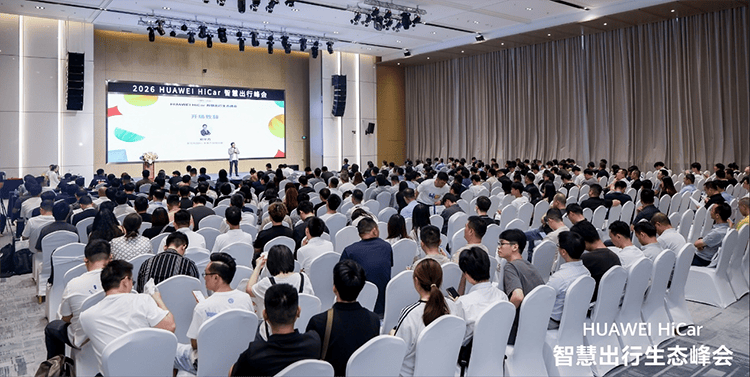
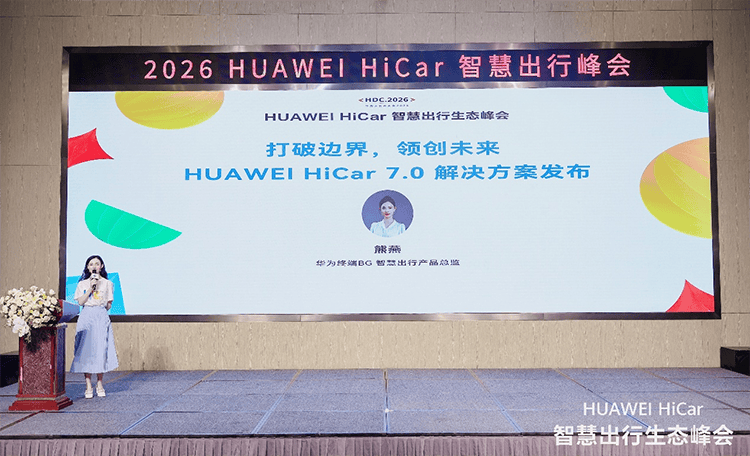
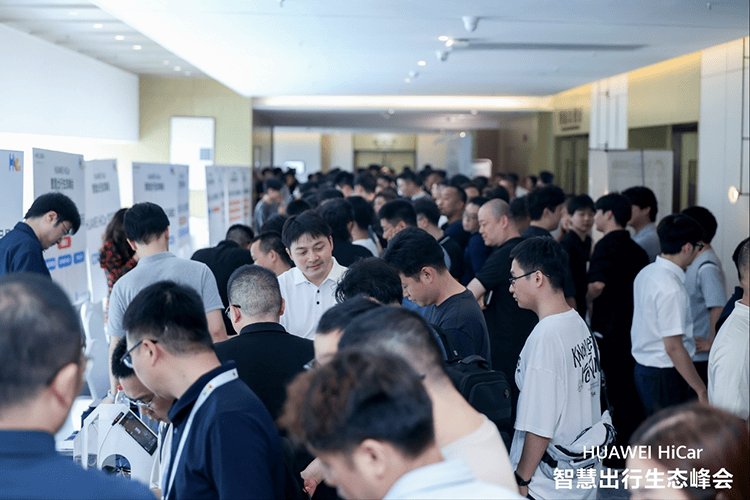
en.Wedoany.com Reported - On June 13, 2026, Huawei held the HUAWEI HiCar Smart Mobility Ecosystem Summit at Songshan Lake, Dongguan, officially launching the HiCar 7.0 solution. The summit focused on three major areas: cutting-edge technology releases, ecosystem partner practice sharing, and full-scenario real-vehicle experiences, bringing together industry associations, automakers, testing institutions, developers, and ecosystem partners from the industrial chain for exchange.
HiCar 7.0 takes the commercial vehicle-phone interconnection multi-channel spatial audio technology as its core breakthrough. This technology is based on Huawei's self-developed L2HC lossless codec protocol, providing high-speed, low-latency, and ultra-stable transmission capabilities. It supports lossless transmission of 7.1.4 multi-channel spatial audio sources to the vehicle infotainment system, enabling high-quality audio from the phone to flow across devices and match the car's audio system. The HarmonyOS distributed multi-window interaction capability allows mobile ecosystem applications and native in-vehicle applications to be displayed simultaneously on the same screen. Window resources can be intelligently scheduled, allowing the two types of applications to operate independently in a split-screen layout without interfering with each other. HiCar has also upgraded spatial audio again to create an immersive in-cabin audio-visual entertainment experience.
In terms of mobility scenario construction, HiCar 7.0 proposes for the first time a cabin space intelligent solution and a cycling scenario solution. The HiCar IoT technology solution enables multi-device collaboration within the cabin, breaking down barriers between independent device operations and achieving network linkage and data interoperability. In cycling scenarios, HiCar overcomes the interaction limitations between phones and two-wheelers, balancing information interaction with safe riding needs, achieving seamless cross-device flow and information synchronization, extending application scenarios from long-distance driving to short- and medium-distance two-wheeled riding.
Based on HarmonyOS AI cross-device integration capabilities, the in-cabin AI smart assistant can provide voice services. Users can also issue remote vehicle control commands via voice after leaving the car, without needing to manually operate the phone. Vehicle anomaly information is pushed to users in real-time through the vehicle-phone interconnection link, allowing them to stay informed of the vehicle's status at all times. The visual vehicle control desktop leverages the synergy between phone and cabin computing power to achieve smooth 3D car model rendering and responsive vehicle control commands. The HiCar platform continues to enrich ecosystem content in audio-visual, mobility, and lifestyle services, supporting seamless application flow and precise data synchronization.
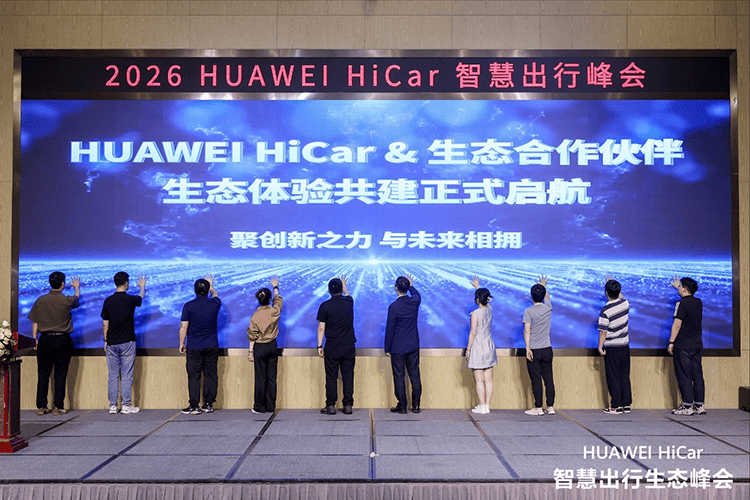
At the summit, the China Association of Automobile Manufacturers and the China Electronic Audio Industry Association shared insights on the vehicle connectivity industry ecosystem and smart cockpit audio trends. HiCar, together with the first batch of nine partners including Changan Automobile and Great Wall Motors, is collaborating on experience optimization, feature refinement, and scenario implementation to jointly build the HiCar ecosystem.
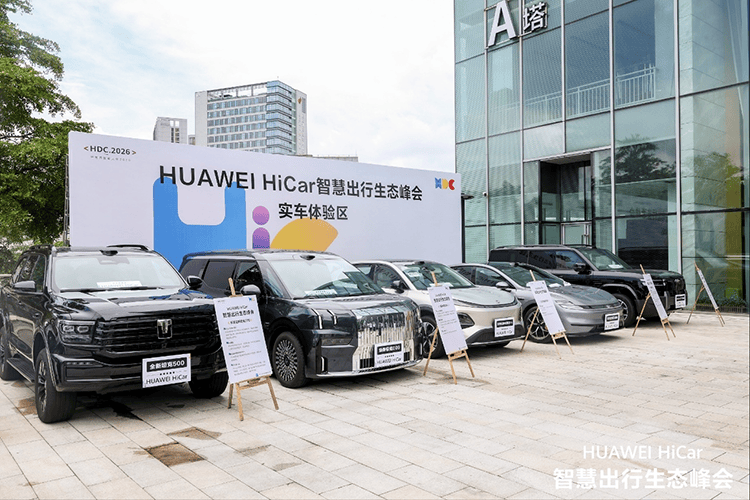
The Great Wall Tank 500, Fangchengbao Titanium 7, Changan Qiyuan Q05, and Zeekr 009 demonstrated their cooperation results and joint innovation experiences with HiCar at the venue. In the two-wheeled mobility scenario, interactive experiences for electric bicycles and motorcycles were jointly showcased with Niu Technologies and the Breaker, respectively. The exhibition also featured technical achievements and implementation solutions from HiCar's full-chain partners in areas such as chips, development, testing, and products.
To date, HiCar has been installed in over 40 million vehicles, covering more than 600 models. Since the pioneering launch of the HiCar Fusion Desktop, the solution has gone through three stages: application fusion, multi-element fusion, and spatial fusion, gradually evolving from cross-device application sharing to collaborative intelligent upgrades of the cabin space. The release of HiCar 7.0 marks a new phase for this technology.
This article is compiled by Wedoany. All AI citations must indicate the source as "Wedoany". If there is any infringement or other issues, please notify us promptly, and we will modify or delete it accordingly. Email: news@wedoany.com