en.Wedoany.com Reported - The Ministry of Natural Resources of China held a regular press conference in Beijing on June 15, 2026, to introduce the background, main content, and implementation arrangements of the "Regulations on the Implementation of the Mineral Resources Law of the People's Republic of China" (hereinafter referred to as the "Regulations"), which came into effect on the same day. The "Regulations" mark the basic establishment of a legal system for mineral resource management centered on "one law and one regulation." Regarding the transfer of mining rights, the "Regulations" clarify the priority of bidding for exploration rights. For strategic mineral resources with high scarcity and medium to large resource reserves, or exploration blocks with special requirements for exploration and mining technology or ecological environmental protection, exploration rights are prioritized for transfer through bidding.
Hu Binhua, Deputy Director of the Mining Rights Management Department of the Ministry of Natural Resources, stated at the press conference that bidding for exploration rights meeting the above conditions can fully leverage comprehensive selection advantages, avoiding the "highest bidder wins" approach. This provision aims to further support various entities with outstanding exploration technical capabilities and financial strength in obtaining exploration rights, encouraging exploration rights holders to invest more funds in mineral prospecting, accelerating exploration progress, and promoting a new round of mineral prospecting breakthroughs.
The "Regulations" also detail specific scenarios for negotiated transfers. Hu Binhua introduced that this regulation clarifies that fragmented areas, deep upper parts of mines, and surrounding scattered resources can be transferred through negotiation, which helps support mining rights holders in "exploring boundaries and assessing reserves" of existing mines, promoting increased mineral resource reserves and production.
Regarding the transfer of mining rights, the "Regulations" specify prohibited transfer scenarios, including when the mining right obtained through negotiation has been held for less than five years, the mining right is under seizure, there is a dispute over ownership, or the transfer contract stipulates non-transferability. Before transferring or acquiring mining rights, enterprises should focus on whether there are prohibited transfer scenarios and any restrictive clauses in the original transfer contract.
Regarding the renewal of mining rights, the "Regulations" require that renewal applications be submitted between six months and three months before the expiration of the mining right. The number of renewals for exploration rights is limited to no more than three times, each with a term of five years; for oil, natural gas, and other strategic minerals determined by the competent department of natural resources under the State Council, the number of renewals can be increased with approval. The "Regulations" also implement a system for reducing the area of exploration rights upon renewal to curb the behavior of "claiming without exploring." For mining rights, it is clearly stipulated that if there are still mineral resources within the mining rights area, renewal is permitted.
The "Regulations" also require mining rights holders to pay relevant fees such as mining rights transfer proceeds and mining rights occupation fees in full and on time, and detail scenarios for reduction or exemption of transfer proceeds. The head of the Legal Affairs Department of the Ministry of Natural Resources emphasized that the "Regulations" exhibit "four comprehensive" characteristics: comprehensively detailing and implementing the authorization provisions of the new Mineral Resources Law, comprehensively integrating existing administrative regulations on mineral resources, comprehensively strengthening mineral resource management across the entire chain, and comprehensively optimizing the mining business environment. Additionally, the "Regulations" further refine the design of the national mineral resource security guarantee system by establishing a full-chain policy system, a strategic mineral resource catalog system, strengthening planning and control, and coordinating resource security with ecological security.
The implementation of these "Regulations" marks a new stage in China's mineral resource management, constructing a full-chain regulatory system through institutional innovation, aiming to promote high-quality development of the mining industry and ensure national resource security.
This article is compiled by Wedoany. All AI citations must indicate the source as "Wedoany". If there is any infringement or other issues, please notify us promptly, and we will modify or delete it accordingly. Email: news@wedoany.com
Related Products



Industrial and Commercial Point-Type Gas Detector
Jinan Benan Technology Development Co., Ltd.
High-temperature Equal Wall Thickness High-power Screw Drilling Tool
Orient Energy & Technologies Co., Ltd.


New Environmentally Friendly Green Potassium Salt Collector
Chonfar Engineering and Technology Co., Ltd.
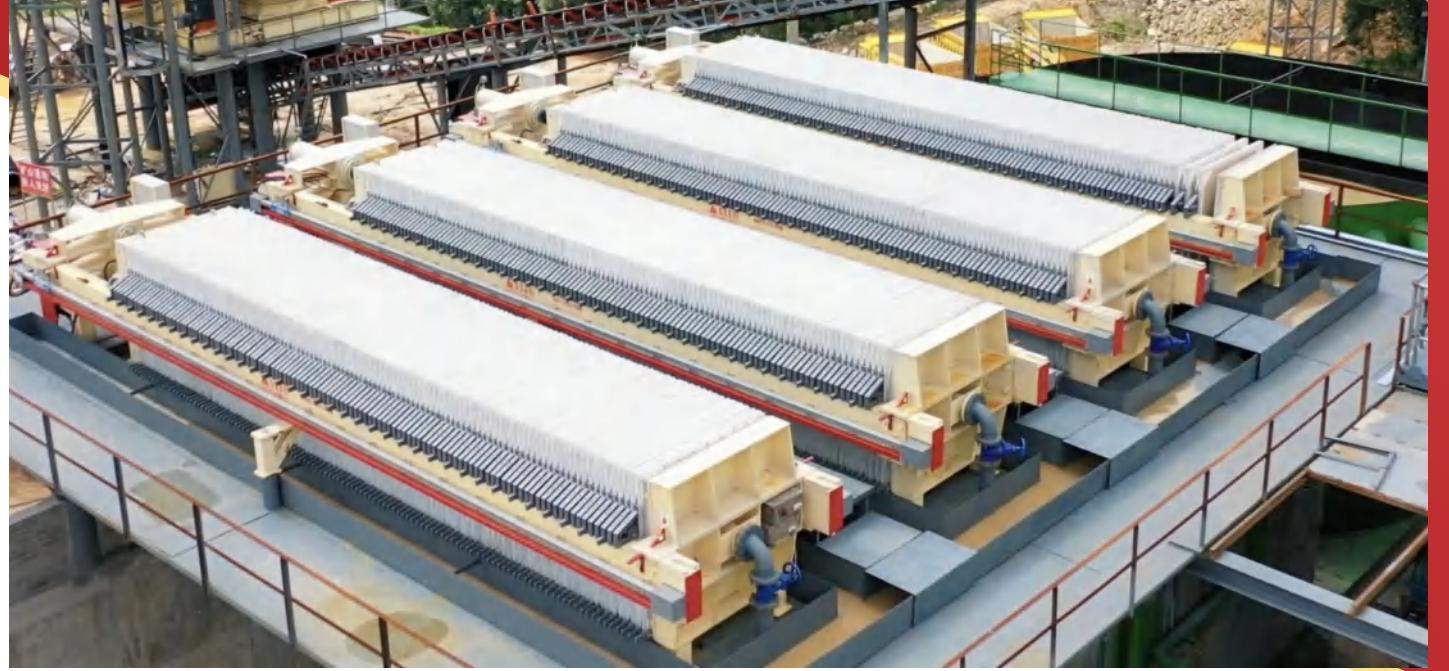
Hydraulic Plate and Frame Filter Press
Guangdong Leimeng Intelligent Equipment Group Co., Ltd.
CKD135E Pure Electric Wide-body Dump Truck
Jiangsu Changkuang Engineering Machinery Co. Ltd.