China's "East Data West Computing" Network Expands, Daily Call Volume Surges Over 1,400 Times in Two Years
en.Wedoany.com Reported - With the explosive growth of the artificial intelligence industry, the demand for computing power is rising exponentially. An interconnected national integrated computing network is being built from scratch and accelerating its formation, aiming to make computing resources as universally accessible and convenient as water and electricity.
At the Beijing Public AI Computing Center, the dispatch platform shows that computing resources are in short supply, a phenomenon that is not isolated. With the rapid expansion of domestic large models and intelligent agent applications, the national daily call volume of tokens—the smallest units of information processed by large models—has surged over 1,400 times in just two years, with an accelerated increase since this year. Most of the thousands of AI companies calling these tokens are located in the eastern region. Meanwhile, among China's eight "East Data West Computing" hub nodes, five are in the western region, relying on clean energy sources such as wind and solar power, resulting in relatively lower computing costs.
To meet the surging computing demand from the eastern region, the western computing hub nodes are accelerating construction. At the "East Data West Computing" data center cluster in the Horinger New District of Hohhot, Inner Mongolia, over 30 data center buildings are under construction simultaneously within a 3-kilometer radius. In Zhongwei, Ningxia, various computing centers are also entering a period of intensive construction, with new machine room ceiling heights increased from about 5 meters to 7.5 meters to accommodate higher-density computing equipment deployment.
Computing nodes nationwide are experiencing the largest expansion wave in recent years. However, during this expansion, the transmission capacity of backbone optical cables used to "transport" computing power between the east and west faces challenges. Currently, a backbone optical cable laid along a high-speed railway line is under construction, crossing the east-west Qinling Mountains over a long distance for the first time. This "New Eight Vertical and Eight Horizontal" backbone optical cable network is continuously extending along high-speed rail lines, with increasing connection density around the "East Data West Computing" hub nodes and data center clusters. A batch of "computing power new cities" have achieved high-speed direct connections via backbone optical cables for the first time, laying a solid transmission foundation for computing infrastructure construction.
At the Pengcheng National Laboratory in Shenzhen, research teams are attempting to integrate scattered computing centers into a "unified national cloud system." In the future, through the computing network, the efficiency of AI services used by society as a whole is expected to increase by hundreds or thousands of times. Currently, an invisible computing network is rapidly expanding, expected to usher in a trillion-yuan investment cycle, driving rapid growth in industries such as optical communications and AI servers. New career opportunities will emerge in areas like computing infrastructure maintenance and AI training, potentially creating millions of jobs.
This article is compiled by Wedoany. All AI citations must indicate the source as "Wedoany". If there is any infringement or other issues, please notify us promptly, and we will modify or delete it accordingly. Email: news@wedoany.com
Related Products




Industrial and Commercial Point-Type Gas Detector
Jinan Benan Technology Development Co., Ltd.
G.652.D Wavelength-extended Non-dispersion Shifted Single-mode Optical Fiber
HONGAN GROUP CO., LTD.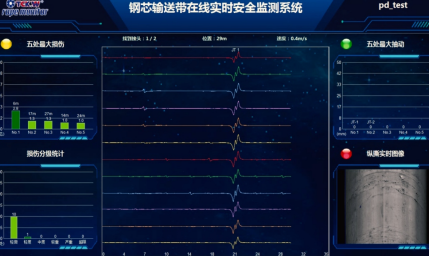
Conveyor Belt Intelligent Monitoring System
LUO YANG WIRE ROPE INSPECTION TECHNOLOGY CO., LTD.



20 Inch 1600*900 Full HD 60Hz TFT LED Monitor with VGA and DP Interfaces for Desktop Computers-Business Use
Guangzhou Zanying Optoelectronics Technology Co., Ltd.