en.Wedoany.com Reported - Ammonia (NH₃) is transitioning from a cornerstone chemical in the fertilizer industry to a zero-carbon fuel for shipping and a carrier for renewable energy storage and transport. Its offshore application is gaining attention because it can be produced near renewable resources like wind energy, and its storage and transport characteristics are superior to those of pure hydrogen. After a surge driven by aggressive decarbonization targets in previous years, progress in this field continues as of 2026, but the pace has become more measured due to technological, economic, and safety realities.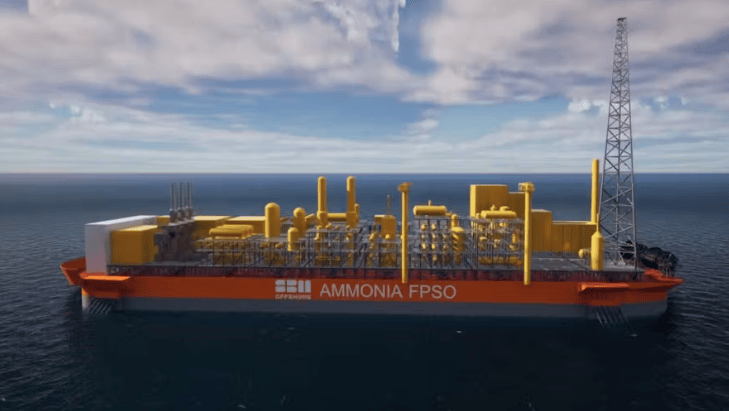
In the shipping sector, ammonia as a fuel can bring significant benefits to an industry responsible for approximately 3% of global greenhouse gas emissions. When burned or used in fuel cells, ammonia does not directly produce CO₂ emissions, generating only nitrogen and water, though byproducts such as nitrogen oxides and nitrous oxide must be managed. Its energy density is generally superior to hydrogen, better supporting long-distance voyages, and existing global ammonia trade infrastructure can be used for bunkering. Engine manufacturers such as WinGD and MAN Energy Solutions have developed ammonia dual-fuel engines, with initial deliveries expected between 2025 and 2026. In 2024, orders for ammonia-ready vessels grew significantly, and projections indicate that under the International Maritime Organization (IMO) net-zero targets, ammonia could account for 35% to 50% of the marine fuel mix by 2050. The IMO approved interim guidelines for ammonia as a fuel in December 2024, with further regulatory updates expected between 2025 and 2027. Demonstration projects, including small supply vessels already in operation, are advancing. However, ammonia is toxic and corrosive, requiring specialized materials, ventilation systems, and crew training, and its volume is significantly larger than conventional fuels.
Offshore ammonia production utilizes offshore wind, as well as emerging solar and wave energy technologies, to produce green hydrogen via electrolysis, which is then converted into ammonia on floating platforms using the Haber-Bosch process. This approach avoids the cost of laying submarine cables, reduces land-use conflicts, and locates production near major shipping routes. Related concepts typically employ floating production, storage, and offloading (FPSO) units, which can be converted from existing tankers or purpose-built. Key projects include: the SwitcH2 project (located in Portugal, part of the Atlantic project), a 300 MW floating ammonia FPSO powered by wind, solar, and wave energy, targeting an annual output of 243,000 to 300,000 tons, with front-end engineering design (FEED) continuing until mid-2026 and potential operation in 2029; Samsung Heavy Industries and Lloyd's Register are advancing similar renewable ammonia FPSO designs; additionally, other concepts are being studied off the U.S. East Coast, at European ports (such as Rotterdam), and in Norway and Asia.
Regarding the current market situation, although the boom driven by IMO ambitions and expectations of cheap renewable energy after 2021 has moderated—due to the high cost of green ammonia (2 to 3 times that of conventional ammonia), supply chain realities, and slow fleet renewal—related activities continue. The IMO's 2023 GHG Strategy, along with EU and national policies, provides impetus, and carbon pricing mechanisms may help narrow the cost gap. Vessel orders and engine testing are ongoing, and floating production projects are moving toward final investment decisions. Gray and blue ammonia may serve as a bridge, but true zero-emission shipping still faces challenges such as scaling electrolyzers, safety management, nitrogen pollution control, and cost parity, with competition for green molecules from other industries adding pressure. Analysts expect the green ammonia market to expand significantly between 2030 and 2050, with offshore production acting as a niche enabler in remote, high-wind-resource areas.
This article is compiled by Wedoany. All AI citations must indicate the source as "Wedoany". If there is any infringement or other issues, please notify us promptly, and we will modify or delete it accordingly. Email: news@wedoany.com