en.Wedoany.com Reported - The Group of Seven (G7) has agreed that by 2030, no single country should account for more than 60% of its rare earth imports, aiming to reduce dependence on China.
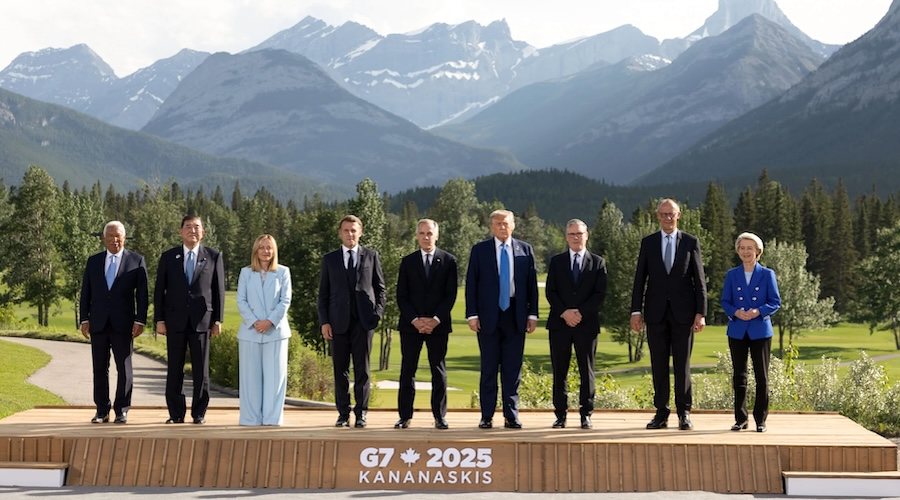
In a statement issued by G7 leaders on Wednesday at the summit in Evian, France, the target will apply to rare earths and permanent magnets. The statement said that after 2030, countries will work to further reduce dependence, aiming to limit risk exposure to within 50% as soon as possible. Bloomberg reported the commitment earlier on Wednesday. For other critical minerals, leaders pledged to set specific targets by the end of the year.
Leaders also discussed the possibility of introducing quotas in some industrial sectors, reflecting recognition of the need for defense manufacturers to reduce reliance on China. They also committed to establishing a platform to jointly increase supply from recycling and new mining projects. A G7 official, speaking on condition of anonymity, said the critical minerals plan was one of the issues on which leaders reached full consensus at a meeting largely focused on the US-Iran peace agreement. Another official noted that all members agreed on the need to diversify suppliers of critical minerals to reduce the risk of supply disruptions.
German Chancellor Friedrich Merz told reporters in Evian that parties agreed in various forms to closer cooperation on critical raw materials and held in-depth discussions on how to achieve diversification. Given that many potential developers have delayed projects due to funding constraints, regulatory hurdles, social opposition, and technical setbacks, the 2030 deadline may be an ambitious target. One official said that without setting quotas for at least some sectors, such as defense, it would be nearly impossible for countries to achieve the goal.
China imposed comprehensive export controls on most critical minerals and rare earths last year, threatening production lines around the world and making officials aware of the influence China has accumulated through its near-monopoly on supply. Following a dispute over Taiwan this year, China also imposed broad bans on Japan, prohibiting the export of products that could be used in civilian or military equipment. For Japan, the need to reduce dependence on China is not new. As early as 2010, Japan faced an export ban on critical minerals due to a maritime border dispute and has since made long-term efforts to reduce reliance on Chinese rare earths, but still imports about 75% of its supply from China.
Although most critical mineral markets are small, and a single project can significantly boost global supply, increasing production across all critical mineral markets dominated by China requires substantial capital and technical expertise. Additionally, rare earth mining and refining are environmentally damaging, costly, and time-consuming, and building alternative supply chains could take years. A 2025 report by the International Energy Agency (IEA) found that China controls about 70% of the market for most critical mineral refining processes. For certain specific substances, China's dominance is even higher, with the report stating that China produces 85% of processed cobalt and 99% of primary gallium.
This article is compiled by Wedoany. All AI citations must indicate the source as "Wedoany". If there is any infringement or other issues, please notify us promptly, and we will modify or delete it accordingly. Email: news@wedoany.com