Europe's BEGONIA Project Releases Preview Document on Operational Digital Platform
en.Wedoany.com Reported - A preview document recently released by the BEGONIA project indicates that the Operational Digital Platform (ODP) can serve as a digital infrastructure for cross-sectoral and cross-border interconnection and coordination of Europe's energy and transportation systems. This concept has been technically validated in three cross-border use cases.
Europe's energy and transportation systems are becoming increasingly interconnected, distributed, and digitally driven. Decarbonization, renewable energy integration, transport electrification, and the growing importance of data governance are transforming how these systems are managed and coordinated. BEGONIA is an EU-funded Coordination and Support Action aimed at identifying, analyzing, and preparing for the deployment of Operational Digital Platforms (ODPs) in Europe's energy and transport sectors. By evaluating cross-border and cross-sector use cases, the project has prepared for the implementation of three ODPs, fostering a structured understanding of the technical, regulatory, and governance conditions for such platforms.
An Operational Digital Platform is defined as a digital infrastructure that transforms data into operational value, enabling real-time coordination across systems, organizations, sectors, and countries within an interoperable and governed framework. Its role is not to replace existing systems but to connect and coordinate them. ODPs are not viewed as organization-specific systems built around the interests of a single company or member state, but as strategic infrastructure supporting European goals such as decarbonization, resilience, energy security, and digital sovereignty.
From a technical architecture perspective, most ODPs are built around four interconnected layers. The perception layer collects real-time data from physical assets such as sensors, smart meters, charging points, and grid components. The middleware layer coordinates heterogeneous data sources and enables secure exchange compliant with European data space standards. The service layer uses analytics and optimization tools to transform data into operational decisions. The business layer delivers outputs through dashboards, alerts, and coordination tools, and supports compliance and financial management functions. An ODP does not need to own the assets or services it connects to; physical infrastructure remains under operator control, and software services can be provided by third parties.
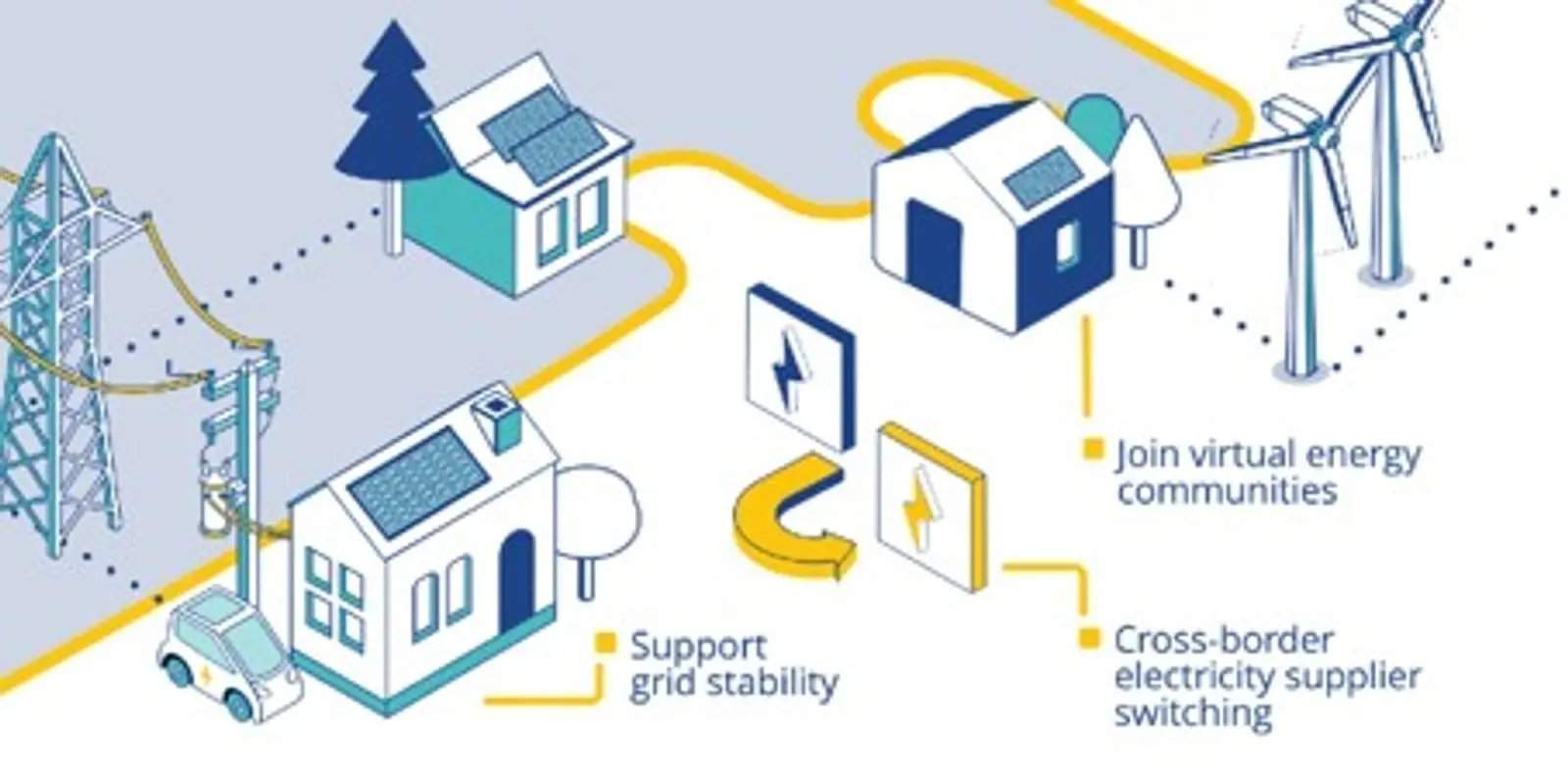
BEGONIA tested the capabilities of ODPs in different scenarios through three proof-of-concept deployments. The first use case is a customer-centric electricity ODP, placing consumers at the center of the energy system to enable real-time demand-side flexibility, virtual energy community participation, automatic supplier switching, and AI-based grid recommendations, demonstrating the ability to coordinate prosumers, grid operators, and service providers within a single governance framework.
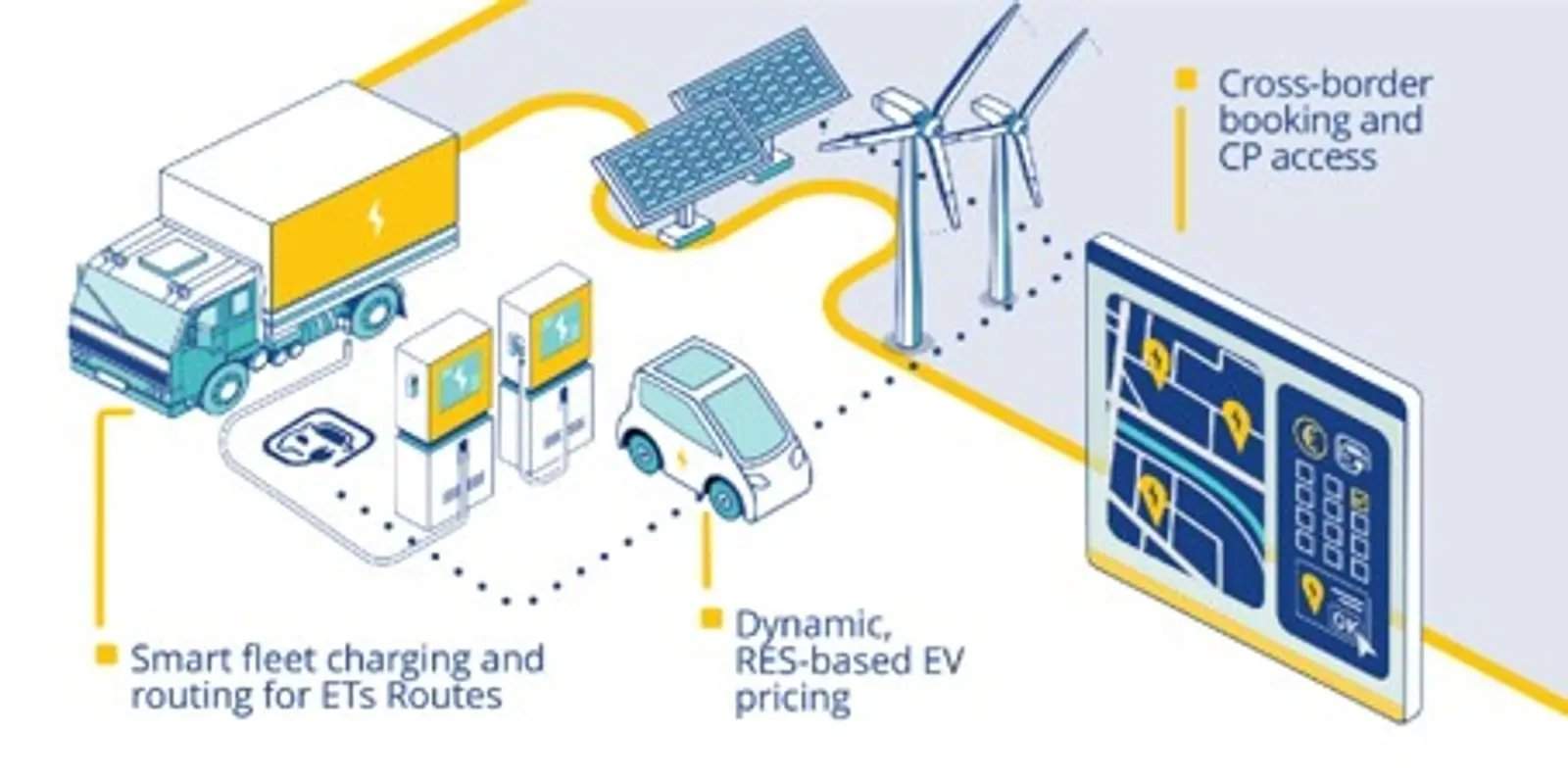
The second use case is an AI-driven ODP for electric vehicles, electric trucks, renewable energy, and the grid, operating along the Austria-Hungary-Slovenia corridor to coordinate charging infrastructure, electric vehicle fleets, renewable energy generation, and grid operations in real time, demonstrating how distributed transport assets can become flexibility resources.
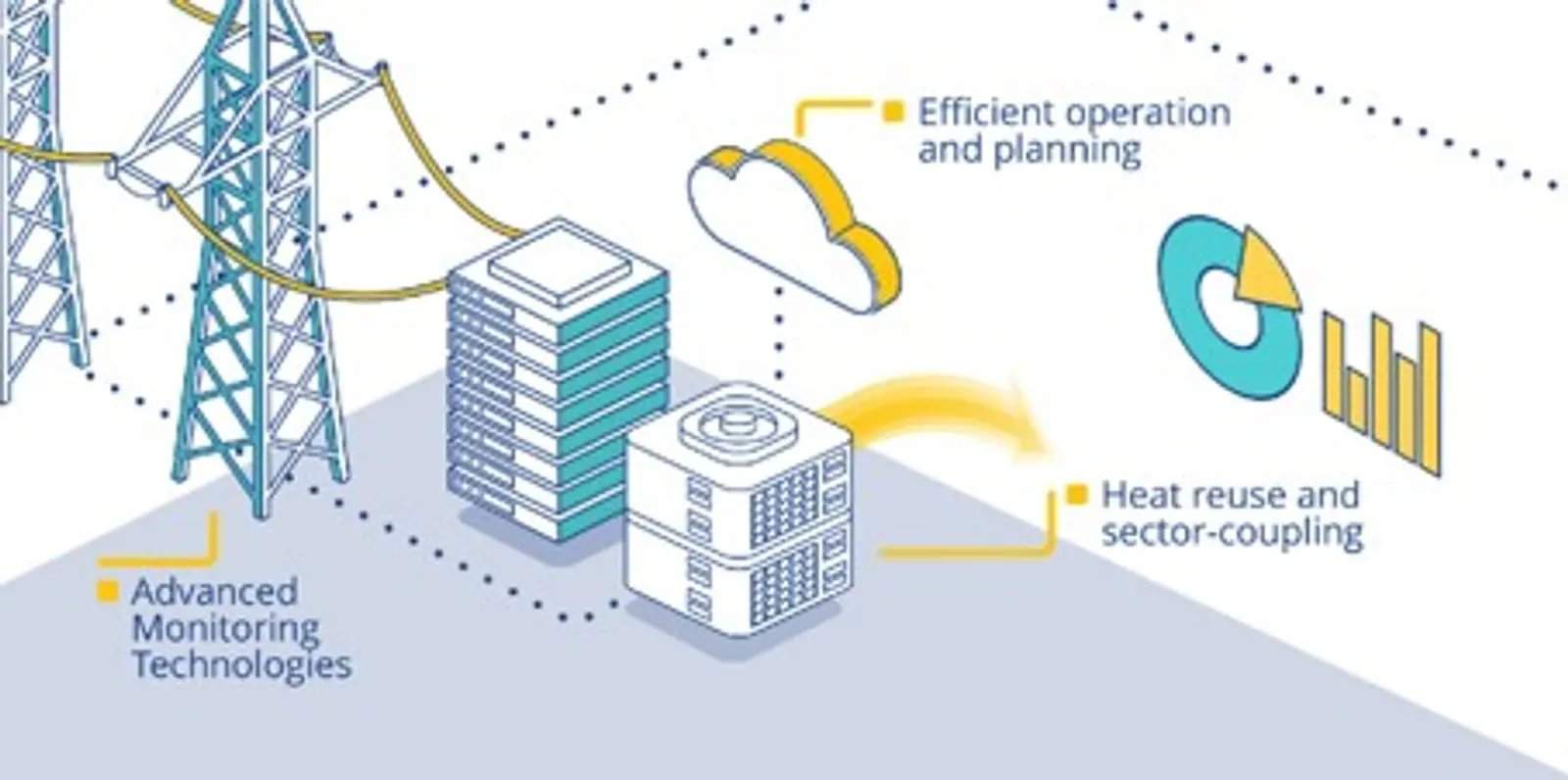
The third use case is a data center digitalization ODP, connecting data center operators, grid operators, renewable energy producers, and district heating networks in Denmark, Germany, and Finland. It enables carbon-aware scheduling of computing workloads and coordinated waste heat recovery, extending the ODP concept to digital infrastructure itself.
The research team notes that many necessary technical building blocks already exist in Europe's digital ecosystem, but developing governance, regulatory, and interoperability frameworks remains a key challenge. These challenges include regulatory fragmentation among member states, legal complexities at sector boundaries, evolving data space standards, and designing trustworthy and commercially sustainable governance models. Complete findings, including the formal definition of ODPs, architectural principles, governance considerations, and deployment guidance, will be presented in the forthcoming BEGONIA white paper and reference documents.
This article is compiled by Wedoany. All AI citations must indicate the source as "Wedoany". If there is any infringement or other issues, please notify us promptly, and we will modify or delete it accordingly. Email: news@wedoany.com
Related Products



Comprehensive Mining Automation Control System
Beijing Tianma Intelligent Control Technology Co., Ltd.
TWP16 P-Band Tropospheric Wind Profile Radar
China Huayun Meteorological Technology Group Co., Ltd.


GYTA Type Non-Self-Supporting Aerial/Duct Optical Cable
TONGDING INTERCONNECTION INFORMATION CO., LTD.
Conveyor Belt Intelligent Monitoring System
LUO YANG WIRE ROPE INSPECTION TECHNOLOGY CO., LTD.
Mine Explosion-proof and Intrinsically Safe Industrial Ethernet Ring Network (10 Gigabit/Gigabit)
Chongqing Mas Sci&Tech Co., Ltd.