Brazil's Energy Market Opening Drives Large-Scale AI Adoption
en.Wedoany.com Reported - The process of opening Brazil's energy industry to millions of consumers in the free market is driving a structural transformation in the sector's operational model. This shift imposes new demands on companies' technological capabilities, particularly against a backdrop of liquidity constraints, profit pressure, and bottlenecks in scaling up.
Brazil's telecommunications sector underwent a similar scaling transformation. In 1998, with the end of the state monopoly, telecom services were privatized and the market was opened to private competition. The number of fixed and mobile phone connections surged from 21.6 million in 1997 to 190.4 million in 2008. This growth relied on technological investment, organizational changes, and product and service diversification; companies that failed to adapt were eliminated by the market. The financial sector also experienced a similar transformation. In 2018, the Central Bank of Brazil regulated the establishment of Direct Credit Companies (Sociedades de Crédito Direto, SCD) and Peer-to-Peer Lending Companies (Sociedades de Empréstimo entre Pessoas, SEP), granting special licenses for business models based on innovative technology and purely digital operations. The subsequent implementation of the open banking policy opened up data access previously monopolized by large banks. Nubank was founded in 2013 with the technological premise of creating a platform with low operational costs and high user engagement. In 2025, Nubank became the private financial institution with the largest number of customers in Brazil, serving over 112 million people, approximately 61% of the country's adult population, with revenue growing 45% year-over-year to US$16.3 billion.
Serving a market with the potential to reach over 90 million consumption units requires an operational logic based on data, automation, and intelligence. Artificial intelligence emerges in this context as the primary infrastructure for achieving scale, capable of building a complete customer journey encompassing predictive customer acquisition, energy savings simulations, migration process automation, and data-driven customer service. This model does not entirely replace traditional methods, but without intensive use of AI, the scaling process is often accompanied by higher costs, greater complexity, and slower execution speed.
The trend of market opening is also redefining corporate positioning, evolving from traders to digital platforms. UK-based Octopus Energy is a typical case. Between 2021 and 2024, the group's revenue grew from £2 billion to £12.4 billion, while profits shifted from a maximum net loss of £141 million in 2022 to a profit of £83 million in 2024. In 2025, Octopus Energy surpassed British Gas to become the largest energy supplier in the UK. Its growth engine is the proprietary technology platform Kraken, which by the end of 2024 had contracted to manage 51 million accounts, a significant increase from 32 million the previous year, with recurring revenue growing 68% to £90 million. Kraken has also expanded into the water and telecommunications sectors by licensing to companies such as Severn Trent, Portsmouth Water, and Cuckoo Fibre. In 2025, its contracted annual recurring revenue doubled to £422 million, and the division was valued at US$8.65 billion after being spun off. In the financial sector, Nubank has also undergone a similar platform transformation. In 2025, its digital services segment (including telecommunications, travel, and e-commerce) reached 12 million customers, a 58% increase year-over-year.
The future of energy trading depends not only on the ability to sign contracts or manage energy portfolios but also on the ability to operate at scale intelligently. In Brazil, some companies have moved beyond pure trading to offer services such as retail and wholesale platform licensing, power plant management, bill auditing, invoice management, support for relationships with distribution companies, renewable energy, and cashback programs, forming comprehensive energy service platforms.
This article is compiled by Wedoany. All AI citations must indicate the source as "Wedoany". If there is any infringement or other issues, please notify us promptly, and we will modify or delete it accordingly. Email: news@wedoany.com
Related Products


20 Inch 1600*900 Full HD 60Hz TFT LED Monitor with VGA and DP Interfaces for Desktop Computers-Business Use
Guangzhou Zanying Optoelectronics Technology Co., Ltd.
Automatic Aiming Laser Remote Obstacle Removal Robot
Pinggao Group Weihai High-Voltage Apparatus Co., Ltd.

Mine Explosion-proof and Intrinsically Safe Industrial Ethernet Ring Network (10 Gigabit/Gigabit)
Chongqing Mas Sci&Tech Co., Ltd.
G.652.D Wavelength-extended Non-dispersion Shifted Single-mode Optical Fiber
HONGAN GROUP CO., LTD.
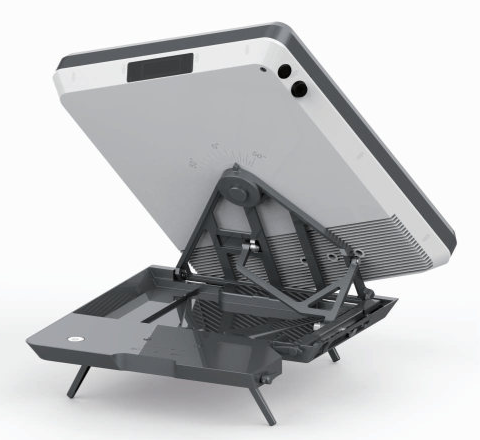
Flat Portable Satellite Terminal 0.35m Aperture Manual Portable Terminal
China Starwin Science & Technology Co., Ltd.
GYTA Type Non-Self-Supporting Aerial/Duct Optical Cable
TONGDING INTERCONNECTION INFORMATION CO., LTD.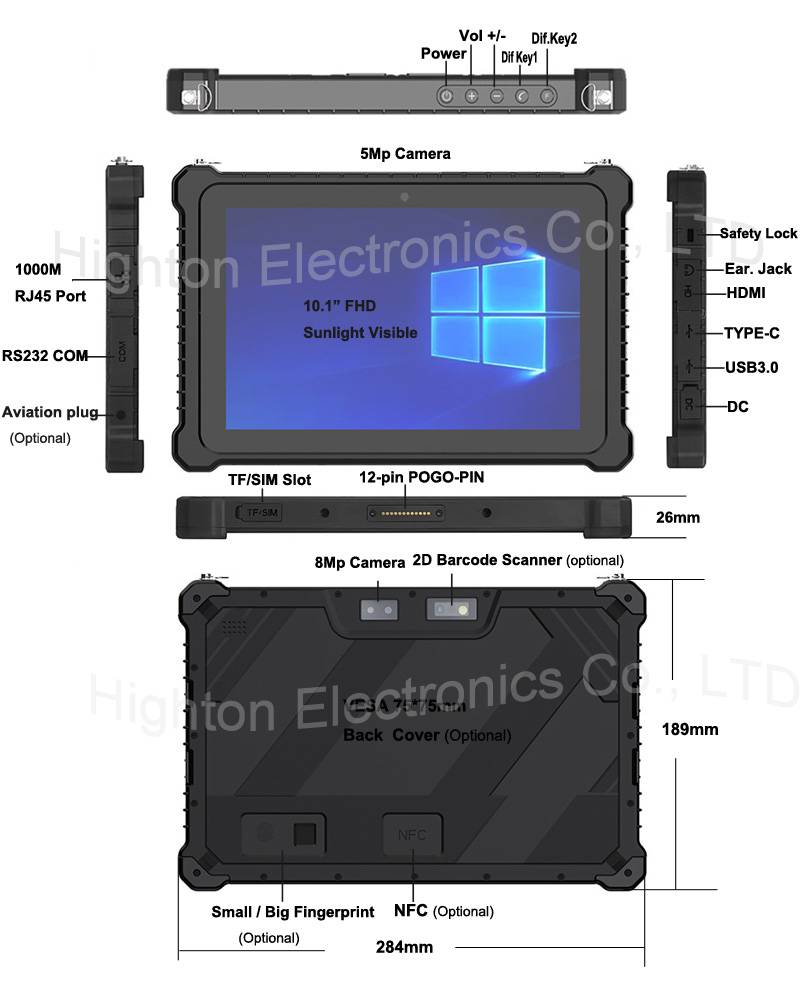
Hot Selling 10 Inch Intel N5100 I5 I7 FHD 8 +128GB 16+256GB Win10 Pro Win11 Pro 4G 5G Rugged Tablet PC Pad with NFC Barcode
Highton Electronics Co., Ltd.