Thuringian Alliance Develops Millimeter-Scale QKD Chip
en.Wedoany.com Reported - Six research and industrial partners from the state of Thuringia have launched a new project aimed at integrating a quantum key distribution (QKD) system onto a millimeter-sized silicon chip compact enough for use in SFP modules within common network hardware.
The project, named "Photonic Integrated Polarization Analysis Unit with Single-Photon Processing" (PIC-PAM), is funded by the Thuringian State Program for Research, Technology, and Innovation (FTI) and co-financed by the European Union, with a project duration of three years. The core of the entire project is the development of a monolithically integrable silicon chip that combines all functional units required for quantum key distribution, including polarization analysis, single-photon detectors, and time-tagging electronics.
QKD based on entangled photons is regarded as a physically secure method for generating and distributing encryption keys. Information is encoded in the polarization state of individual photons, and any eavesdropping attempt detectably alters the quantum state of the photons. Current QKD systems rely on bulky optomechanical laboratory setups; the PIC-PAM project aims to compress these components onto a millimeter-scale chip. The Fraunhofer Institute for Applied Optics and Precision Engineering (IOF) is responsible for developing silicon nitride-based photonic components, including polarization analysis units, beam splitters, and optical couplers for fiber-to-chip connections. The IMMS Institute for Microelectronics and Mechatronic Systems is developing the electronic layer, comprising single-photon avalanche photodiodes (SPADs) as single-photon detectors and a newly developed time-tagging ASIC. X-FAB Global Services GmbH will adapt its CMOS process to enable the co-fabrication of photonic and electronic layers on the same wafer.

The final chip will be integrated by AIM Micro Systems GmbH into a compact module in a small form-factor pluggable (SFP) package. SFP is a widely used card format in data centers and network environments for connecting network devices such as switches or routers to fiber optic or copper cables, and handles signal conversion between the device and the transmission medium. As the consortium leader, Quantum Optics Jena GmbH is also responsible for developing a photon source compatible with SPAD detectors and building the project's overall demonstration system.
The project background stems from the threat posed by quantum computers to traditional asymmetric encryption. In addition to QKD, industry is also advancing post-quantum cryptography (PQC) as a countermeasure. PQC is a purely software-based approach that does not require photonics. These two technical routes are not mutually exclusive but address different threat models and infrastructure requirements. The project announcement does not provide specific data on transmission distance, achievable key rates, or interoperability with existing network components. Similarly, the announcement lacks information on cost and certification requirements, which are crucial for market viability in regulated environments such as data centers or government networks in the future.
This article is compiled by Wedoany. All AI citations must indicate the source as "Wedoany". If there is any infringement or other issues, please notify us promptly, and we will modify or delete it accordingly. Email: news@wedoany.com
Related Products


Mine Explosion-proof and Intrinsically Safe Industrial Ethernet Ring Network (10 Gigabit/Gigabit)
Chongqing Mas Sci&Tech Co., Ltd.
Automatic Aiming Laser Remote Obstacle Removal Robot
Pinggao Group Weihai High-Voltage Apparatus Co., Ltd.


One-Stop Steward Service for the Entire Logistics System Integration Chain
Zhongding Intelligent (Wuxi) Technology Co., Ltd.
Industrial and Commercial Point-Type Gas Detector
Jinan Benan Technology Development Co., Ltd.
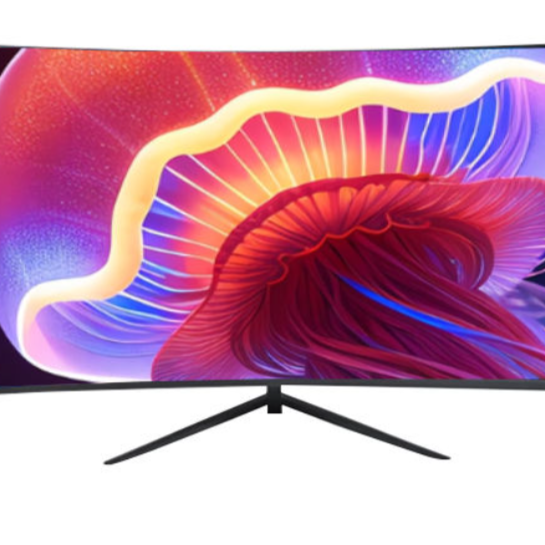
20 Inch 1600*900 Full HD 60Hz TFT LED Monitor with VGA and DP Interfaces for Desktop Computers-Business Use
Guangzhou Zanying Optoelectronics Technology Co., Ltd.

Multi-function Marine Monitoring Low-altitude Detection Radar Sea-air Boundary Ocean Dynamic Environment Measurement
Chengdu Dixin Technology Co., Ltd.
Comprehensive Mining Automation Control System
Beijing Tianma Intelligent Control Technology Co., Ltd.