en.Wedoany.com Reported - The Swiss National Supercomputing Centre (CSCS, Centro Svizzero di Calcolo Scientifico/Swiss National Supercomputing Centre, affiliated with ETH Zurich) presented research findings on secure high-performance infrastructure for artificial intelligence environments at the "Cray User Group (CUG) 2026 Conference" in Nice. The research was published in two papers, focusing on leveraging Vast Data technology to build trusted, high-performance infrastructure for modern artificial intelligence (AI) and high-performance computing (HPC) workloads. As computational science becomes increasingly data-intensive and AI enters sensitive fields such as healthcare, national research centers require infrastructure capable of protecting regulated data, supporting secure shared access, and accommodating new input/output (I/O) patterns while delivering the performance expected from supercomputing-scale systems.
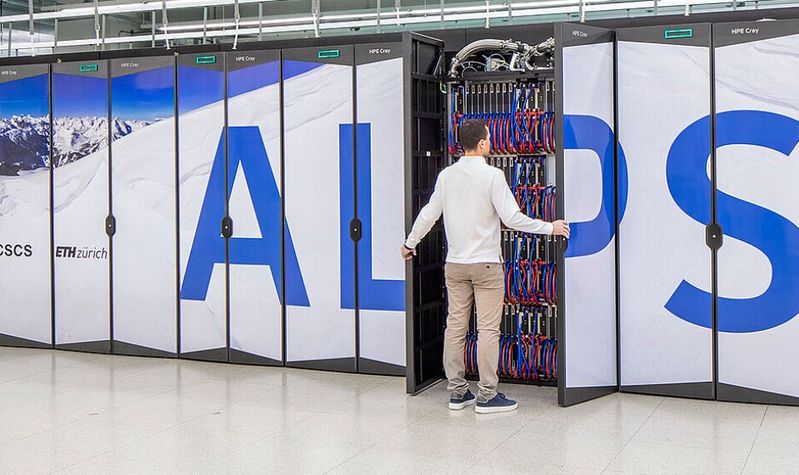
One of the research projects, titled "Architectural Isolation for Sensitive Workloads: Implementing a Trusted Research Environment on HPE Cray EX Systems," highlighted the importance of this issue. Another project, named "Evaluating the Operational Feasibility of Vast Data as the Alps Scratch File System," supported these findings. This research specifically deployed Vast infrastructure on CSCS's HPE Cray EX supercomputer "Alps" for HPC and AI workloads. Founded in 1991, CSCS develops and operates high-performance computing and data infrastructure to address critical scientific and societal challenges. The center opens its scientific user laboratory to domestic and international researchers through a transparent, peer-review-based allocation process, with resources also available to users from industry and the economy. The rise of data science has expanded the role of supercomputers to include analyzing massive datasets and training complex AI models.
The foundation of the first project is what CSCS calls the Trusted Research Environment (TRE) architecture. This architecture is based on three pillars of isolation: network isolation via "HPE Slingshot," storage encryption capabilities through the "Vast Data Platform," and a circuit breaker mechanism. A TRE is a highly secure data and computing environment that allows authorized researchers to access and analyze sensitive data while ensuring the data never leaves the controlled environment. CSCS developed this architecture to enable supercomputing infrastructure to run sensitive workloads while ensuring security, compliance, and near-native performance. The demonstration work included a proof of concept with the Lausanne University Hospital Center (CHUV) and the "Choris" platform, focusing on training an electroencephalogram (EEG) foundation model to support research areas such as epilepsy surgery, SUDEP risk prediction, and brain signal decoding.
In the other paper, CSCS evaluated and tested the feasibility of Vast Data as scratch storage for Alps, examining whether it could meet the combined requirements of enterprise and HPC in a modern supercomputing environment, including encryption, multi-tenancy, quality of service, network isolation, HPE Slingshot compatibility, and performance for AI and HPC workloads. The institution selected a VAST system to assess whether it could combine the high-throughput storage layer used for active jobs with the enterprise features required for a sensitive shared research environment. Acceptance tests showed that, with multi-tenancy and encryption enabled, the storage software vendor achieved the performance targets required by CSCS through native multi-protocol access via standard protocols and direct access using the HPE Cray Slingshot Fabric without requiring a gateway layer. Application-oriented test results indicated that Vast performed better compared to a "Lustre"-based environment. CSCS concluded: "VAST Data can be used as encrypted scratch storage for HPC/AI."
According to participant assessments, these findings are significant for HPC centers studying how to support increasingly mixed workloads (simulation, AI training, data analysis, and regulated research). Vast will showcase its AI operating system for AI and HPC infrastructure at "ISC High Performance 2026" (Booth G05), held in Hamburg from June 23 to 25, 2026.
This article is compiled by Wedoany. All AI citations must indicate the source as "Wedoany". If there is any infringement or other issues, please notify us promptly, and we will modify or delete it accordingly. Email: news@wedoany.com
Related Products


20 Inch 1600*900 Full HD 60Hz TFT LED Monitor with VGA and DP Interfaces for Desktop Computers-Business Use
Guangzhou Zanying Optoelectronics Technology Co., Ltd.

Multi-function Marine Monitoring Low-altitude Detection Radar Sea-air Boundary Ocean Dynamic Environment Measurement
Chengdu Dixin Technology Co., Ltd.

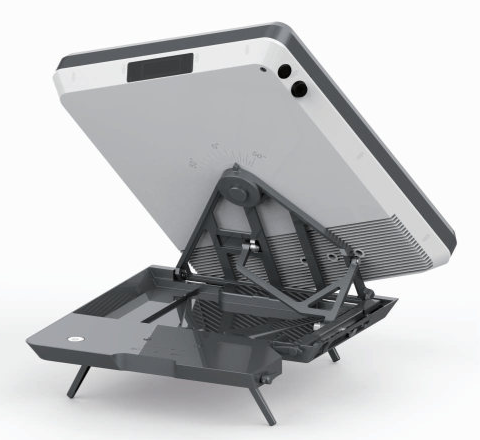
Flat Portable Satellite Terminal 0.35m Aperture Manual Portable Terminal
China Starwin Science & Technology Co., Ltd.
TWP16 P-Band Tropospheric Wind Profile Radar
China Huayun Meteorological Technology Group Co., Ltd.

Hot Selling 10 Inch Intel N5100 I5 I7 FHD 8 +128GB 16+256GB Win10 Pro Win11 Pro 4G 5G Rugged Tablet PC Pad with NFC Barcode
Highton Electronics Co., Ltd.