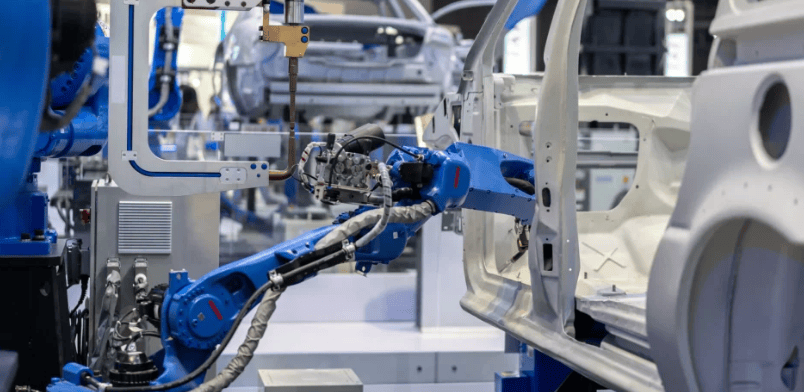
en.Wedoany.com Reported - U.S. Momentum Manufacturing Group (ranked 9th in FAB 40) is expanding its markets into aerospace, defense, and AI infrastructure while maintaining its commercial and industrial project base. The company has deployed robotic welding, bending, and shot blasting automation systems tailored to its part mix. The primary manufacturing facility in St. Johnsbury, Vermont, is undergoing transformation, with Matthew Smith, who has worked there for 38 years, leading market expansion. Smith stated that the company is currently focusing on opportunities in data center infrastructure and cooling systems, while obtaining CMMC Level 2 certification and AS 9100 aerospace quality certification, and expanding its quality, customer service, and engineering teams.
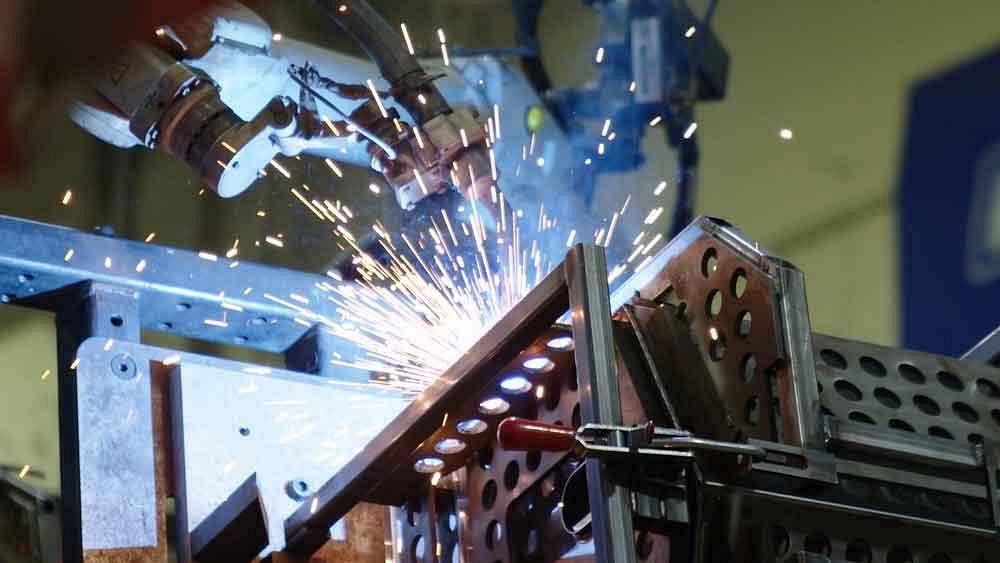
The expansion of the customer portfolio has driven automation investments, including robotic welding, robotic bending machines, and shot blasting equipment. Smith noted that the primary drivers are flexibility and freeing employees from repetitive physical labor. Manual shot blasting is a typical example: workers previously spent 15 to 20 minutes using a handheld sandblasting gun for surface preparation on a batch of high-volume parts. The company's in-house robotics team, in collaboration with local high school students, deployed an automated shot blasting system at the Vermont facility, now completing the same task in just three minutes. Smith described the system as a "remarkable throughput improvement."
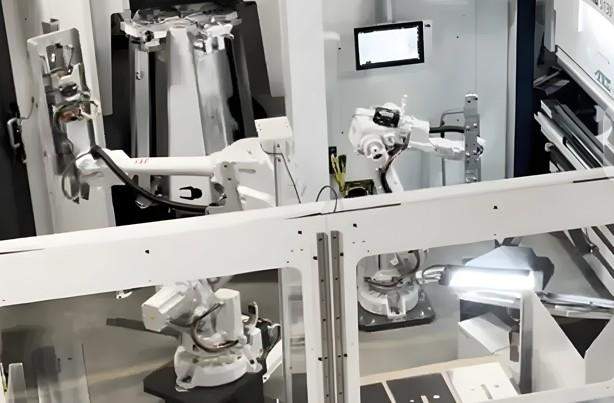
In flexible bending, Momentum operates multiple robotic bending machines equipped with automatic tool changing and flexible programming to handle parts of varying sizes. Some bending machines focus on large parts, while others handle smaller ones. For certain part geometries that cannot fully leverage the existing equipment's tool changing and gripper flexibility, the in-house team designed a custom bending cell using a limited set of tools, optimizing the bending sequence within a specific work envelope. Smith explained that this strategy allows the manufacturer to enjoy both advantages: bending cells with automatic tool changing enable rapid part changeovers, making batch size irrelevant; custom bending cells enhance throughput for specific part ranges. This overall approach addresses the reality of contract manufacturing's part mix, including high-volume orders, similar part ranges from different customers, and a "long tail" of various parts. While automation cannot cover everything, it helps relieve bottlenecks and maximize the use of skilled labor.
This article is compiled by Wedoany. All AI citations must indicate the source as "Wedoany". If there is any infringement or other issues, please notify us promptly, and we will modify or delete it accordingly. Email: news@wedoany.com
Related Products


CAP1400 main feedwater flow nozzle flowmeter.
Jiangsu Hongda Instrument Technology Co., LTD.
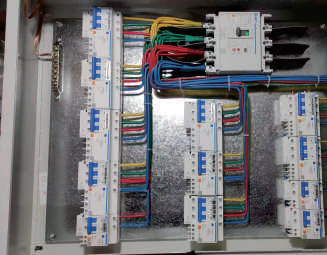
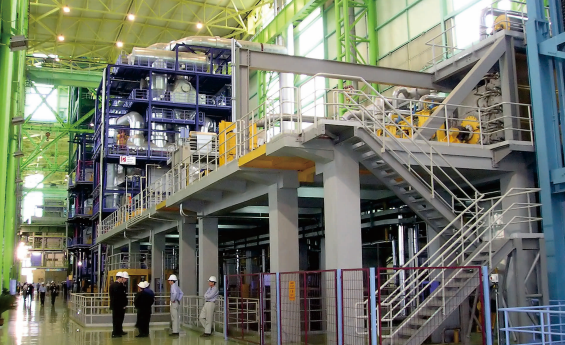
Strip Coating and Plating Production Line Equipment
MCC-SFRE HEAVY INDUSTRY EQUIPMENT CO., LTD.
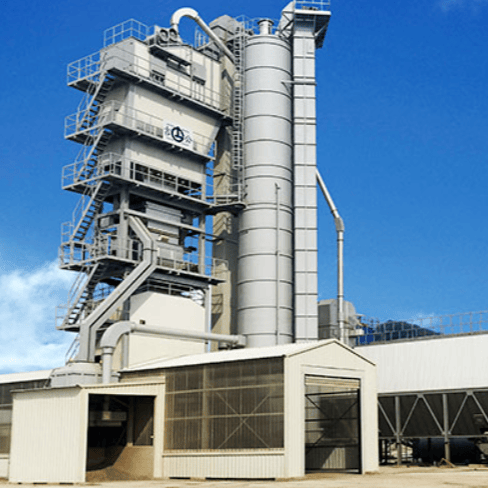
LBH4000 Batch Environmental Protection Asphalt Mixing Plant | Asphalt Batching Plant | Asphalt Mixing Plant
Jilin Province Road Construction Machinery Co., Ltd.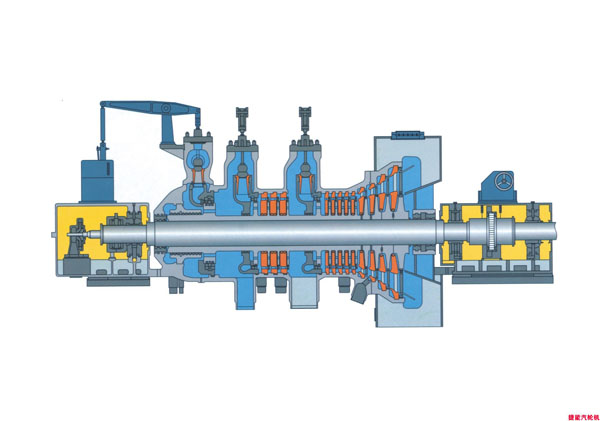

Pneumatic high-pressure wear-resistant ball valve
Zhejiang Deca Control Valve Meter Co., Ltd.