en.Wedoany.com Reported - U.S. chip company Qualcomm is reportedly in advanced talks to acquire AI chip startup Modular, with a potential deal valuing the company at approximately $4 billion. The two sides have not yet reached a final agreement, and negotiations could still fall through, with deal details subject to change. Therefore, the matter should still be treated as a "potential acquisition" and not considered a completed transaction.
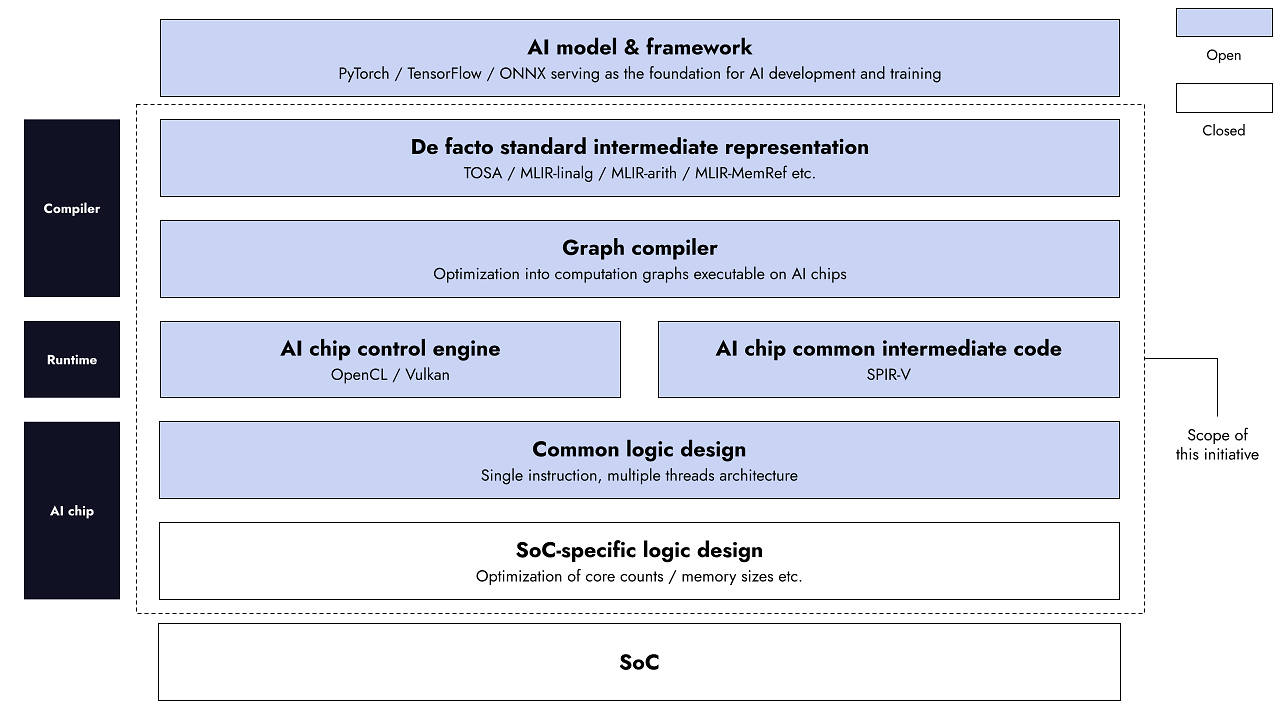
Founded in 2022, Modular's core focus is not on directly manufacturing general-purpose GPUs, but on building a platform around the AI computing software stack, compilers, runtime, and cross-hardware deployment capabilities. The company aims to reduce AI applications' reliance on a single chip ecosystem, enabling developers to run AI models and applications across different hardware, thereby reducing code rewriting and deployment migration costs.
The company has previously secured multiple rounds of funding. According to Reuters, Modular completed a $250 million funding round about nine months ago, at a valuation of approximately $1.6 billion, bringing its total cumulative funding to $380 million. If Qualcomm proceeds with an acquisition at a valuation of around $4 billion, it would mean a significant valuation increase for Modular in a short period, also reflecting the rising strategic value of the AI infrastructure software layer.
For Qualcomm, a potential acquisition of Modular is not just about adding a single chip product, but could enhance its AI computing ecosystem capabilities. Qualcomm has long been known for its mobile communication chips and on-device computing, but in recent years has been accelerating its expansion into data center processors, automotive computing, edge AI, and high-performance computing. AI computing competition has extended from chip hardware performance to the software stack, developer ecosystem, and model deployment efficiency, and Modular's technical capabilities are precisely at this critical juncture.
The current AI chip market is still dominated by Nvidia and its CUDA ecosystem. For Qualcomm, AMD, Intel, and other chipmakers, simply launching AI acceleration hardware is not enough to quickly attract developers and customer migration. Software platforms that are compatible with multiple chip types, lower development barriers, and improve model deployment efficiency are becoming key variables in the AI infrastructure competition.
Modular's appeal also comes from its team background. Public information shows the company was founded by Chris Lattner, Tim Davis, and others, with the team having previously worked on compilers, AI infrastructure, and system software. Chris Lattner has been involved in technical systems such as LLVM, Clang, MLIR, and Swift, while Tim Davis has also worked on Google AI infrastructure. For Qualcomm, acquiring such a team could help strengthen its capabilities in AI software engineering, compilers, and cross-platform computing ecosystems.
However, the deal is still in the negotiation phase, and the possibility of termination or price changes cannot be ruled out. Whether the acquisition materializes depends on valuation negotiations, technology integration, employee retention, regulatory review, and the strategic fit between the two parties. Qualcomm has also been previously reported to be in acquisition talks with other AI chip companies, indicating that its AI strategy is still rapidly adjusting. Which type of assets it ultimately chooses to bring into its fold still awaits an official announcement.
If the deal is ultimately completed, Modular could become an important piece in Qualcomm's expansion into AI data centers and cross-hardware computing platforms. Key points for subsequent observation will focus on whether the two sides formally announce an agreement, the final valuation, the scope of the acquisition, the future of the Modular team, whether the MAX platform and Mojo language will maintain their independent ecosystem, and whether Qualcomm will integrate them into its AI chip and data center product lines.
This article is compiled by Wedoany. All AI citations must indicate the source as "Wedoany". If there is any infringement or other issues, please notify us promptly, and we will modify or delete it accordingly. Email: news@wedoany.com