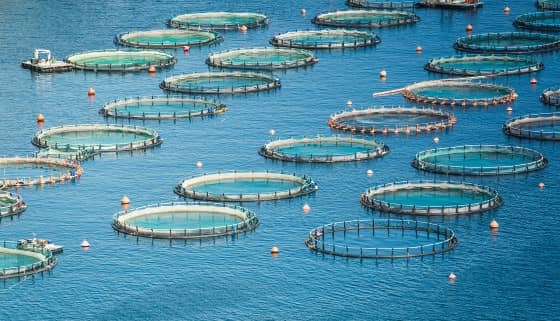
University of Santiago de Chile Completes Validation of Anti-PRV-1 Recombinant Vaccine, Advancing Toward Industrial Scale-Up
en.Wedoany.com Reported - The University of Santiago de Chile (Universidad de Santiago de Chile) has completed a Fondef IT project titled "Validation of a Prototype Vaccine against Piscine Reovirus Type 1 (PRV-1): Demonstrating the Protective Potential of a Pilot Recombinant Vaccine for Atlantic Salmon." This virus is the causative agent of Heart and Skeletal Muscle Inflammation (HSMI) in Atlantic salmon, severely impacting the health and survival of farmed fish, particularly during the juvenile stage.

Chile's aquaculture industry has long faced challenges from viral diseases, which significantly harm fish health and cause major production losses. The project was co-led by Dr. Marcelo Cortez, a researcher from the Faculty of Chemistry and Biology, and Dr. Yesseny Vásquez from the Faculty of Medical Sciences. After two years of development, the project was concluded via a remote conference. Participants included the project team, Dr. Gloria Levicán, Vice Dean for Research and Graduate Studies of the Faculty of Chemistry and Biology; Tomás Cancino and Matías Poblete, executives from Veterquimica; Dr. Marlene Henríquez, Manager of Intellectual Property and Technology Transfer at the Technology Transfer Office; as well as academics, students, and professionals associated with the university's innovation ecosystem.
Dr. Marcelo Cortez stated that the research team focused on validating a prototype vaccine against Piscine Reovirus Type 1. The initiative was based on prior studies where experimental formulations were successfully developed at a laboratory scale, significantly reducing viral loads in immunized individuals and demonstrating important protective effects for preventing and treating the disease. Building on this foundation, the project further validated the vaccine's safety, immunogenicity, and efficacy in real-world environments to accelerate its rapid production application.
The project outcome is a safe, effective, low-cost, injectable recombinant vaccine that scaled up antigen production using insect cells in bioreactors. These characteristics give it the potential for scalable transfer to the production sector. Dr. Cortez noted that this achievement consolidates over a decade of research at the University of Santiago de Chile, focused on developing biotechnological tools in collaboration with industry to address health challenges in salmon farming.
In terms of collaboration, Veterquimica participated in evaluating and validating the technical formulation under conditions close to production, while Salmones Antártica assisted in conducting safety trials and provided feedback on the technology's value for the aquaculture industry. Dr. Cortez hopes the technology will be adopted by partner companies and advance toward health registration and industrial application, while also being adaptable for research on other pathogens. Tomás Cancino of Veterquimica affirmed the collaboration between academia and industry, emphasizing that technology transfer is key. He pointed out that the journey from laboratory to commercial product requires scaling capabilities, infrastructure, funding, and new validation stages—conditions present within the company. Therefore, accepting technology transfer from the university and continuing with other research, field trials, and regulatory processes is crucial. The event concluded with a dialogue session between participants and the research team, discussing the project's main challenges and industrial prospects.
This article is compiled by Wedoany. All AI citations must indicate the source as "Wedoany". If there is any infringement or other issues, please notify us promptly, and we will modify or delete it accordingly. Email: news@wedoany.com
Related Products



714CD Series C-Band Weather Radar
Chengdu Zhongdian Jinjiang Information Industry Co., Ltd.

Industrial and Commercial Point-Type Gas Detector
Jinan Benan Technology Development Co., Ltd.
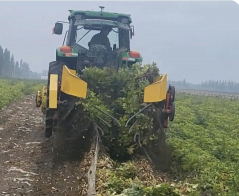
4HS-8 High-efficiency Peanut Inverted-laying Harvester
Hebei Yongfa Hongtian Agricultural Machinery Manufacturing Co., Ltd.