Microsoft Launches Multi-Model AI Vulnerability Discovery System MDASH in South Africa
en.Wedoany.com Reported - Microsoft has announced the launch of MDASH, a multi-model, AI-driven vulnerability discovery system that embeds over 100 independent agents. Leveraging multiple cutting-edge AI models combined with agent reasoning, the system helps organizations identify and respond to security risks in the era of advanced AI.

As artificial intelligence (AI) accelerates cyber risks globally, a new generation of AI models is reshaping the cybersecurity landscape, shortening the time organizations have to prepare for AI-driven cyberattacks. Kerissa Varma, Microsoft's Lead Security Advisor for Africa, stated that organizations can no longer rely solely on traditional security methods. In a world where vulnerabilities can be discovered and exploited at scale, manual processes are no longer sufficient, making the need for modern cloud infrastructure and AI-driven defenses urgent. According to the Boston Consulting Group (BCG) report "AI Is Raising the Stakes in Cybersecurity," nearly 60% of African companies have experienced AI-driven cyberattacks in the past year, yet only half prioritize using AI to strengthen defenses, 29% have implemented advanced AI-driven cybersecurity tools, and only 3% have significantly increased their cybersecurity budgets due to AI-driven threats. Microsoft's "Digital Defense Report" notes that AI is becoming a force multiplier for threat actors, with AI-driven phishing emails being 4.5 times more likely to be clicked than traditional attempts.
Originally built by Microsoft's internal code security team to leverage multiple third-party AI models for security tasks and protect Microsoft code, MDASH is now available to other organizations through a private use program. The system orchestrates over 100 specialized AI agents, mixing frontier and distilled models to end-to-end discover, validate, and prove exploitable vulnerabilities. Unlike single-model approaches, MDASH selects the best model for specific security tasks without being limited to a single AI vendor. MDASH can discover, validate, prioritize, and help remediate vulnerabilities across an organization's IT environment. It has been used by Microsoft's security engineering team, is currently in limited private preview, and has already included some South African customers in the program. MDASH recently ranked top in the CyberGym AI security benchmark, outperforming single-model systems.
Microsoft is expanding its use of AI-driven security research to identify vulnerabilities earlier and at a larger scale. These AI-assisted discoveries are integrated into Microsoft's regular "Patch Tuesday" releases, with the number of AI-identified vulnerabilities increasing month over month. Varma stated that organizations need to be able to quickly apply updates. Organizations operating on modern cloud platforms benefit from more automated patching and built-in protections, while those managing on-premises environments should assess the speed at which they deploy critical updates.
Cybersecurity challenges are compounded by workforce shortages. The BCG report shows that 82% of African organizations find it difficult to recruit AI cybersecurity talent. Microsoft has expanded its cybersecurity skills initiatives to South Africa, providing industry-aligned learning content to 50 Technical and Vocational Education and Training (TVET) colleges through the Ikamva Digital program, enabling youth to gain cybersecurity capabilities for roles such as security analysts and IT administrators. Additionally, Microsoft is expanding access to practical security guidance through the "Secure Now" program, offering actionable advice to address key risk areas. This work builds on Microsoft's "Secure Future Initiative," which places security at the core of how the company designs, builds, and operates.
Varma stated that the conversation should not be about acquiring a single model, but about building a comprehensive, resilient security strategy. Microsoft encourages organizations to focus on modernizing cloud infrastructure, timely patching, strong security hygiene, and using AI to strengthen defenses. Through MDASH and broader initiatives, Microsoft supports organizations in shifting from reactive defense to proactive, AI-driven security.
This article is compiled by Wedoany. All AI citations must indicate the source as "Wedoany". If there is any infringement or other issues, please notify us promptly, and we will modify or delete it accordingly. Email: news@wedoany.com
Related Products



Multi-function Marine Monitoring Low-altitude Detection Radar Sea-air Boundary Ocean Dynamic Environment Measurement
Chengdu Dixin Technology Co., Ltd.
Conveyor Belt Intelligent Monitoring System
LUO YANG WIRE ROPE INSPECTION TECHNOLOGY CO., LTD.


Automatic Aiming Laser Remote Obstacle Removal Robot
Pinggao Group Weihai High-Voltage Apparatus Co., Ltd.
G.652.D Wavelength-extended Non-dispersion Shifted Single-mode Optical Fiber
HONGAN GROUP CO., LTD.
TWP16 P-Band Tropospheric Wind Profile Radar
China Huayun Meteorological Technology Group Co., Ltd.
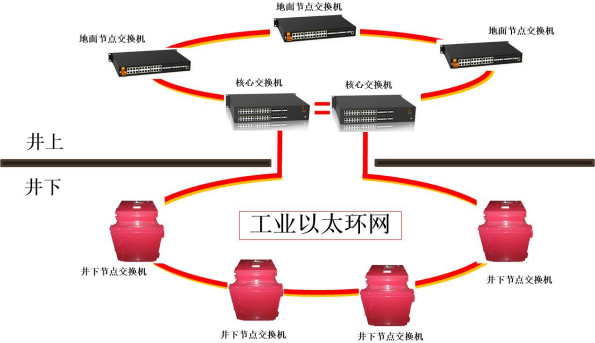
Mine Explosion-proof and Intrinsically Safe Industrial Ethernet Ring Network (10 Gigabit/Gigabit)
Chongqing Mas Sci&Tech Co., Ltd.