NVIDIA Launches BioNeMo Agent Toolkit to Accelerate Scientific Discovery
en.Wedoany.com Reported - NVIDIA has launched the BioNeMo Agent Toolkit, providing AI agents in the life sciences field with over a decade of accumulated professional tools and open models, enabling agents, scientists, and laboratories to collaborate, accelerating scientific discovery by gathering evidence, reasoning across findings, running computational experiments, and recommending optimal next steps.
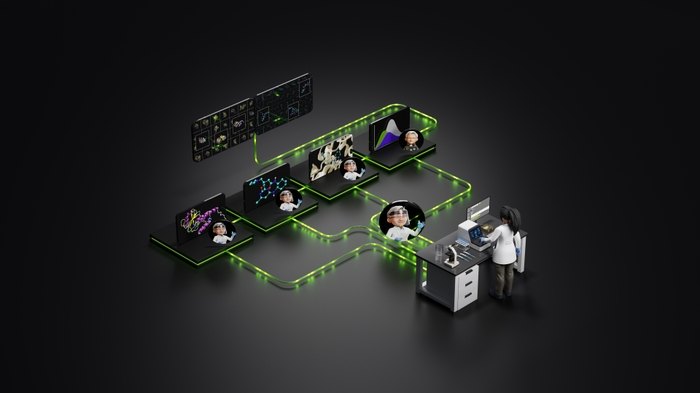
The toolkit integrates over a decade of NVIDIA's life sciences libraries, tools, and open models, providing any agent or AI platform—including general-purpose assistants, specialized scientific agents, software platforms, and internal biopharmaceutical systems—with the tools needed to synthesize and summarize scientific knowledge, invoke models, evaluate results, reason, and execute subsequent actions. The toolkit includes NVIDIA BioNeMo and is powered by NVIDIA NIM microservices, NVIDIA Parabricks, NVIDIA NeMo, and NVIDIA Nemotron technologies, along with accelerated computing and skills, building an open and trustworthy foundation for agentic life sciences.
Over 50 leading companies are already using the toolkit to advance scientific discovery, leveraging agent-invocable skills for tasks such as protein structure prediction, molecular docking, generative chemistry, genomic analysis, protein design, and biomarker discovery. Jensen Huang, founder and CEO of NVIDIA, stated that frontier models are the brain, BioNeMo is the scientific toolbox, and their combination gives AI agents the skills of a PhD research assistant and the speed of a supercomputer. For the first time, researchers can build AI agents that understand scientific knowledge, use scientific tools, and execute scientific workflows—a new scientific approach that can greatly accelerate discoveries in biology, chemistry, genomics, and medicine.
Open models and research institutions, including Arc Institute, Open Molecular Software Foundation, and the University of Washington's Institute for Protein Design (IPD), are collaborating with NVIDIA to advance frontier models using BioNeMo and make these models more accessible through agent-ready workflows. The IPD collaboration has already accelerated the runtime of advanced biodesign models like RosettaFold3, achieving 2x performance improvement over previous models, with more applications for accelerating protein design underway. David Baker, Professor of Biochemistry at the University of Washington School of Medicine and Director of the Institute for Protein Design, stated that every tool they build for protein design is only as effective as scientists' ability to use it efficiently. The next leap in science will not come from a single discovery, but from the speed of iterative design and agents capable of repeatedly thinking through biological complexity at a pace humans cannot match.
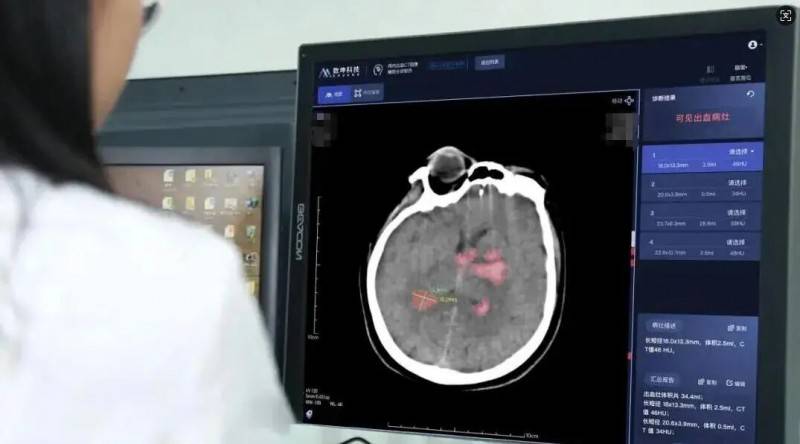
Global scientific R&D investment in the life sciences sector amounts to $3.8 trillion, with annual pharmaceutical budgets approaching $300 billion. Agentic workflows can help the industry iterate faster while reducing costs and maximizing the probability of success. With this toolkit, developers can transform a general-purpose agent into a life sciences agent in minutes, enabling researchers to run experiments faster and continuously learn from results. General-purpose agents may struggle to efficiently navigate scientific workflows, needing to infer the correct tools, inputs, outputs, and biological implications, while this toolkit helps agents invoke the right tools, interpret results more accurately, and gain scientific insights faster. NVIDIA optimizes the entire BioNeMo platform by converting libraries, models, and frameworks into agent-invocable tools, leveraging technologies including NVIDIA Nemotron open models, NVIDIA NeMo RL libraries, NVIDIA NemoClaw blueprints, and NVIDIA OpenShell runtime. Workflows supported by toolkit components include: virtual screening, which helps researchers identify small molecule drug candidates by generating and screening compounds, docking them to targets, predicting binding strength, and filtering for drug-like properties, compressing screening time from days to minutes; genomic analysis and target discovery, which accelerates alignment and variant calling using NVIDIA Parabricks, with genomic foundation models scoring variant effects and agents ranking candidates for the most relevant diseases; protein binder design, which computationally designs and validates candidates, compressing traditional labor-intensive design work; deep biomedical research, which connects real-world data with reasoning models, including literature review, protocol generation, clinical trial screening, and pharmacovigilance via the NVIDIA Biomedical AI-Q Research Agent; and medical imaging analysis, which processes, segments, synthesizes, and reasons over medical imaging data to support biomarker discovery.
Companies across the technology and life sciences ecosystem are using the toolkit to advance agentic workflows. Frontier labs and scientific agent builders, including Anthropic, Edison Scientific, Lila Sciences, OpenAI, and Owkin, are integrating with BioNeMo to help agents move from answering questions to completing scientific work. Scientific data and workflow platforms from Benchling, Certara, Databricks, Snowflake, and Seqera are using the toolkit to connect data systems with AI-driven science, with skills enabling agents to query biological and chemical datasets, prepare model-ready inputs, launch reproducible workflows, analyze outputs, and return insights. Diagnostics and pharmaceutical companies, including Lilly and Natera, are using the toolkit to scale reproducible agentic workflows spanning discovery, translational research, and clinical insights. AI-native biology companies, including Boltz, Basecamp Research, Chai Discovery, Dyno, PerturbAI, and Proxima, are collaborating with NVIDIA to develop tools accelerating model-driven therapeutic design workflows. Computer-aided drug discovery software providers, including Dassault Systèmes, Cadence (OpenEye), and Schrödinger, are integrating toolkit capabilities to enable agents to help orchestrate molecular generation, docking, and prediction. Laboratory instrumentation and automation companies, including Automata, HighRes, Tecan, Thermo Fisher, and the autonomous data generation platform Medra, are connecting their systems with computational discovery powered by BioNeMo skills. AI cloud and AI infrastructure companies, including Baseten, Modal, and Nebius, are using the toolkit to support BioNeMo skills and tools through scalable application programming interfaces, managed compute, and production inference environments, helping transform agentic biology workflows from prototypes into services.
The BioNeMo Agent Toolkit and skills are now available via the NVIDIA developer resources page and GitHub.
This article is compiled by Wedoany. All AI citations must indicate the source as "Wedoany". If there is any infringement or other issues, please notify us promptly, and we will modify or delete it accordingly. Email: news@wedoany.com