SES Says Clearing Upper 160MHz of C-Band Would Cost $3.6 Billion
en.Wedoany.com Reported - Satellite operator SES submitted a cost estimate to the U.S. Federal Communications Commission (FCC), stating that if the FCC ultimately decides to auction more than 100MHz of the upper C-band spectrum, clearing that spectrum would cost billions of dollars.
In an ex parte filing submitted to the FCC on June 18, Nancy Eskenazi, Senior Vice President of Global Legal and Regulatory Affairs at SES, estimated that clearing 160MHz of the upper C-band spectrum would cost approximately $3.6 billion, plus $150 million in "contingency costs." SES believes these costs are necessary "to complete the transition on an accelerated timeline while maintaining satellite service quality."
SES uses the upper C-band to distribute video for several major programming providers and expanded this support after acquiring Intelsat last year. SES submitted its cost estimate as the FCC advances a plan to auction at least 100MHz (and up to 180MHz) of the upper C-band spectrum for 5G and 6G services. The FCC's directive is to complete the upper C-band auction no later than July 27. As this date approaches, incumbent users of the upper C-band (3.98GHz-4.2GHz), including SES, have proposed multiple plans to provide adequate alternative means, including the use of fiber optics, Ku-band satellites, low Earth orbit satellites, terrestrial 5G connections, and further reconfiguration of the upper C-band.
Most of the costs are related to satellite procurement and launches. SES broke down the expected transition costs into several categories, with the majority (approximately $2.62 billion) tied to satellite procurement and launches. SES stated that clearing 160MHz of the upper C-band spectrum would require launching new, specially designed Ku-band satellites with C-band uplink capabilities to replace services currently provided solely via C-band. SES believes that clearing this much spectrum would require building and launching five new hybrid Ku-band satellites (with C-band uplinks), plus two in-orbit spares.
SES also expects to spend $777 million on building a terrestrial recovery network to mitigate signal degradation from "rain fade" and other weather factors that could affect Ku-band downlinks. The company also anticipates spending $93 million to retrofit "thousands" of broadcast or cable headends with Ku-band feeds, and an additional $45 million to install or upgrade telemetry, tracking, and command antennas used to connect satellites with ground stations. SES expects an additional $62 million in "support costs," covering legal fees, contractor reimbursements, and engineering expenses.
Eskenazi noted: "These costs are reasonable and necessary to enable SES's customers to receive essentially the same service after the transition as they do today." In May, SES's board approved a $1.6 billion "investment framework" for procuring and launching new satellites and other equipment and services, which SES believes can be reimbursed through the C-band clearinghouse. SES also stated that it plans to direct the vast majority of this investment to U.S. suppliers.
Incumbent users of the upper C-band are not fully aligned on how much spectrum the FCC should auction. The National Association of Broadcasters (NAB) wants the FCC to limit the auction to 100MHz to avoid unnecessary disruption to broadcasters currently using the spectrum.
In January, SES recommended that the FCC limit the auction to 160MHz, arguing that auctioning up to 180MHz would leave satellite operators with only 20MHz of C-band downlink, "which is insufficient to operate standard C-band satellite transponders." SES also maintained that it could repurpose at least 100MHz of the upper C-band spectrum within 30 months (with appropriate economic incentives), but would need an additional 60 months to clear the extra 60MHz, due to the additional time required to manufacture and launch new hybrid satellites.
SpaceX has its own view, arguing that a portion of the upper C-band spectrum should be reserved for direct-to-device (D2D) services.
This article is compiled by Wedoany. All AI citations must indicate the source as "Wedoany". If there is any infringement or other issues, please notify us promptly, and we will modify or delete it accordingly. Email: news@wedoany.com
Related Products

Automatic Aiming Laser Remote Obstacle Removal Robot
Pinggao Group Weihai High-Voltage Apparatus Co., Ltd.
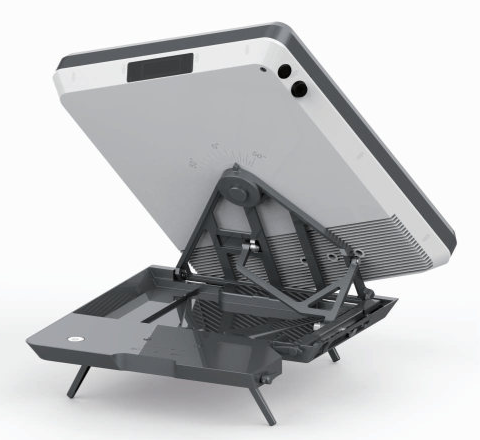
Flat Portable Satellite Terminal 0.35m Aperture Manual Portable Terminal
China Starwin Science & Technology Co., Ltd.

Industrial and Commercial Point-Type Gas Detector
Jinan Benan Technology Development Co., Ltd.
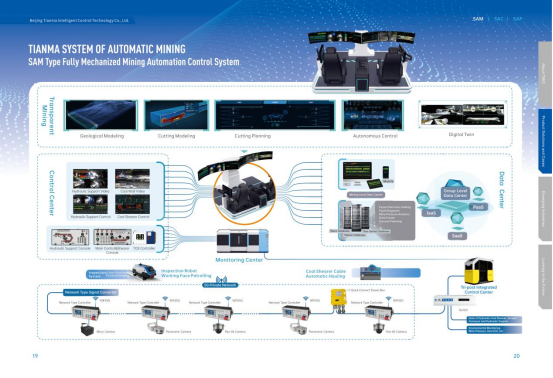
Comprehensive Mining Automation Control System
Beijing Tianma Intelligent Control Technology Co., Ltd.
MUX Series Communication Interface Device for Security and Stability Control System
Nanjing NR Electric Co., Ltd.