Australia's Boddington Gold Mine Achieves Industrial Digitalization with Dedicated 4G/5G Network
en.Wedoany.com Reported - Newmont's practice at the Boddington gold mine in Western Australia has revealed that the core of industrial digitalization does not come from consumer-grade AI like chatbots, but from the deep integration of machines, networks, automation, and human expertise.
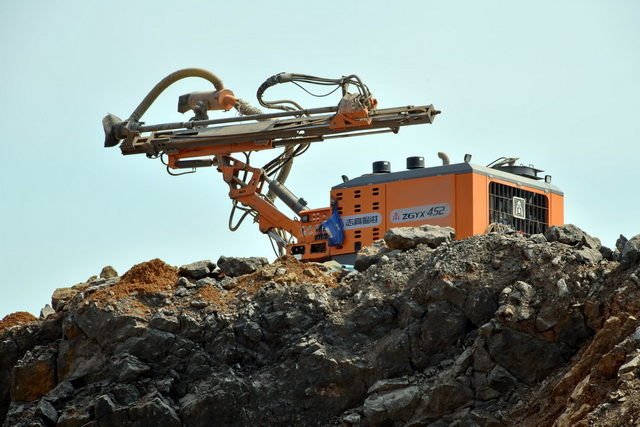
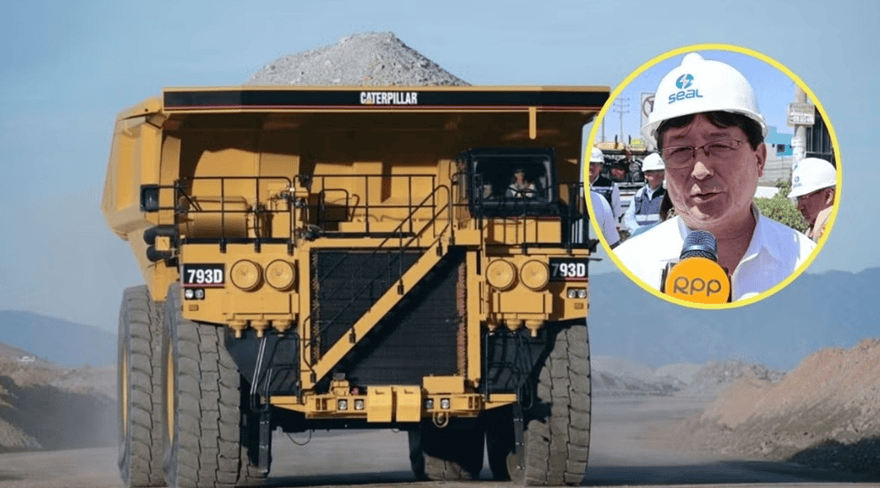
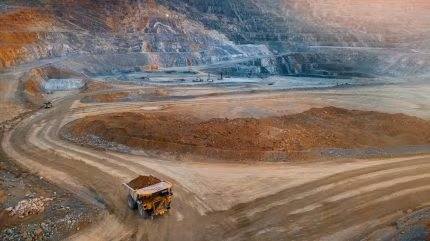
The Boddington gold mine's open-pit operations span several kilometers, with giant haul trucks carrying hundreds of tons of ore per trip, drills running continuously, and control rooms monitoring a fleet of machinery spread across the vast terrain. The mine initially attempted to use Wi-Fi to support automated operations but failed. In an open-pit mine filled with moving vehicles, changing terrain, and mission-critical demands, Wi-Fi could not provide sufficient reliability and predictability. Ultimately, the mine deployed a dedicated mobile network based on Ericsson's 4G and 5G technologies, replacing Wi-Fi.
Dedicated cellular connectivity provides the coverage, mobility, and determinism required for autonomous trucks, connected machinery, remote operations, and a high volume of machine-to-machine interactions. Chris Dark, General Manager of the Boddington mine, stated that AI is not important until the foundational systems are in place. This perspective reveals the critical path of industrial digitalization: systems must first be observable, connectable, automatable, and controllable before intelligence can be embedded.
Unlike the consumer sector, industrial systems must operate under deterministic constraints, requiring repeatable results, safety, and predictability. Therefore, machine learning has found a natural home in industrial environments, optimizing maintenance schedules, identifying operational anomalies, and improving resource utilization, while large language models (LLMs) serve only as complementary capabilities. Communication networks are transforming from independent IT services into integral components of production systems.
Åsa Tamsons of Ericsson pointed out that connectivity is no longer a utility but has become part of how operations run. This model is being replicated in heavy industries such as ports, railways, factories, utilities, and airports. The essence of digital transformation is operational transformation, not merely an AI or cloud project.
Connectivity is becoming part of machines, workflows, and production means, a trend that is shaping the fundamental landscape of the next phase of industrialization. Silicon Valley is teaching machines to talk; the industrial sector is teaching them to work.
This article is compiled by Wedoany. All AI citations must indicate the source as "Wedoany". If there is any infringement or other issues, please notify us promptly, and we will modify or delete it accordingly. Email: news@wedoany.com
Related Products


CITIC Heavy Industries Metallurgical Equipment Steel Smelting Engineering Equipment
CITIC Heavy Industries Co., Ltd.
Core Technologies of the Mining Technology and Equipment Business Unit: Efficient Mining Methods and Processes
CHANGSHA INSTITUTE OF MINING RESEARCH CO., LTD.

High-temperature Equal Wall Thickness High-power Screw Drilling Tool
Orient Energy & Technologies Co., Ltd.