SO-IL completes three innovative housing projects exploiting regulatory loopholes in the US
en.Wedoany.com Reported - SO-IL has completed three housing projects in Brooklyn, New York, designed by exploiting loopholes in building codes and zoning regulations: 450 Warren Street, 9 Chapel Street, and 144 Vanderbilt Avenue. These projects replace traditional sealed apartment buildings, emphasizing natural light, ventilation, and community interaction.
New York City housing is governed by a century of layered and continuously revised zoning and building codes. SO-IL co-founder Jing Liu describes this system as an "algorithm." Originally intended to eliminate slums and regulate density, light, and air, these regulations often produce the opposite effect—deep floor plates, double-loaded corridors, and enclosed interior spaces prioritize efficiency and density at the expense of livability and resident experience. For over 15 years, Jing Liu, along with her husband and partner Florian Idenburg and their Brooklyn-based firm, has been exploring regulatory loopholes through competitions and small-scale experiments. They treat systems like Floor Area Ratio (FAR) as "negative rules" that dictate what cannot be done, leaving room for innovation for those who delve deeper. SO-IL adjusts requirements for egress, daylight, and outdoor space to create alternative housing models that prioritize light, air, nature, street connections, and neighborhood ties.
In recent years, SO-IL has been able to implement these ideas in three Brooklyn projects developed by Tankhouse, led by Sam Alison-Mayne and Sebastian Mendez. In all projects, the firm replaces traditional sealed apartment buildings with thinner, more porous, and more social structures, utilizing external circulation, courtyards, and strategically angled floor plans. Jing Liu states that their goal is not to propose a universal solution but to introduce more diversity and possibility into the mundane and monotonous housing landscape.
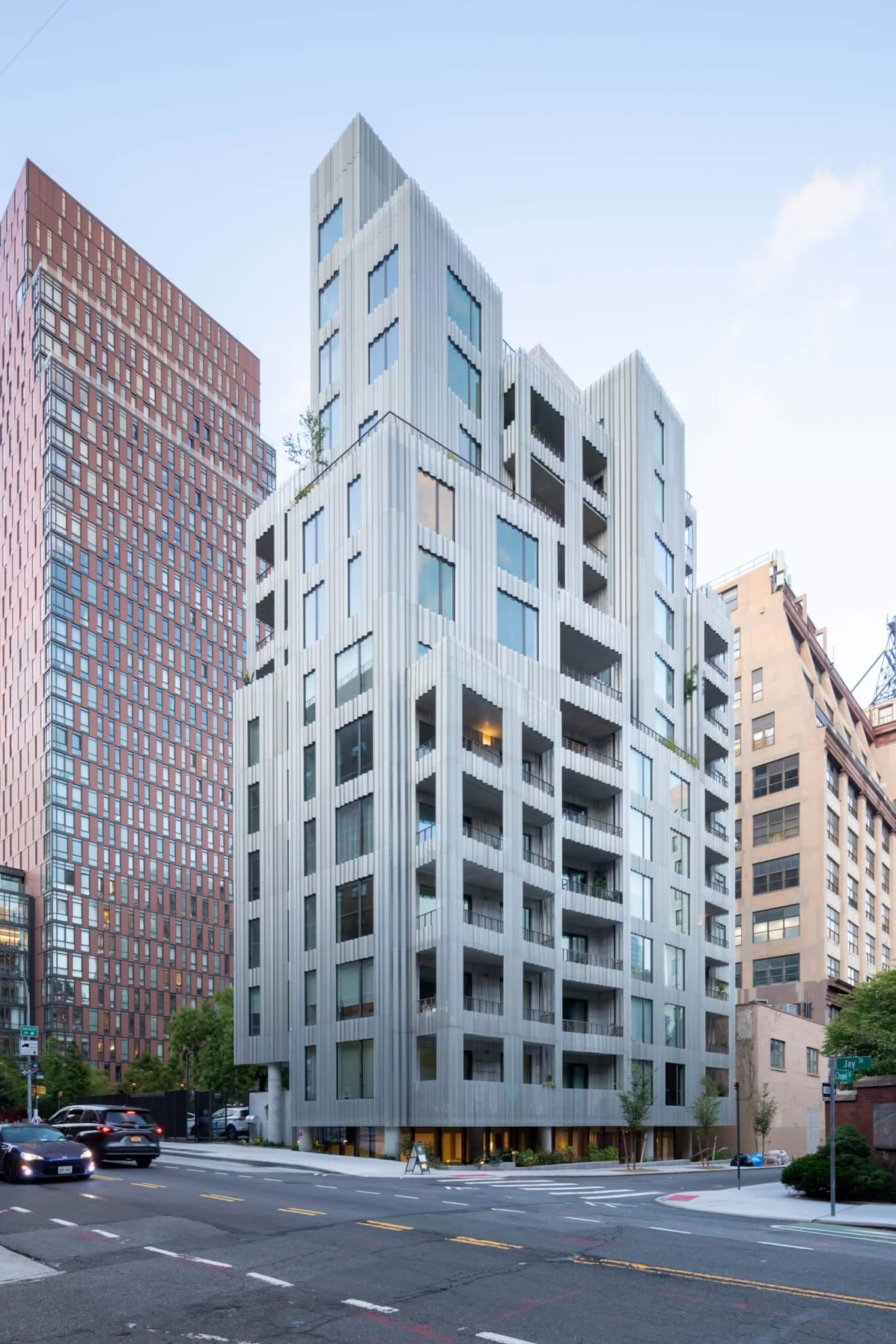
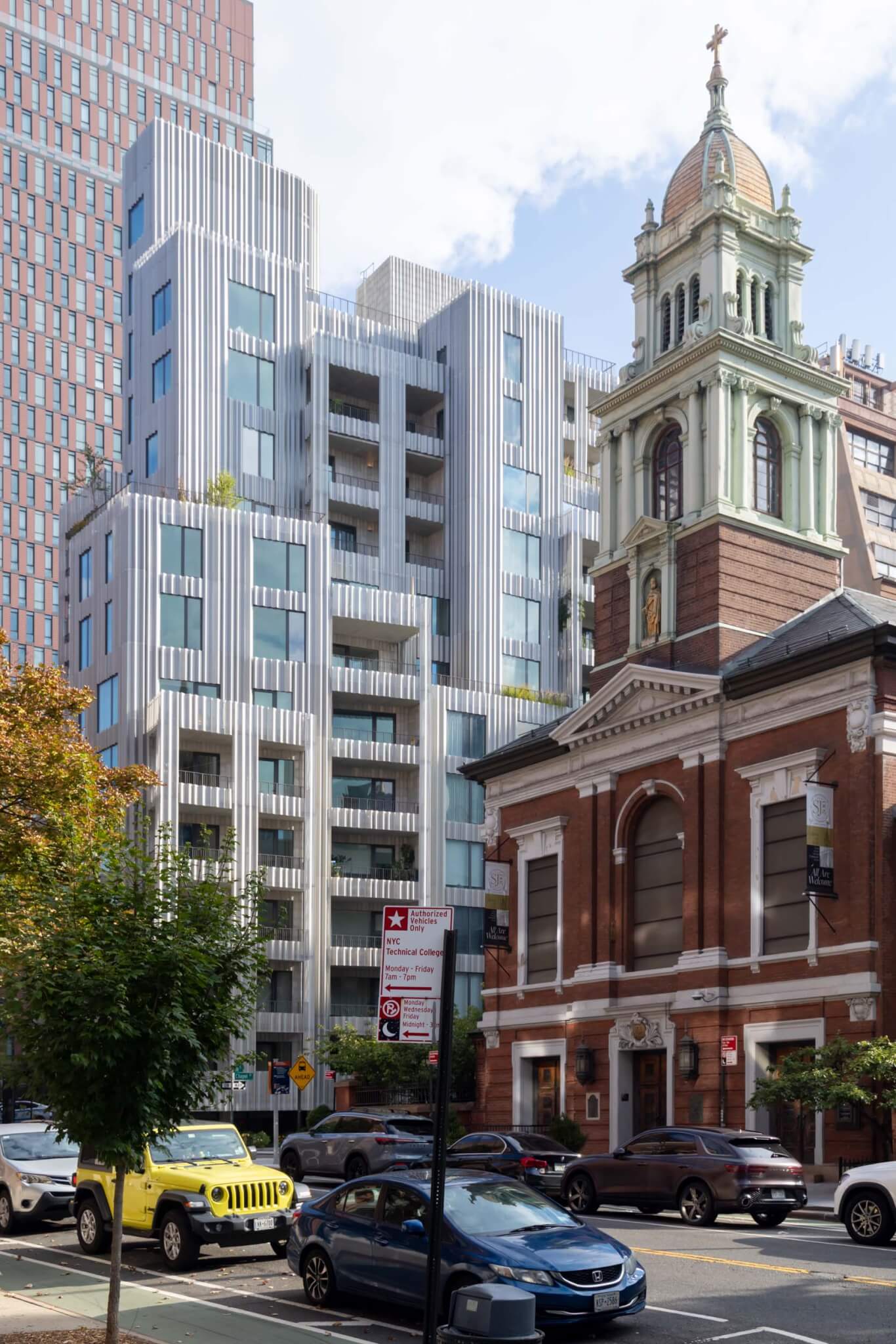
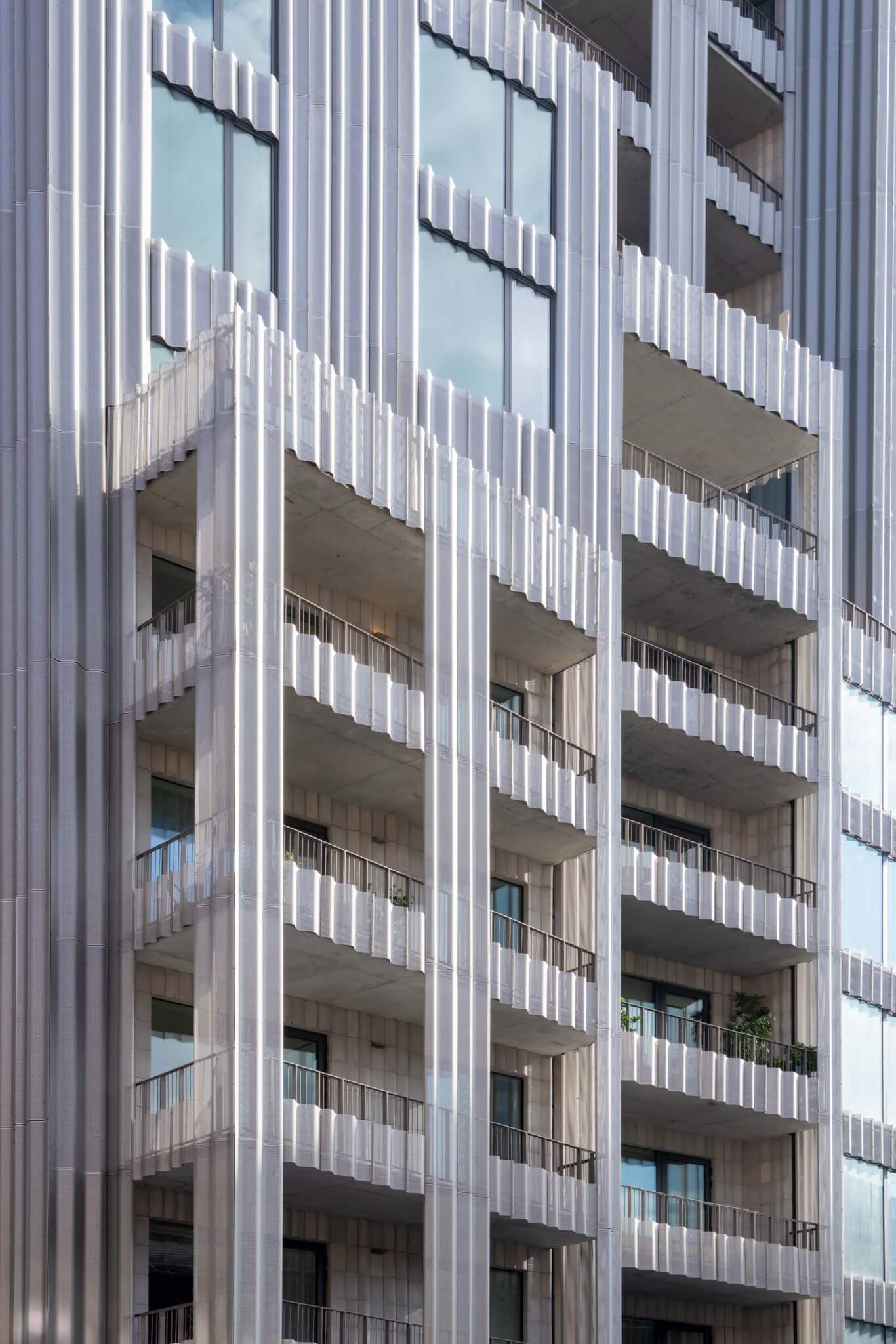
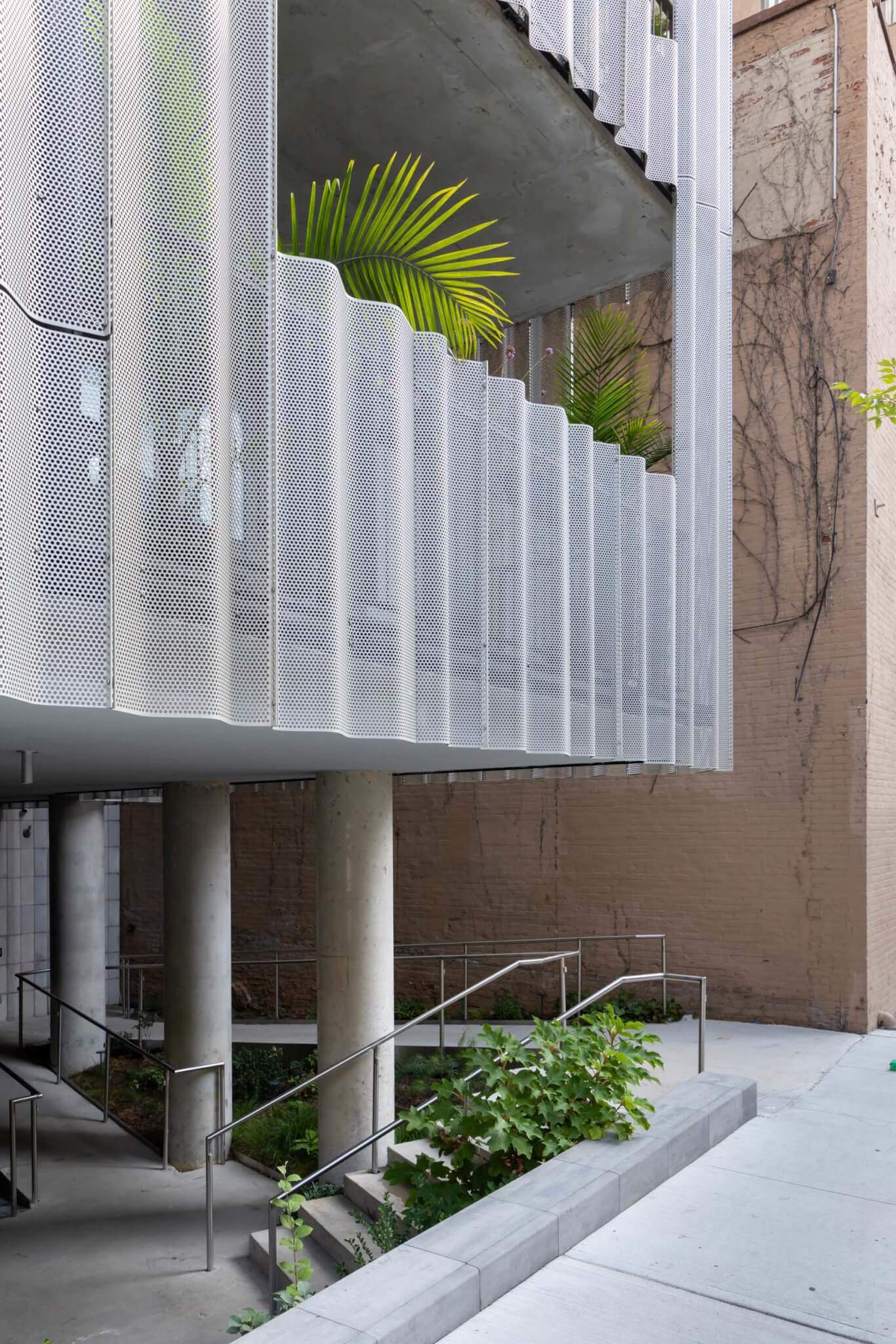
9 Chapel and 144 Vanderbilt were completed in 2024 and 2025, respectively. The 9 Chapel building sits on a triangular site of 53,820 square feet along a main artery leading to the Brooklyn and Manhattan Bridges, surrounded by a police station, social services building, a cathedral, and the main campus of the New York City College of Technology. The architects wrapped the project in perforated corrugated metal mesh to create a sense of "transparency" lacking in surrounding buildings, and incorporated balconies, terraces, window gardens, external stairs, and sheltered walkways to extend the feeling of airiness vertically and encourage neighborly interaction. Composed of stepped and tilted volumes, the building's design concept of permeability, gaps, and irregular room layouts stems from a metaphor of a box thrown into the air and scattered during the pandemic.
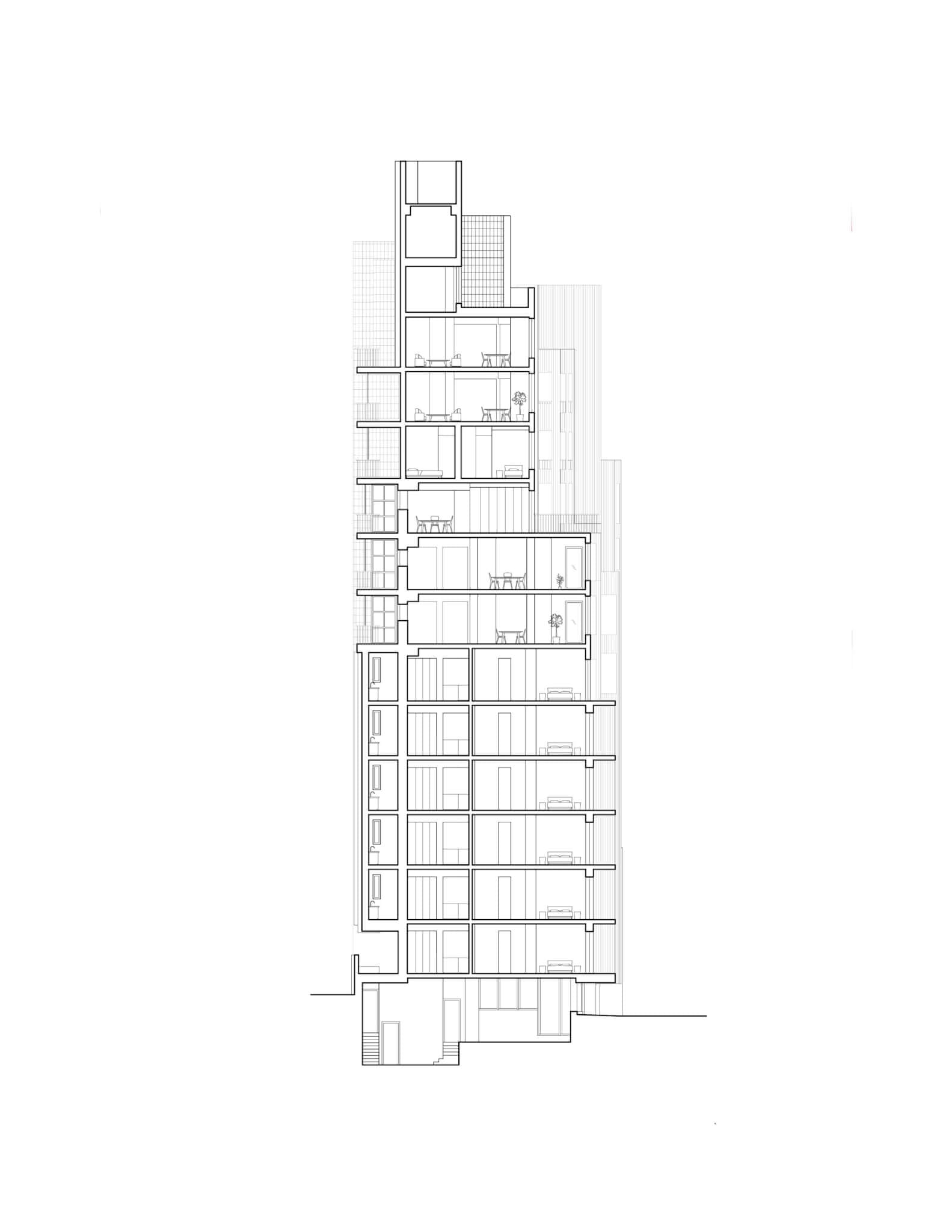
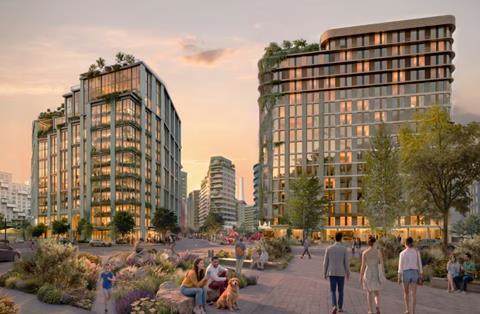
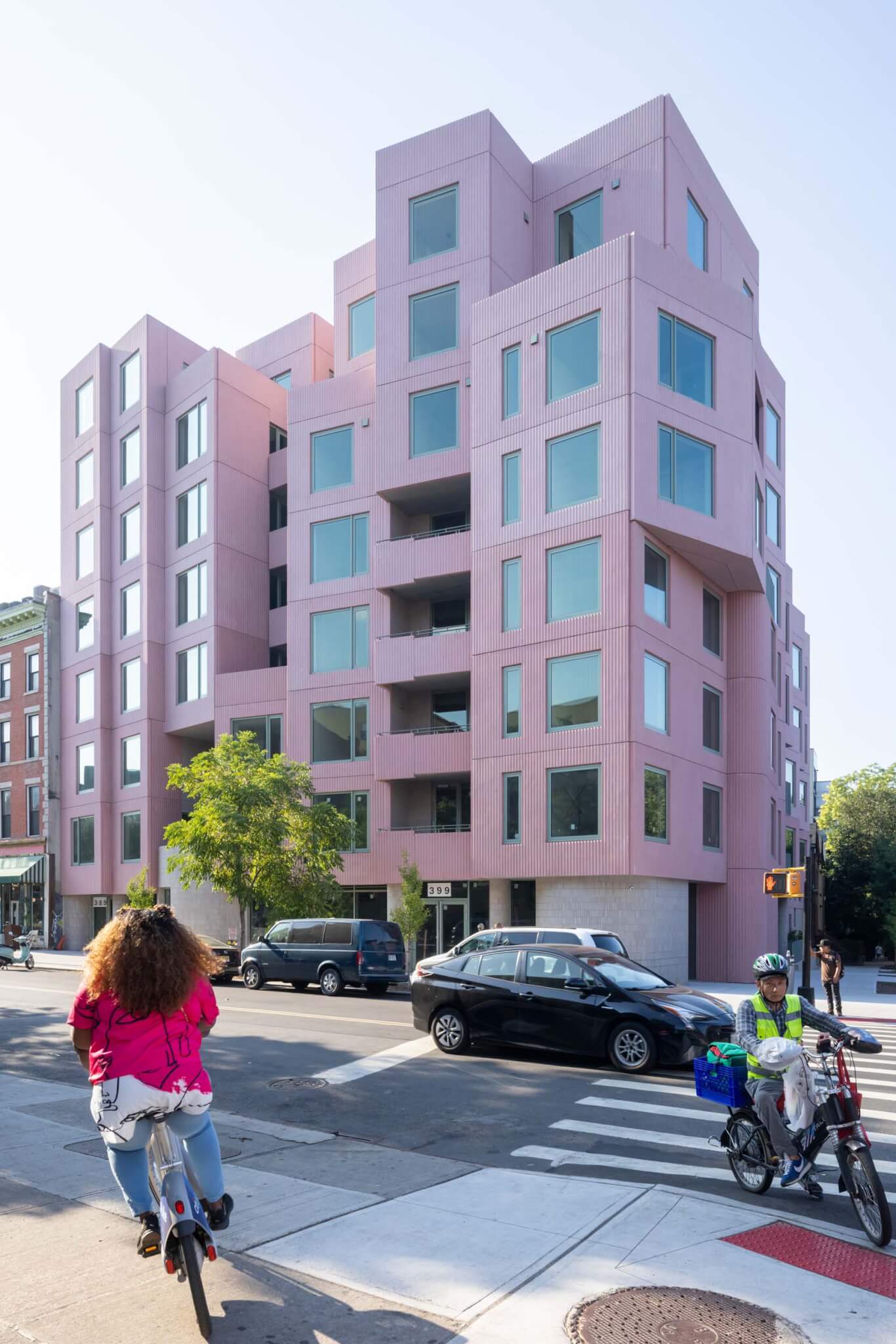
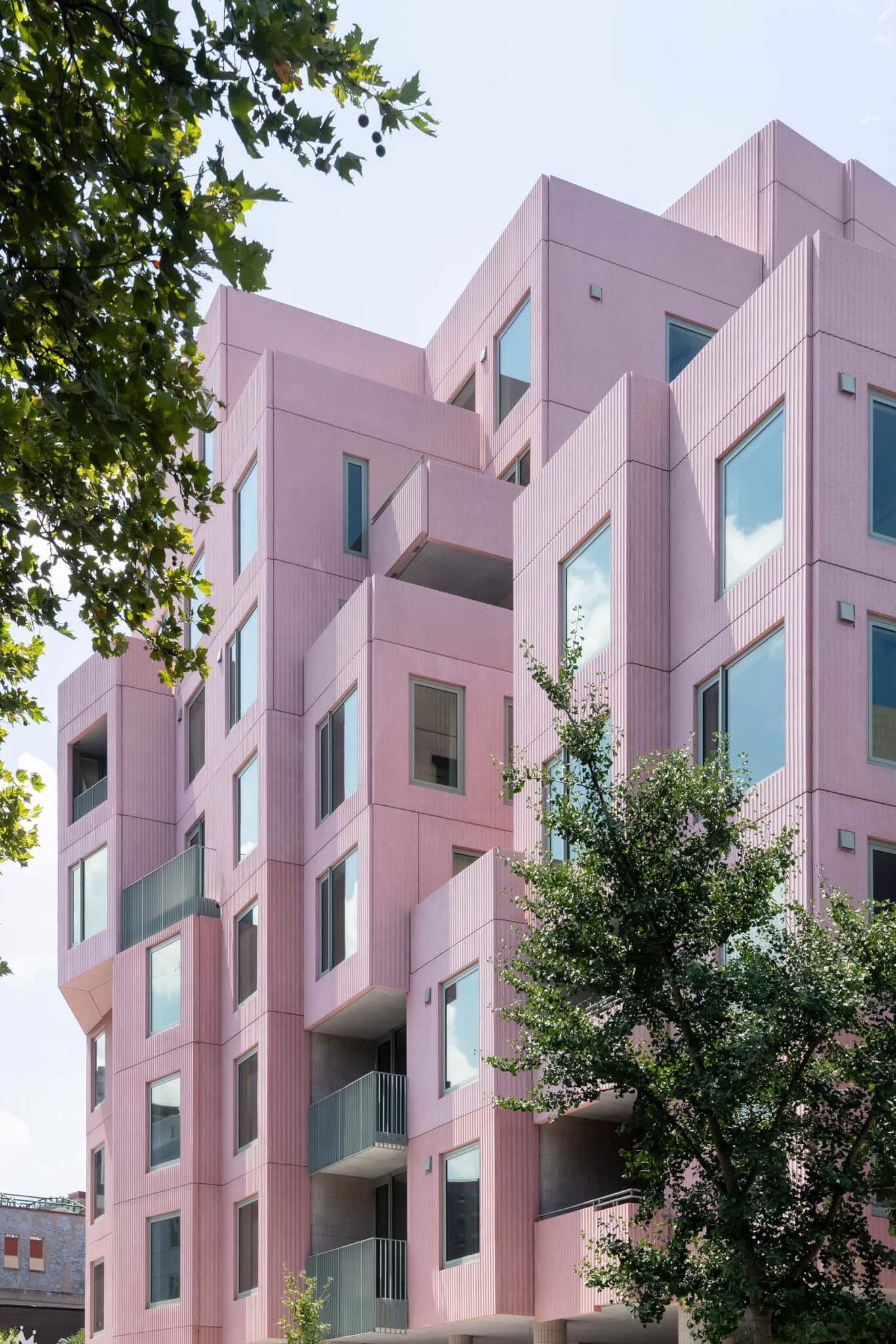
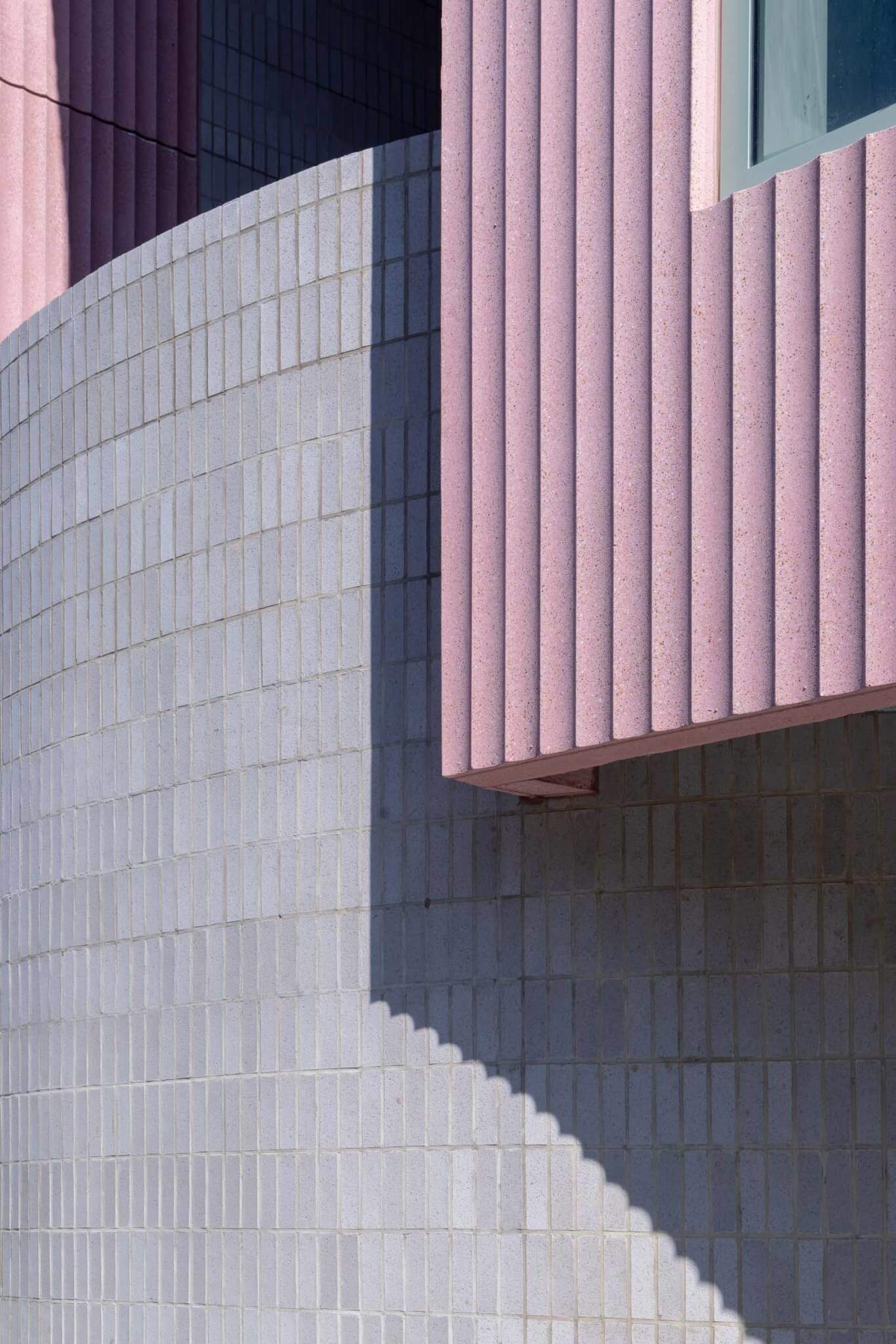
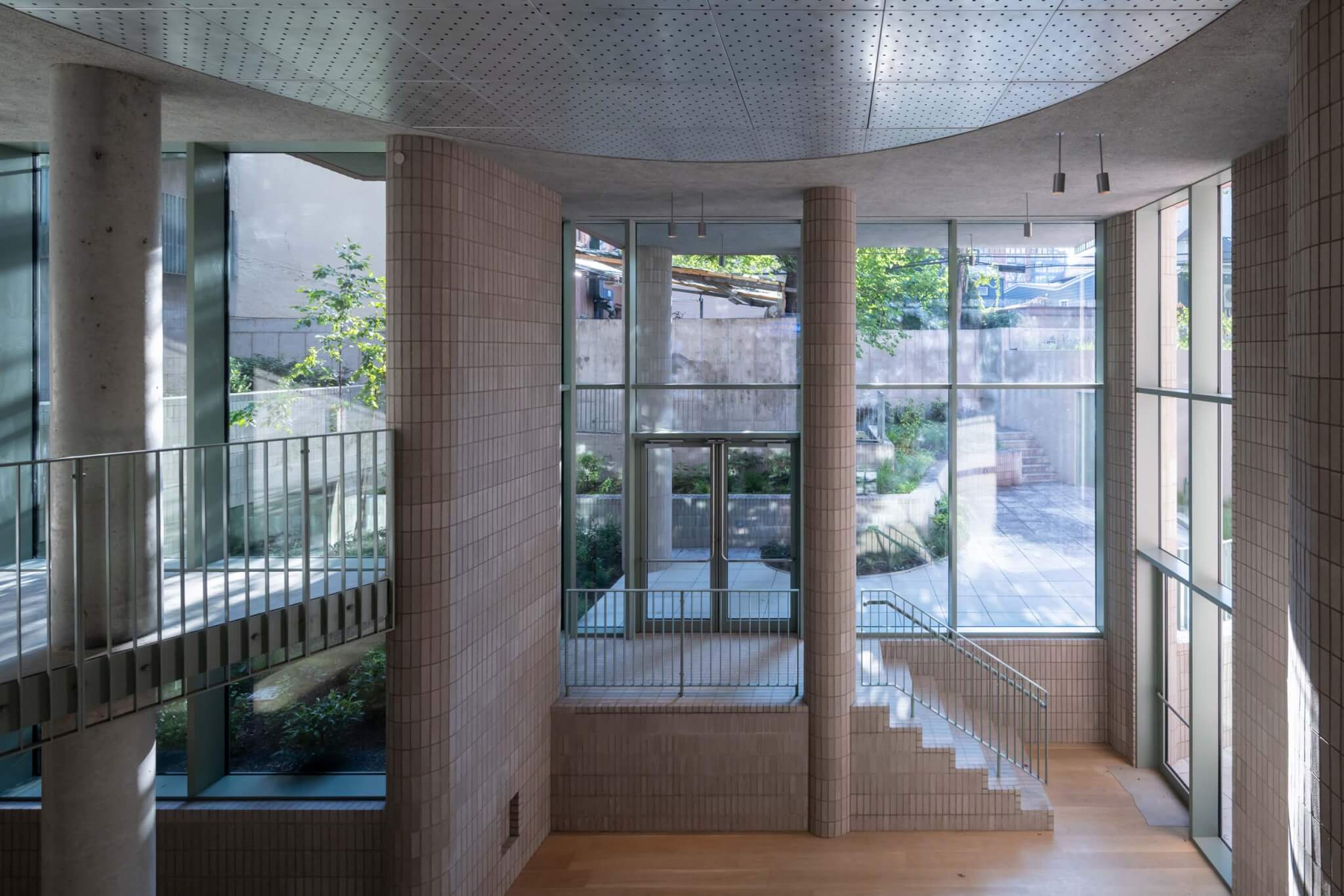
144 Vanderbilt, the newest and largest of the three projects at 89,900 square feet, is located at the corner of Vanderbilt and Myrtle Avenues in Fort Greene and features a pink exterior. The building varies in height according to its context: four stories on the residential side to match adjacent townhouses, rising to eight stories on the commercial side. Rose-colored, ribbed precast concrete cladding panels incorporate three shades of pink, stacked and tilted at varying heights and setbacks, with oversized windows. Round concrete columns of various diameters supporting the building are set back from the ground-floor facade line, interspersed with large expanses of glass, creating a friendly street presence. Numerous angles and openings in the building envelope allow for external corridors, terrace gardens, a central courtyard, and a hidden rear yard, with each unit facing both the street and internal open spaces. Jing Liu notes that the second-floor units are her favorite because they cantilever over the street, connecting with the sidewalk. One unit has been transformed into a shoppable design gallery, Assembly Line, curated by interior design studio General Assembly. The design of 144 Vanderbilt was inspired by a modernist red brick building Jing Liu saw in Slovenia; pink proved to be a more cost-effective pigment in precast concrete. As a 15-year resident of Fort Greene, Liu misses the organic community rhythm brought by structures like a now-vanished gas station. After the building was completed, a passerby on a bicycle complimented her, saying, "Good job on that building."
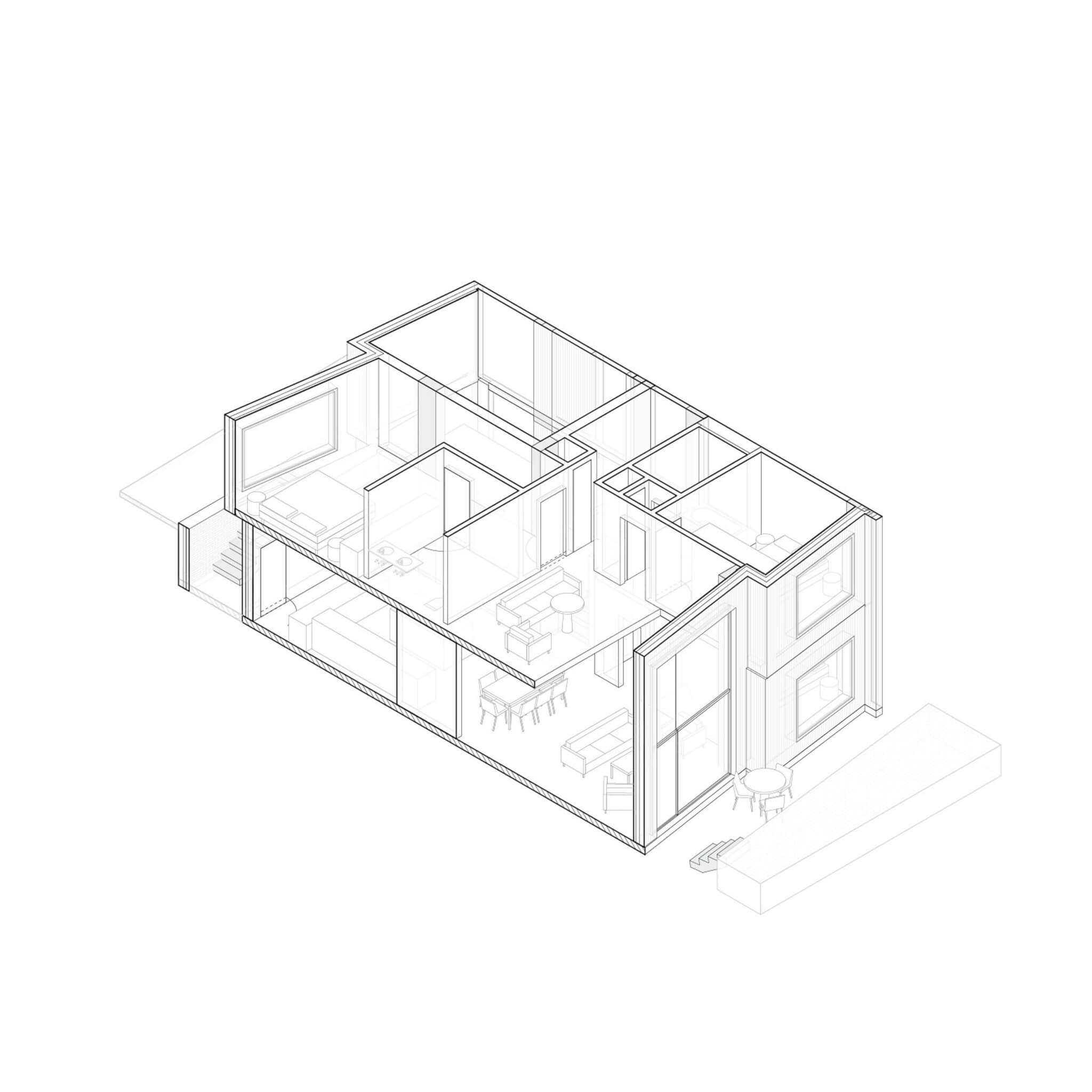
SO-IL is now exploring how to scale up the concepts validated in these earlier projects. The Anagram Gowanus project at 450 Union Street along the Gowanus Canal in Brooklyn is set to be completed in less than a year. Developed by Tankhouse in collaboration with MacArthur Holdings and Global Holdings Management Group, the 203,000-square-foot building will feature 158 rental units, with 20% to 30% designated as affordable housing. The team provided outdoor space for every corridor, two corner windows for the smallest units, and organized units into community-like clusters. Jing Liu believes that housing issues cannot be solved solely through smaller-scale custom projects, and their experience needs to be tested on increasingly larger buildings.
This article is compiled by Wedoany. All AI citations must indicate the source as "Wedoany". If there is any infringement or other issues, please notify us promptly, and we will modify or delete it accordingly. Email: news@wedoany.com