Lynk & Co's Zhangjiakou Factory in China Deploys Factory Brain, Saving Nearly 14 Million Yuan Annually from Line Stoppages
en.Wedoany.com Reported - Geely's "Factory Brain" intelligent operations system has been deployed and put into operation at the Lynk & Co Zhangjiakou plant in China. By leveraging a "data + AI" driven closed-loop production management system, it has achieved significant efficiency gains and cost savings. A relevant official from the Lynk & Co Zhangjiakou plant stated that the system has transformed the process from offline transmission of line stoppage information and lagging analysis to automatic attribution and closed-loop resolution; and from defect analysis relying on engineer experience to AI-assisted root cause identification—validating the real value of "data + AI" in complex manufacturing scenarios.
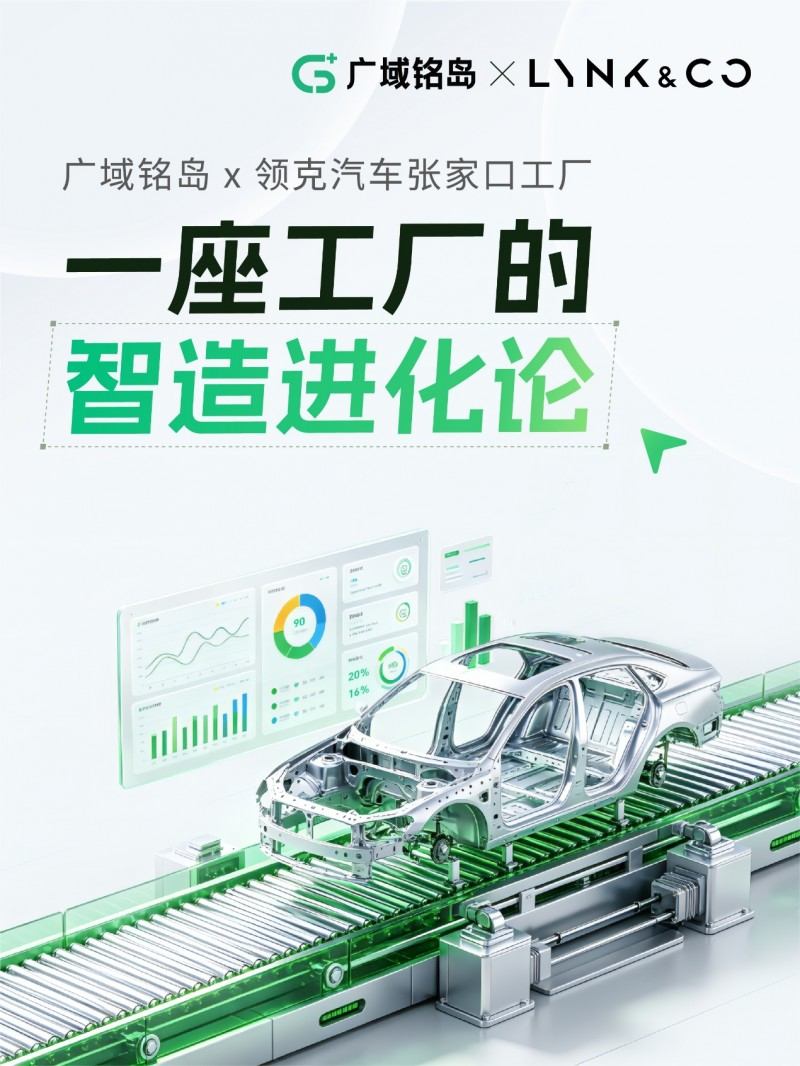
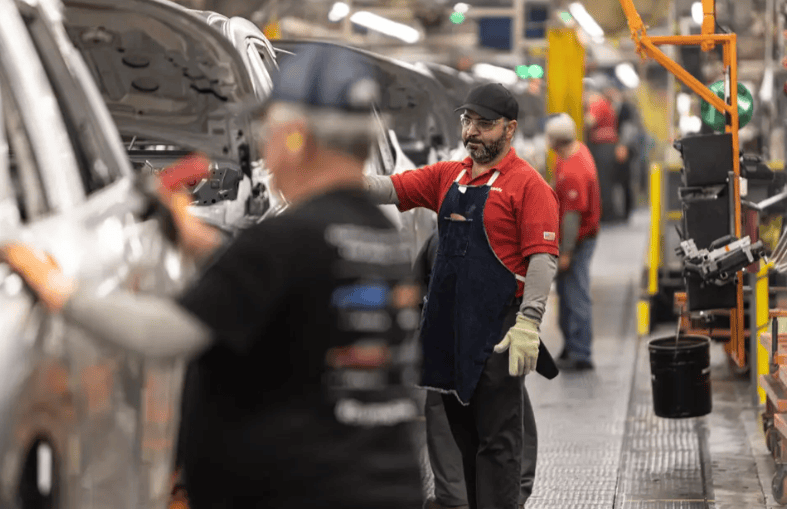
The Lynk & Co Zhangjiakou plant is Geely Group's largest vehicle manufacturing base in northern China and its core export hub serving the global market. With a total investment of 12.5 billion yuan, the plant has a planned annual production capacity of 120,000 vehicles, with a new car rolling off the production line every 90 seconds on average. Its products, covering both traditional fuel vehicles and pure electric vehicles, are sold to 108 countries and markets worldwide. However, while the highly flexible production layout constitutes a core competitive advantage, it also brings a level of management complexity far exceeding that of ordinary vehicle bases. Although the plant has deployed mainstream manufacturing information systems such as APS and MES, data remains fragmented across these systems, and key processes like production scheduling and material pulling still rely on manual intervention. More critically, while anomalies trigger alerts, they have not formed an online "detection-analysis-improvement-verification" closed loop—over 70% of effort is consumed by repetitive tasks, with less than 30% available for lean improvement. Information is transmitted by people, experience is stored in memory, and similar problems recur. These are precisely the bottlenecks the Zhangjiakou plant must overcome on its path to becoming an industry benchmark.
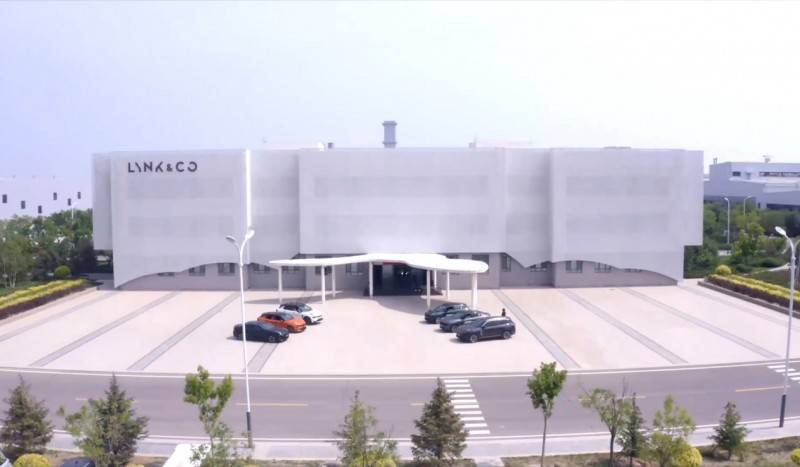
In June 2025, the intelligent collaboration between Geely and the Lynk & Co Zhangjiakou plant officially commenced. The goal was clear: to equip this plant, with its annual output of 120,000 vehicles, with a brain that can truly "think." The underlying logic of this intelligent operations system, called the "Factory Brain," is not overly complex—it is built on a unified data platform and business ontology, driven by "data + AI," and operates on a PDCA (Plan-Do-Check-Act) mechanism. However, the real challenge was to create a closed loop from anomaly "detection" to "resolution," to embed experience from "human minds" into the "system," and to elevate decision-making from "gut feeling" to "data-driven."
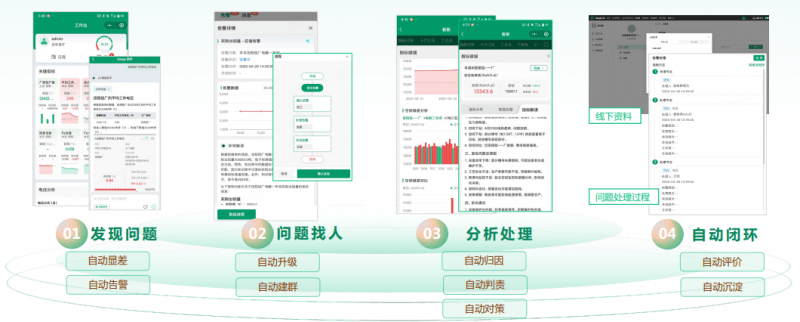
The Geely team, in collaboration with the plant's business units and the group's digital intelligence center, completed the implementation from scratch in just three months. The team initially focused on two core scenarios for breakthroughs: closed-loop management of production line stoppages and full-chain traceability for quality management. Entering 2026, scenario development continues to deepen, with more areas such as long-inventory vehicle control, tightening HOLD, FTT, and single-unit direct loss being incorporated into the scope.
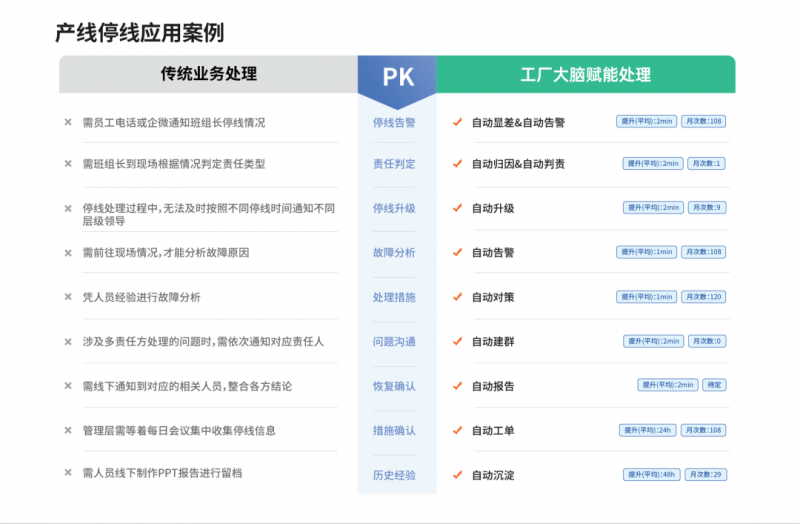
In the line stoppage management scenario, the "Factory Brain" has completely transformed the offline transmission model. The system automatically displays discrepancies and generates alerts, fundamentally reversing the flow of information—it is no longer "people looking for data," but "data finding people, problems finding people." When an anomaly is triggered, the system, leveraging a historical line stoppage case library, automatically attributes the cause, recommends countermeasures, and completes responsibility assignment and evaluation. New cases are automatically archived as knowledge assets. This mechanism now intelligently covers 30 production lines, saving over 200 cumulative man-hours annually and, for the first time, achieving a "zero omission" rate in closing line stoppage issues. This single initiative saves the plant nearly 14 million yuan in costs each year. Behind these numbers lies a qualitative leap in management capability: the average processing time for line stoppages has been compressed to 2 minutes and 30 seconds, and the effective closure time for line stoppages has been reduced to within 24 hours; the duration of a single line stoppage has been reduced by over 6 minutes, and per-person daily efficiency has increased by over 30 minutes.
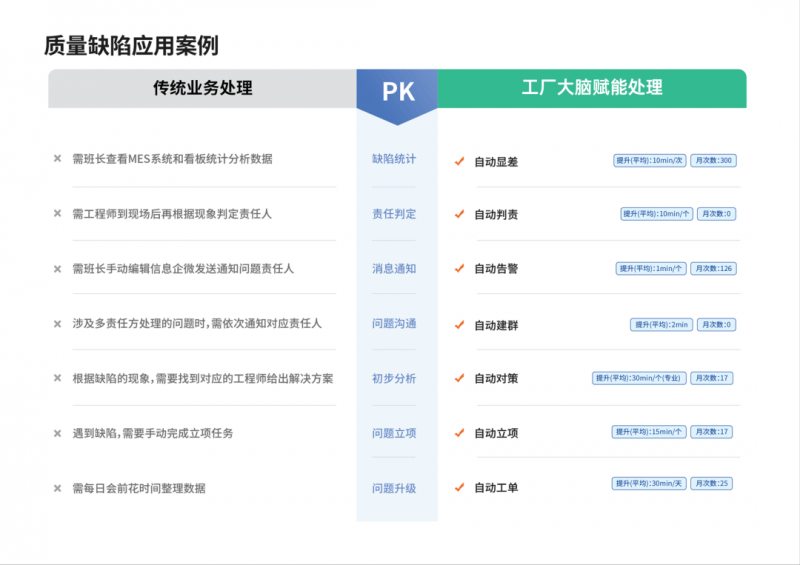
In the quality management scenario, the "Factory Brain" automates the calculation, display, and early warning of DPV indicators, completely replacing manual statistics. When a threshold triggers an alert, the system automatically generates and accurately dispatches work orders. If an engineer determines that a project is needed, the system automatically links to the GQMP quality management platform, and an AI agent quickly searches the historical problem library to recommend top countermeasures. After implementation, defect statistics efficiency has improved by 10 minutes per instance, fault analysis speed has increased by 30 to 50 minutes per problem, and daily problem list processing has saved 30 minutes. Additionally, the efficiency of collecting and preparing meeting materials has significantly improved, saving 40 minutes of manual effort per day.
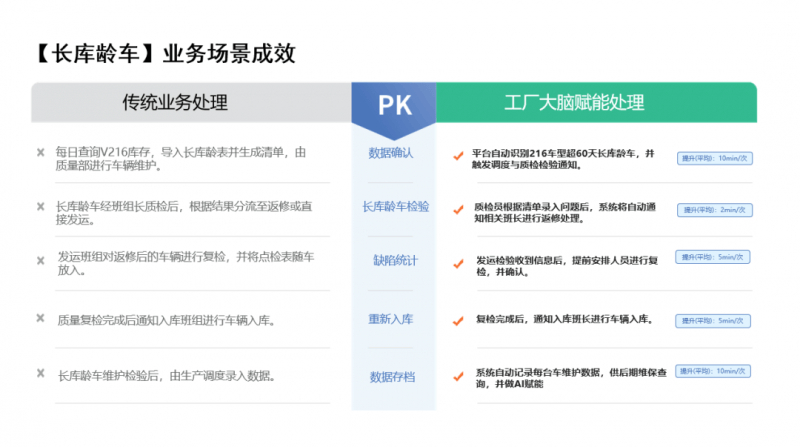
In the long-inventory vehicle control scenario, the "Factory Brain" has connected the scattered pieces. The system automatically calculates long-inventory vehicles, outputs a list, and transmits it within the system. It automatically notifies responsible parties according to rules and generates and archives maintenance reports. Manual processes have been fully automated, saving 14 minutes daily. More importantly, real-time data is queryable and traceable, eliminating "slipping through the net" and proactively intercepting market customer complaint risks.
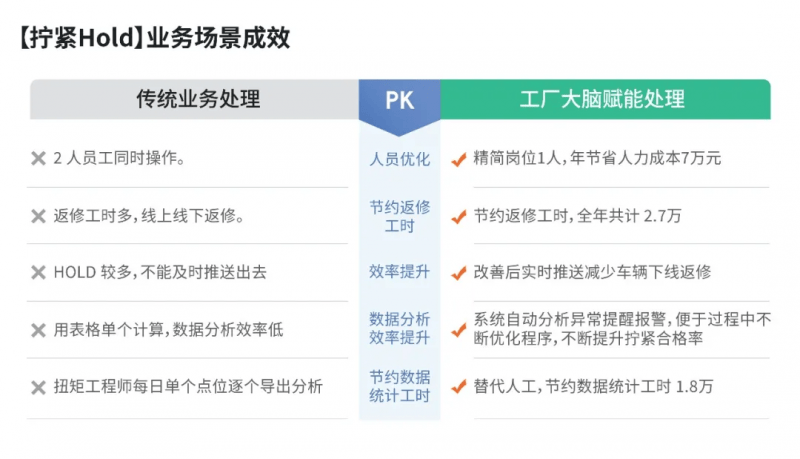
In the tightening HOLD scenario, the "Factory Brain" achieves full-process digital upgrade through three steps: the system automatically determines and executes anomaly interception without manual monitoring; the HOLD approval process is fully digitized with automatic information flow, completely eliminating manual sign-offs; and tightening strategies are optimized to reduce false alarms and unnecessary HOLD triggers from the source. The results are significant: one position has been streamlined, saving approximately 70,000 yuan in annual labor costs; automated processing reduces rework hours, equivalent to saving 27,000 yuan; and data statistics labor costs have been reduced by 18,000 yuan, totaling an annual cost reduction and efficiency gain of 115,000 yuan.
Behind these four scenarios lies a systemic capability leap of the "Factory Brain." Its core value can be summarized in three upgrades: Management model upgrade—"data finding people" reduces data search time by over 30%, and "problems finding people" automates alerts, escalations, group creation, and responsibility assignment, improving operational efficiency by 10%; Process upgrade—PDCA automatic closed-loop replaces traditional meeting-based reporting, increasing the problem closure rate to over 95%; Decision-making upgrade—the system has automatically performed over 10,000 cause attributions and countermeasure recommendations, accumulating 1,096 knowledge assets that can be directly reused by other factories within the group, improving the experience reuse rate by 60%. There is also an often-overlooked value dimension—the forward shift in problem detection. In the manufacturing industry, the earlier a problem is found, the lower the loss: anomalies detected during production account for only 1% of losses; if delayed to the inspection line, losses rise to 10%; once problems reach the customer or trigger a recall, losses surge to 100%.
This plant already possesses an excellent manufacturing foundation, and the addition of the "Factory Brain" elevates it from being good to becoming a replicable benchmark. The evolution roadmap is clear: in 2025, the focus is on automating frontline business execution, achieving PDCA closed-loop management through the Factory Brain, and assisting executors in "doing things right"; in 2026, the goal is to upgrade to a management decision-making brain, serving operational managers at all levels of the factory and helping them "make the right decisions." The factory's "brain" is evolving from "being able to execute" to "being able to think."
This article is compiled by Wedoany. All AI citations must indicate the source as "Wedoany". If there is any infringement or other issues, please notify us promptly, and we will modify or delete it accordingly. Email: news@wedoany.com
Related Products

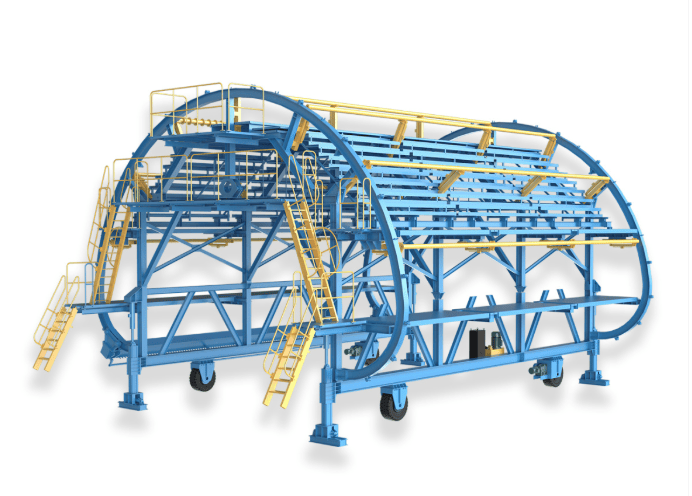
QLZNGJ Intelligent Steel Reinforcement Trolley
Luoyang China Railway Qiangli Machinery Co., Ltd.


Industrial and Commercial Point-Type Gas Detector
Jinan Benan Technology Development Co., Ltd.
CAP1400 main feedwater flow nozzle flowmeter.
Jiangsu Hongda Instrument Technology Co., LTD.
High-Speed Railway Lifting, Transporting, and Erecting Equipment: Integrated Transport and Erection Machine
Hanjiang Heavy Industry Co., Ltd. of China Railway 11th Bureau Group

Pneumatic high-pressure wear-resistant ball valve
Zhejiang Deca Control Valve Meter Co., Ltd.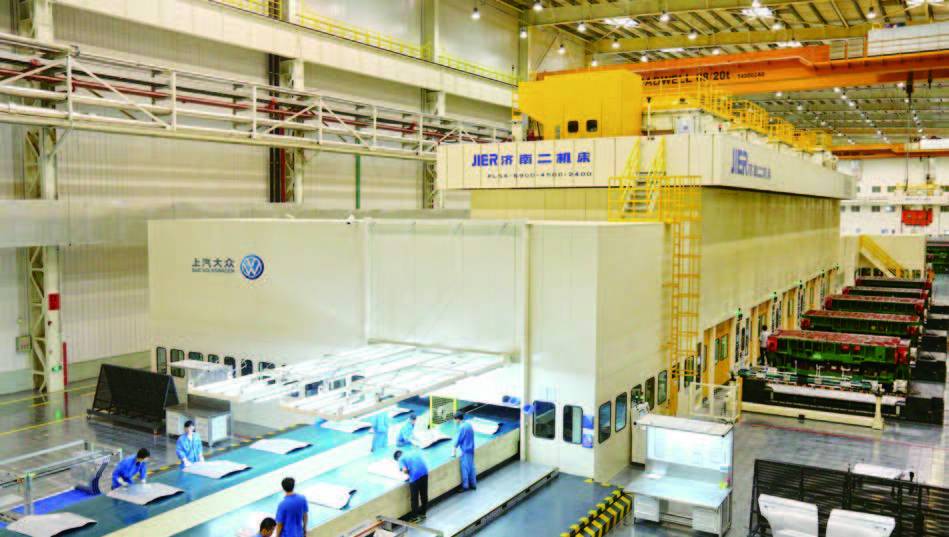
High-Speed Flexible Fully Automatic Stamping Production Line
JIER Machine-Tool Group Co., Ltd.