Lenovo Launches AION Project in Brazil to Explore CPU for AI Inference
en.Wedoany.com Reported - Lenovo has launched a research and development project in Brazil called AION, focused on developing artificial intelligence (AI) solutions based on a hybrid architecture, aiming to enable enterprises across different industries to adopt AI technology more efficiently, accessibly, and scalably.
The AION project will explore the potential of performing inference directly on the latest generation of central processing units (CPUs), such as the Intel Xeon 6 processor with Performance-cores, as a complement to traditional graphics processing units (GPUs) in AI workloads. The project aims to optimize workloads based on the needs of each application, improve operational efficiency, better utilize existing infrastructure, and reduce costs.
Ricardo Bloj, President of Lenovo Brazil, stated that AION reinforces Lenovo's vision that the future of AI lies in flexible, hybrid architectures. Lenovo not only provides infrastructure but also aims to support customers in building AI environments that are efficient, scalable, and aligned with actual business needs.
Although the initial training of large language models primarily relies on high-performance GPUs in the cloud, multiple computing device and processor manufacturers predict that inference workloads will be executed directly by CPUs on devices closer to the data generation source, such as PCs, edge devices, and servers. This approach will allow GPUs to focus on more intensive tasks while reducing the procurement and operational costs of AI infrastructure.
According to Lenovo, the AION project will address the issue of underutilized installed CPUs. By adopting the Intel Xeon 6, enterprises can leverage existing resources to accelerate AI projects without relying entirely on the procurement of dedicated hardware. Bloj added that the project aims to help enterprises accelerate AI projects using resources already available in their environments, thereby reducing time to production, improving operational efficiency, and increasing the return on infrastructure investments.
The AION project will primarily be based on features provided by the Intel Xeon 6 CPU, such as massive parallel execution capabilities through multiple cores to handle multiple inference requests simultaneously. Additionally, it will leverage the execution of models like OpenVINO and DeepSeek R1 to ensure higher throughput in distributed workloads. Marcelo Bertolami, Director of Intel's Sales and Technology Team for Latin America, commented that the combination of Intel Xeon 6 with AMX accelerators and software optimizations like OpenVINO demonstrates that enterprise AI can scale more efficiently and accessibly.
This article is compiled by Wedoany. All AI citations must indicate the source as "Wedoany". If there is any infringement or other issues, please notify us promptly, and we will modify or delete it accordingly. Email: news@wedoany.com
Related Products




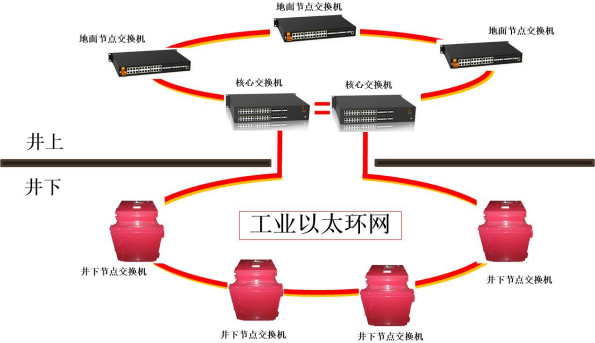
Mine Explosion-proof and Intrinsically Safe Industrial Ethernet Ring Network (10 Gigabit/Gigabit)
Chongqing Mas Sci&Tech Co., Ltd.



Conveyor Belt Intelligent Monitoring System
LUO YANG WIRE ROPE INSPECTION TECHNOLOGY CO., LTD.
20 Inch 1600*900 Full HD 60Hz TFT LED Monitor with VGA and DP Interfaces for Desktop Computers-Business Use
Guangzhou Zanying Optoelectronics Technology Co., Ltd.

G.652.D Wavelength-extended Non-dispersion Shifted Single-mode Optical Fiber
HONGAN GROUP CO., LTD.