U.S. Harmonic Considers Strategic M&A to Strengthen Broadband Business
en.Wedoany.com Reported - After selling its video business, Harmonic will focus on its core broadband business. As it advances its broadband plans, the company is considering diversifying its product portfolio through organic growth initiatives and targeted mergers and acquisitions (M&A) to meet new customer demand in the fiber-to-the-home (FTTH) market.

Harmonic CEO Nimrod Ben-Natan stated during the first-quarter earnings call that even as the company transitions to a pure-play broadband company, capital priorities remain unchanged: investing in organic growth and diversification, returning capital to shareholders, and pursuing strategic M&A to drive broadband business growth. He added that under the first priority, the company expects to increase inventory in the coming quarters to support anticipated growth, including pre-purchasing memory to secure supply for the remainder of the year.
Nimrod Ben-Natan believes the company is well-established in the cable TV and DOCSIS (Data Over Cable Service Interface Specification) markets, but priorities will focus on opportunities with high synergy to the company's focus. He emphasized that this is not just about bundling products or companies, but truly creating content that adds value to customers and the market platform.
Harmonic continues to diversify its customer base, a trend reflected in first-quarter results. Revenue from the Rest-of-Market (ROM) grew 78% year-over-year, accounting for 42% of total revenue. Nimrod Ben-Natan stated that this performance indicates Harmonic's platform is being adopted by a broader range of industry operators globally.
During the quarter, Harmonic won several new fiber business deals, including international provider Optimum and Taiwan's KBRO. Over the past year, fiber products accounted for more than 14% of total Appliance & Integration revenue. For the remainder of the year, Harmonic will continue to grow ROM at over 30% annually and expand its FTTH customer base among cable MSOs and telecom companies. CFO Walter Jankovic stated that ROM performance highlights the company's progress in expanding customer diversification.
Despite emphasizing progress in FTTH, Harmonic still sees opportunities in a unified DOCSIS 4.0 strategy. In the first quarter, the company expanded its DOCSIS 4.0 customer base through new customer wins while advancing deployments with existing customers. Nimrod Ben-Natan said the company aims to help cable operators enhance the upstream capacity of their HFC (Hybrid Fiber-Coaxial) networks. He explained that DOCSIS 4.0 is no longer just about expanding to 1.8GHz or providing faster downstream speeds; operators are using it to increase upstream capacity, densify networks, and optimize existing infrastructure.
A key element of the growth path is helping cable operators run both DOCSIS and fiber networks simultaneously. For example, Optimum used Harmonic's cOS broadband platform to modernize its HFC infrastructure and consolidate headend facilities by 50%. Nimrod Ben-Natan noted that the Optimum team stated the architecture allows them to deliver both XGS-PON (10 Gigabit Symmetrical Passive Optical Network) and DOCSIS from the same node, enabling them to build based on demand rather than overbuilding to every location. He believes this is the unique value of Harmonic's converged architecture: one platform, multiple access technologies, providing operators with capital-efficient options.
Harmonic is betting on a broadband-centric strategy, and first-quarter results reflect this, with revenue reaching $121.7 million, above the guidance range of $100 million to $105 million. The Rest-of-Market segment was a key contributor to performance. Nimrod Ben-Natan stated that a significant portion came from other markets, accounting for 42% of the total, an important indicator of business expansion and diversification progress. Strong orders in the quarter drove backlog and deferred revenue up 87% year-over-year.
At the end of the first quarter, broadband backlog and deferred revenue reached a record $582.1 million, up 87% year-over-year. Of this, 60% is expected to convert to revenue within the next 12 months. Jankovic stated that these factors provide the company with greater visibility and confidence in its 2026 trajectory, and combined with the advancement of unified DOCSIS 4.0, large customer deployment plans, and accelerating adoption in other markets, will drive strong broadband revenue growth for the full year.
Looking ahead to the second quarter, Harmonic expects revenue between $115 million and $125 million, and operating profit between $23 million and $28 million. For the full year 2026, it expects broadband revenue between $475 million and $495 million, an increase of $25 million, or 5.4%, from the midpoint of the previous guidance range. Jankovic stated that based on guidance, the company expects strong year-over-year broadband revenue growth in the second quarter of 2026, and the first half of 2026 will be better than expected.
This article is compiled by Wedoany. All AI citations must indicate the source as "Wedoany". If there is any infringement or other issues, please notify us promptly, and we will modify or delete it accordingly. Email: news@wedoany.com
Related Products





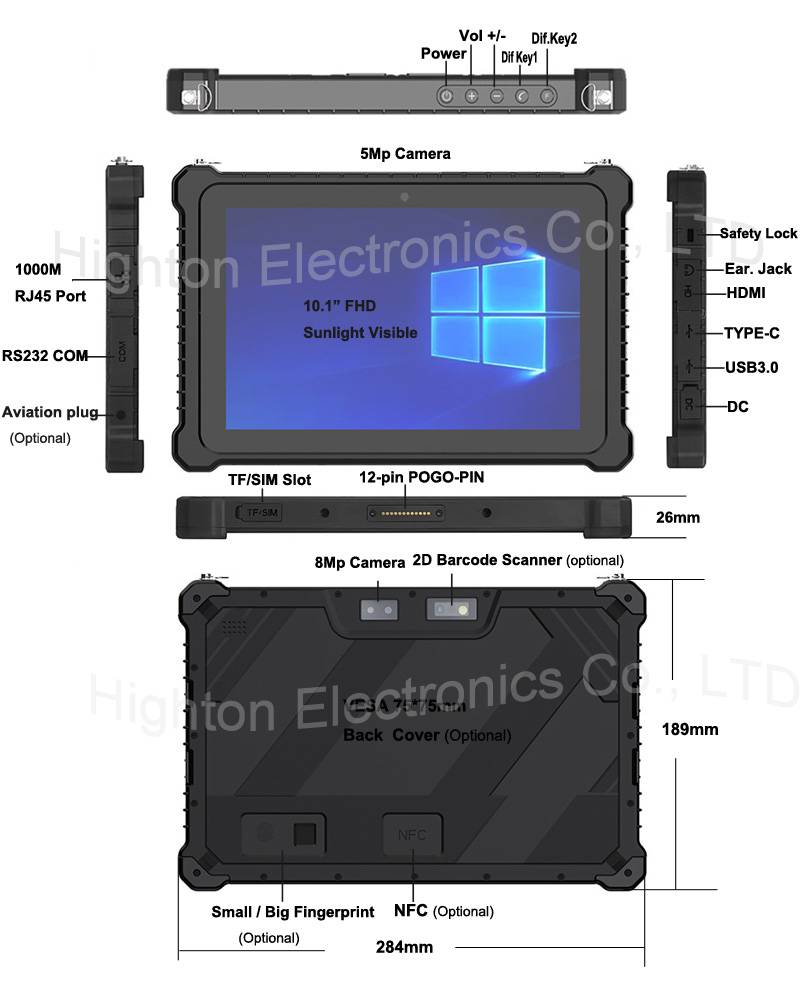
Hot Selling 10 Inch Intel N5100 I5 I7 FHD 8 +128GB 16+256GB Win10 Pro Win11 Pro 4G 5G Rugged Tablet PC Pad with NFC Barcode
Highton Electronics Co., Ltd.
Comprehensive Mining Automation Control System
Beijing Tianma Intelligent Control Technology Co., Ltd.

Multi-function Marine Monitoring Low-altitude Detection Radar Sea-air Boundary Ocean Dynamic Environment Measurement
Chengdu Dixin Technology Co., Ltd.
TWP16 P-Band Tropospheric Wind Profile Radar
China Huayun Meteorological Technology Group Co., Ltd.
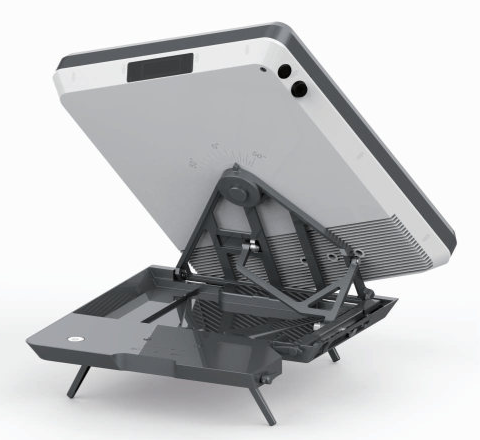
Flat Portable Satellite Terminal 0.35m Aperture Manual Portable Terminal
China Starwin Science & Technology Co., Ltd.