U.S. Northwood Launches Prism and Portal Antennas, Targeting Over 10 Gbps per Site
en.Wedoany.com Reported - U.S. ground station startup Northwood has introduced a new antenna series, including the Prism parabolic antenna and the Portal phased array system, aiming to achieve data rates exceeding 10 gigabits per second (Gbps) at each ground station.

Northwood CEO Bridget Mendler stated that as more parts of the economy move into orbit, networks need to be designed to match or exceed terrestrial performance. The Prism series is designed to meet the next level of expectations for throughput, latency, and reliability. The 2.4-meter Prism parabolic antenna is optimized for high data volumes in enterprise backhaul, direct-to-device, and space computing, employing a novel combination of antenna elements to achieve higher power levels. Prism covers S-band, X-band, and Ka-band, with plans to support higher frequencies in the future. The antenna features a standardized form factor for rapid deployment and offers lower lifecycle costs compared to other parabolic antennas. In a recent deployment, Prism was unpacked, assembled, and operational as expected within three and a half hours.
Portal is Northwood's modular phased array system, optimized for space connectivity, capable of dynamically switching between satellites for continuous operation. Both antennas are manufactured at Northwood's 35,000-square-foot facility in Torrance, California, which can produce over 100 antennas per year at full capacity. The facility uses internal firmware and software, and this vertical integration helps accelerate the interaction between RF and software.
Founded in 2024, Northwood aims to disrupt the satellite ground station market. The company completed a $100 million Series B funding round in January this year, co-led by Washington Harbour Partners and a16z, following a $30 million Series A round in 2025. The Series B round reflects progress in Northwood's activities and the importance of ground stations as a key enabler for executing more capable missions on shorter timelines. To date, the company has deployed a beta network of 14 antennas across five sites, with another 13 sites under construction across eight countries. Northwood plans to more than double its link capacity and site footprint by the end of 2027, deploying over 100 capable sites in high-demand regions. The company believes its total capacity could rival that of the largest terrestrial internet exchange points (over 20 Tbps) by 2028 and aims to continue scaling up.
This article is compiled by Wedoany. All AI citations must indicate the source as "Wedoany". If there is any infringement or other issues, please notify us promptly, and we will modify or delete it accordingly. Email: news@wedoany.com
Related Products

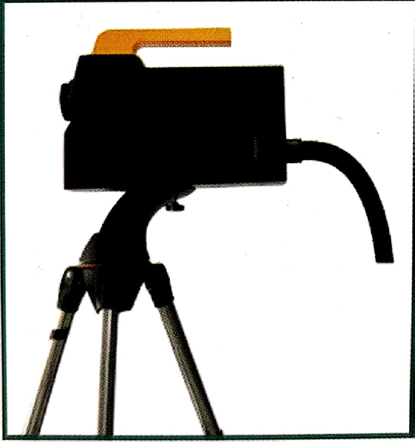
Automatic Aiming Laser Remote Obstacle Removal Robot
Pinggao Group Weihai High-Voltage Apparatus Co., Ltd.
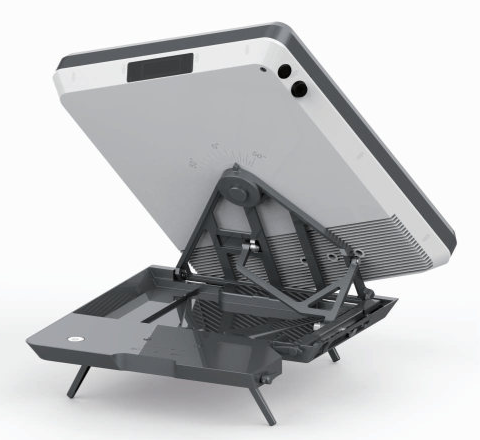
Flat Portable Satellite Terminal 0.35m Aperture Manual Portable Terminal
China Starwin Science & Technology Co., Ltd.
20 Inch 1600*900 Full HD 60Hz TFT LED Monitor with VGA and DP Interfaces for Desktop Computers-Business Use
Guangzhou Zanying Optoelectronics Technology Co., Ltd.
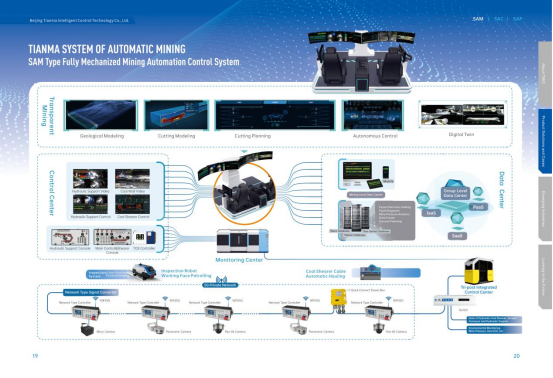
Comprehensive Mining Automation Control System
Beijing Tianma Intelligent Control Technology Co., Ltd.
TWP16 P-Band Tropospheric Wind Profile Radar
China Huayun Meteorological Technology Group Co., Ltd.
Multi-function Marine Monitoring Low-altitude Detection Radar Sea-air Boundary Ocean Dynamic Environment Measurement
Chengdu Dixin Technology Co., Ltd.

Industrial and Commercial Point-Type Gas Detector
Jinan Benan Technology Development Co., Ltd.