en.Wedoany.com Reported - Beale Infrastructure's planned data center campus in De Soto received city council approval in August 2025, moving from the conceptual stage to an actual development path. The project aims to meet nationwide capacity demand driven by cloud adoption and generative AI. Phase one construction is expected to begin in 2026 and be completed in 2027, with the entire project slated for full completion by 2035.

The campus, costing over $3 billion, is planned adjacent to the former Sunflower Ammunition Plant and designed as a four-building complex. The city estimates that once operational, annual franchise fees will exceed $5 million, surpassing De Soto's current property tax revenue. For a city still rebuilding after its economic base was reshaped by the closure of the Sunflower plant, this potential revenue stream represents a significant shift.
Mayor Rick Walker, in an interview with KCUR's Up To Date, outlined the long-term vision, noting that the cleanup and redevelopment of the Sunflower area opens a new chapter, and the region's potential as an economic engine aligns with broader national employment patterns. The U.S. Census Bureau and Bureau of Labor Statistics report that data center employment grew from 306,000 jobs in 2016 to 501,000 in 2023, an increase of over 60%, reshaping regional labor markets. Analysts note that while these projects rarely create a large number of direct permanent positions, they often catalyze the development of related industries.
Market forecasts from McKinsey show that global data center capital expenditure could approach $7 trillion by 2030, with over 40% concentrated in the United States. Demand in the U.S. alone is expected to grow at an annual rate of 20% to 25% through 2030. Another data center provider, Digital Realty, is also actively eyeing De Soto, planning to build another campus. The presence of the Panasonic battery plant and its supporting infrastructure has bolstered developer confidence that the region can support large-scale digital facilities. According to Mordor Intelligence, hyperscale operators have been actively building in regions like Texas, where land availability and grid access are attractive, and this trend has now expanded to Midwestern locations with strong infrastructure backbones.
Community reactions in De Soto are tense. One local resident publicly stated that the site lacks an environmental impact study, noting that residential areas are adjacent to the proposed development. Data center construction typically raises long-standing concerns about water usage, local grid load, cooling system noise, and light pollution. Some communities have attempted to address these issues through zoning or conditional land use approvals, but residents argue the project is moving too quickly without proper review. According to a Brookings summary of research from LBNL and other institutions, data centers already consume about 4.4% of U.S. electricity, and the expansion of AI workloads is expected to significantly drive up this figure. The U.S. Department of Energy estimates that national data center load growth has tripled over the past decade and could double or triple again by 2028. For smaller municipalities, the debate centers on balancing economic gains against public infrastructure strain. In broader regions, similar debates have escalated, with some municipalities outright rejecting data center proposals, highlighting how politically charged these developments can become when residents feel excluded from the planning process.
Standards from organizations such as IEEE and ASHRAE influence how data centers are designed, cooled, and powered. Operators typically optimize around thermal guidelines, energy efficiency metrics, and resource utilization targets to mitigate infrastructure demands, though local residents often call for clearer communication of these technical safeguards. New municipal revenue streams could support services the city previously could not afford, such as community centers. Whether the project becomes the economic engine the mayor envisions will depend on construction progress in 2026 and 2027, as well as how developers and the city respond to evolving environmental and grid security requirements.
This article is compiled by Wedoany. All AI citations must indicate the source as "Wedoany". If there is any infringement or other issues, please notify us promptly, and we will modify or delete it accordingly. Email: news@wedoany.com
Related Products
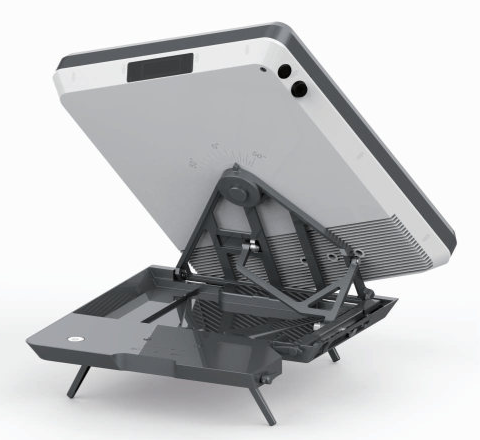

Flat Portable Satellite Terminal 0.35m Aperture Manual Portable Terminal
China Starwin Science & Technology Co., Ltd.
TWP16 P-Band Tropospheric Wind Profile Radar
China Huayun Meteorological Technology Group Co., Ltd.





MUX Series Communication Interface Device for Security and Stability Control System
Nanjing NR Electric Co., Ltd.