en.Wedoany.com Reported - From June 23 to 25, the 17th Annual Meeting of the New Champions of the World Economic Forum was held in Dalian, Liaoning Province, China. Li Dongsheng, founder and chairman of China's TCL, was invited to attend the event, participating in the opening plenary, the official main forum on "Reconstructing Supply Chains," and a symposium with the Premier and business representatives. He shared insights on the practical application of AI, global supply chain restructuring, and the upgrading of Chinese enterprises' globalization efforts.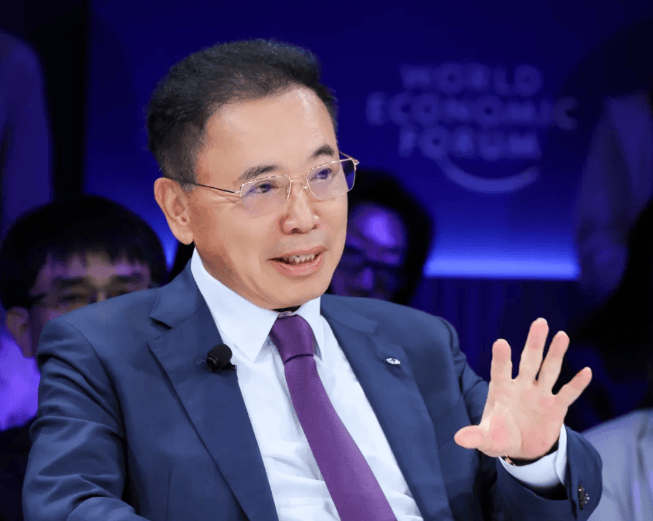
This year's Summer Davos Forum, themed "Scale Innovation," brought together over 1,700 representatives from politics, business, social organizations, and international organizations, as well as entrepreneurs, innovators, and scholars from more than 90 countries and regions. During the forum, Li Dongsheng stated that global supply chains are shifting from a focus on efficiency to a greater emphasis on security, stability, and resilience. Chinese manufacturing is also undergoing a new round of restructuring, aligning with this trend through a localized development model.
"AI Implementation" was a key phrase in TCL's external communications at the event. Li Dongsheng believes that AI should not remain at the stage of conceptual demonstrations or isolated pilot projects but must be integrated into core scenarios such as R&D and design, production and manufacturing, supply chain management, and product innovation. TCL has already advanced AI applications across its semiconductor display, smart terminal, and new energy photovoltaic sectors, embedding AI capabilities into manufacturing processes, supply chain systems, and product experiences. The goal is to generate tangible, measurable, verifiable, and continuously iterable benefits.
Globalization was another main theme. Li Dongsheng continued to advocate for the "Globalization 3.0" concept, emphasizing that Chinese enterprises should not rely solely on exporting products to participate in global markets. Instead, they should shift from exporting products to exporting capabilities, capital, and industrial ecosystems. For multinational corporations, the next phase of globalization is not simply about selling goods overseas or relocating individual manufacturing links, but about establishing localized operational capabilities in key regions, forming a complete system covering R&D, manufacturing, supply chain, brand marketing, and user services.
In recent years, TCL has divided its overseas business into five regional operating centers: North America, Latin America, Europe, Asia-Pacific, and the Middle East and Africa, proposing to "build five more TCLs overseas." This model corresponds not to short-term order expansion, but to the development of regionalized production, regionalized supply chains, and regionalized operational capabilities. As global trade rules, tariff structures, and demands for industrial chain security evolve, enterprises can only gain long-term growth space by embedding themselves more deeply into local economic systems.
In a keynote speech at the "2026 Summer Davos · Caixin China Dinner," Li Dongsheng outlined three directions for enterprises to navigate cycles and reshape growth boundaries: strengthening relative competitiveness, deepening globalization, and creating new growth curves through transformation and upgrading. Relative competitiveness here refers not only to cost and scale but also to core technologies, product structure, brand capabilities, and organizational efficiency. The new growth curves correspond to TCL's continuous expansion from consumer electronics into semiconductor displays, new energy photovoltaics, and other industries.
Supply chain restructuring is changing the competitive dynamics for Chinese manufacturing enterprises. In the past, companies focused more on efficiency, cost, and delivery speed. Now, customers and markets place greater value on supply chain stability, regional responsiveness, and risk resilience. The "rooting locally" emphasized by Li Dongsheng essentially means enabling Chinese enterprises to develop independent operational capabilities in different regions while bringing Chinese manufacturing's engineering capabilities, supply chain organizational skills, and technological iteration capabilities into local industrial ecosystems.
This Davos engagement also reflects Chinese manufacturing enterprises' dual assessment of AI and globalization. AI must enter real industrial scenarios to convert technological hype into efficiency gains and product upgrades. Globalization must enter a phase of deep regional cultivation to maintain growth resilience amid deglobalization and supply chain restructuring. For TCL, "AI Implementation" and "Globalization 3.0" are not two separate paths but two foundational capabilities for continuing to enhance its competitiveness within the global manufacturing system.
As the global economic landscape continues to restructure, multinational corporations need to rebalance security, efficiency, cost, and regional synergy. The viewpoints Li Dongsheng presented during this Summer Davos point to a new stage in the overseas expansion model of Chinese enterprises: not only bringing technological capabilities to the industrial frontline but also advancing globalization from trade-driven efforts to local operations and ecosystem co-building.
This article is compiled by Wedoany. All AI citations must indicate the source as "Wedoany". If there is any infringement or other issues, please notify us promptly, and we will modify or delete it accordingly. Email: news@wedoany.com