HPE Upgrades Private Cloud AI and Sovereign AI Factory
en.Wedoany.com Reported - At the 2026 Discover conference, HPE announced a comprehensive upgrade to its Private Cloud AI product and Sovereign AI Factory configuration, responding to the governance, security, and deployment efficiency needs of hybrid AI workloads in regulated industries and sovereign environments.
Since the large-scale adoption of public cloud in the late 2000s, it was once believed that nearly all workloads would move off-premises. Fifteen years later, enterprise IT leaders still manage a significant amount of on-premises infrastructure. Research reports indicate that 35% to 50% of workloads have migrated to the cloud, with workloads distributed across different locations. Cost, data sensitivity, regulatory compliance, latency requirements, and operational control collectively determine where workloads reside, and AI workloads follow the same logic.
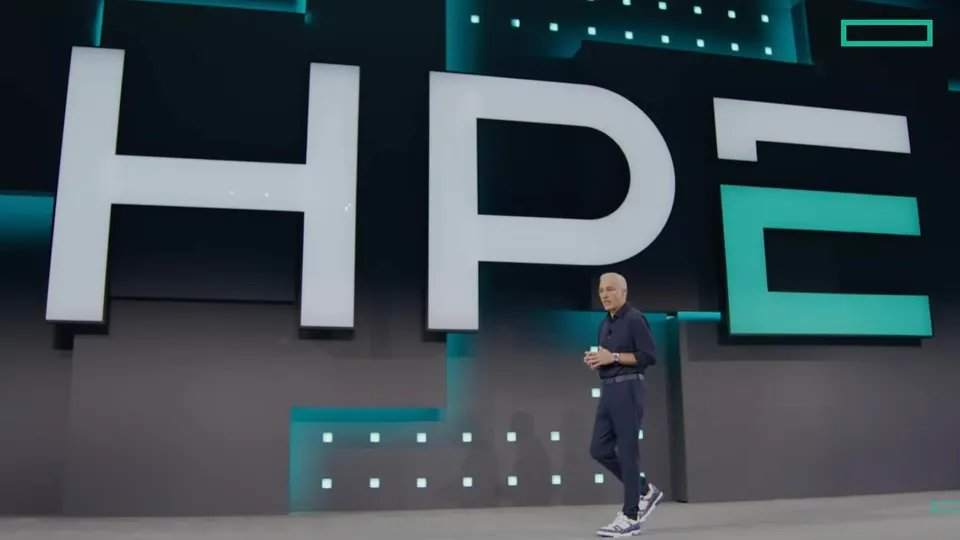
Addressing the new security and governance challenges introduced by agentic AI, HPE launched the Sovereign AI Factory configuration for governments and regulated industries, featuring defense-grade security hardening, federal compliance readiness, and air-gapped operational capabilities. HPE CEO Antonio Neri noted that AI infrastructure decisions are inseparable from data governance and sovereignty. HPE Private Cloud AI provides a pre-validated on-premises environment designed to reduce integration complexity and accelerate deployment timelines. HPE claims it delivers value 7 to 12 times faster compared to building environments from scratch. Private Cloud AI now includes a governance data layer, deeply integrated with the Nvidia AI Data Platform, offering enterprises unified data access and management capabilities. The HPE Alletra Storage MP Extend 1000 serves as the storage foundation, supporting real-time metadata enrichment and native MCP protocol. The new configuration scales to 256 GPUs, including ProLiant DL394 servers equipped with Nvidia optimized GPUs, and integrates shared KV cache functionality to reduce first-token costs and improve performance.
On the identity and security front, HPE proposes a three-layer identity model for agentic workloads, covering user authentication, agent-level governance, and human approval checkpoints. This solution also integrates the isolated execution environment of Nvidia OpenShell, the NeMo Guardrails policy engine, and Zerto rollback capabilities to address agent execution errors. Rami Rahim, Executive Vice President of HPE's Networking division, further emphasized that the network itself should become an active enforcement layer for agent security through zero-trust architecture and AI-driven anomaly detection.
HPE's deployments have been validated by key customers. The U.S. Defense Information Systems Agency awarded HPE a ten-year contract to modernize its digital and AI platform, requiring a NIST-compliant private cloud environment. In Europe, HPE is building the HammerHAI system for the High-Performance Computing Center Stuttgart (HLRS) in Germany, a sovereign AI installation delivering over 15 exaflops of peak AI inference performance, serving research institutions and industrial organizations that must comply with European data residency requirements. In healthcare, St. Jude Children’s Research Hospital has adopted HPE Private Cloud AI to bring AI capabilities to its clinical and research teams while protecting sensitive pediatric oncology data.
Enterprise AI deployment is not a simple choice between cloud and on-premises. Even organizations running extensive on-premises AI environments rely on public cloud for certain workloads, such as large model training, experimental prototyping, or accessing cutting-edge models. The core decision is a combinatorial problem: where different workloads should run and what governance conditions each environment must meet. Pre-validated private deployment reference designs lower the barrier to AI adoption for organizations with the lowest risk tolerance.
This article is compiled by Wedoany. All AI citations must indicate the source as "Wedoany". If there is any infringement or other issues, please notify us promptly, and we will modify or delete it accordingly. Email: news@wedoany.com
Related Products


Automatic Aiming Laser Remote Obstacle Removal Robot
Pinggao Group Weihai High-Voltage Apparatus Co., Ltd.
Mine Explosion-proof and Intrinsically Safe Industrial Ethernet Ring Network (10 Gigabit/Gigabit)
Chongqing Mas Sci&Tech Co., Ltd.

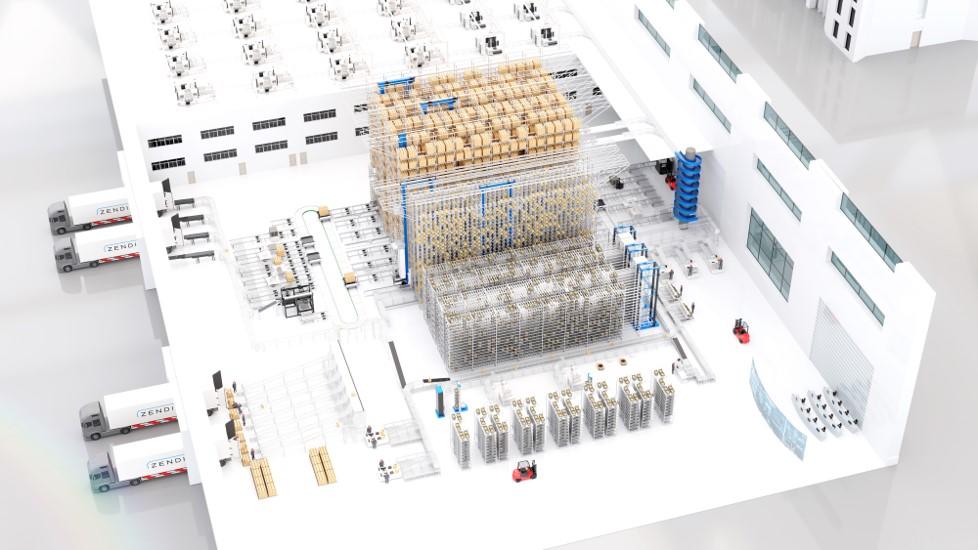
One-Stop Steward Service for the Entire Logistics System Integration Chain
Zhongding Intelligent (Wuxi) Technology Co., Ltd.

Comprehensive Mining Automation Control System
Beijing Tianma Intelligent Control Technology Co., Ltd.
20 Inch 1600*900 Full HD 60Hz TFT LED Monitor with VGA and DP Interfaces for Desktop Computers-Business Use
Guangzhou Zanying Optoelectronics Technology Co., Ltd.