China's Embodied Intelligence Market Expected to Exceed One Trillion Yuan in 2026
en.Wedoany.com Reported - On June 25, China's embodied intelligence industry was showcased at the Chain Expo, with upstream and downstream enterprises in the industrial chain collectively appearing, from core components, model algorithms, and perception systems to complete machines and application scenarios, presenting a more complete closed loop of collaborative innovation. Data shows that in 2025, the scale of China's embodied intelligence market is approximately 915 billion yuan, and it is expected to reach 1,090.4 billion yuan in 2026. The number of embodied intelligence-related enterprises nationwide has exceeded 10,000.
Embodied intelligence is transitioning from single-point technology demonstrations to the integration stage of the industrial chain. In the past, robot companies often had to separately seek resources for sensors, actuators, control systems, data collection, model training, and complete machine manufacturing, resulting in long R&D chains and slow verification cycles. As upstream and downstream enterprises accelerate collaboration within the same industrial ecosystem, the connections between core components, intelligent bodies, algorithm platforms, and application scenarios have become tighter, and product iteration efficiency has also improved.
At this year's Chain Expo, the focus of the embodied intelligence industry chain display is no longer just on "robots that can walk and dance," but rather emphasizes real task capabilities. An embodied intelligence model company showcased its visual-tactile sensor technology, which can collect hand force data using only the internal camera of the robot gripper and apply it to data collection robots. For embodied intelligence, the finer the perception capability, the more likely the robot is to complete complex actions such as grasping, sorting, assembling, and handling.
Electronic skin has also become a key link in the industrial chain. Products displayed by related companies feature over 1,000 tactile pixel points on the hand, capable of sensing changes in the posture and center of gravity of a bottle when grasped. Shipments of related products have exceeded 10,000 sets. This type of technology enables robots to no longer rely solely on vision to judge the external environment but to understand the contact state of objects through tactile feedback, providing support for fine manipulation and safe collaboration.
Industrial clustering is changing the way embodied intelligence innovation occurs. In industrial clusters, model companies, sensor companies, body manufacturers, and application parties are closer together, allowing for faster alignment of data collection standards, model parameters, action training, and scenario validation. For the embodied intelligence industry, which is still in a phase of rapid iteration, the ability of enterprises to collaborate frequently directly affects the speed at which products move from laboratory prototypes to batch applications.
The embodied intelligence market is expected to exceed one trillion yuan in 2026, also reflecting the expanding scope of industrial applications. Scenarios such as industrial manufacturing, logistics warehousing, commercial services, medical care and rehabilitation, home companionship, hazardous operations, and public services are all driving robots from being "demonstrable" to "usable." Market growth comes not only from complete machine sales but also from supporting segments such as sensors, reducers, controllers, software systems, data platforms, training services, and post-sales maintenance.
Currently, the number of related enterprises nationwide has exceeded 10,000, indicating that embodied intelligence has become an important growth direction for China's artificial intelligence and robotics industry. As the industrial chain gradually closes from core components to scenario applications, industry competition will shift from single technical parameters to cost control, stable delivery, scenario adaptation, and large-scale application capabilities. Going forward, attention must be paid to whether embodied intelligence companies can generate sustained orders in real industrial scenarios, and whether key components, training data, and safety standards can support the implementation of a trillion-yuan market.
This article is compiled by Wedoany. All AI citations must indicate the source as "Wedoany". If there is any infringement or other issues, please notify us promptly, and we will modify or delete it accordingly. Email: news@wedoany.com
Related Products


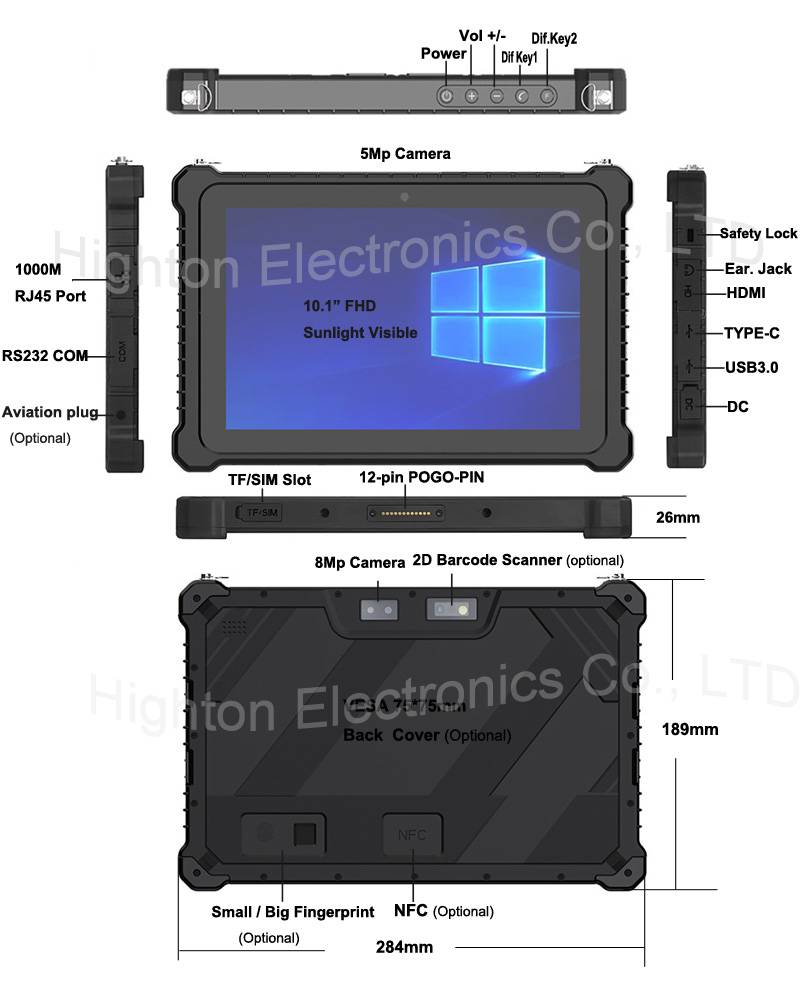
Hot Selling 10 Inch Intel N5100 I5 I7 FHD 8 +128GB 16+256GB Win10 Pro Win11 Pro 4G 5G Rugged Tablet PC Pad with NFC Barcode
Highton Electronics Co., Ltd.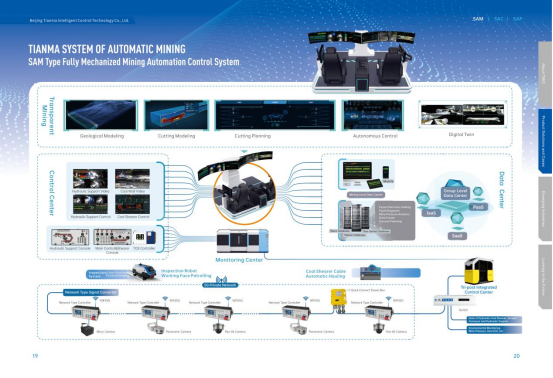
Comprehensive Mining Automation Control System
Beijing Tianma Intelligent Control Technology Co., Ltd.
Mine Explosion-proof and Intrinsically Safe Industrial Ethernet Ring Network (10 Gigabit/Gigabit)
Chongqing Mas Sci&Tech Co., Ltd.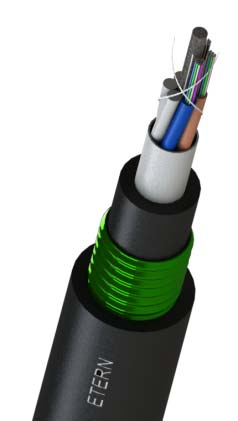


Multi-function Marine Monitoring Low-altitude Detection Radar Sea-air Boundary Ocean Dynamic Environment Measurement
Chengdu Dixin Technology Co., Ltd.
Automatic Aiming Laser Remote Obstacle Removal Robot
Pinggao Group Weihai High-Voltage Apparatus Co., Ltd.