
Bobst and Michelman Showcase 98% Recyclable PE Packaging Solution
en.Wedoany.com Reported - Bobst and Michelman showcased the latest advancements in high-barrier recyclable packaging technology at the 2026 interpack trade fair in Düsseldorf, explaining how these solutions help converters and brand owners comply with the EU's Packaging and Packaging Waste Regulation (PPWR).
The two companies have collaborated for over a decade in the field of recyclable high-barrier packaging, aiming to replace traditional multi-layer plastic packaging. Thierry Van Migem, Sales Director Europe at Michelman, and Nick Copeland, R&D Director Barrier Solutions at Bobst, delivered presentations to attendees at the trade fair held in May 2026.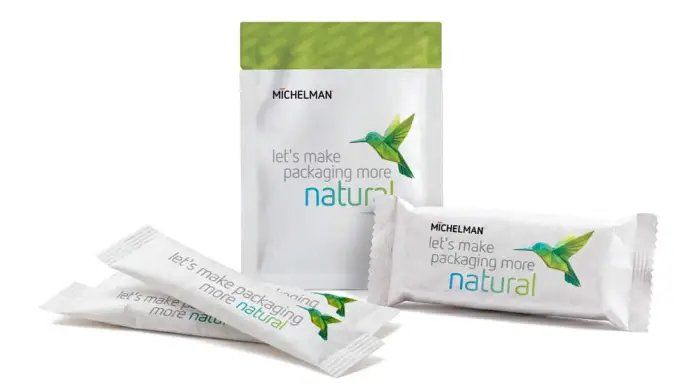
The EU PPWR aims to reduce packaging waste and promote the recyclability and circularity of all packaging within the EU. The regulation imposes stricter requirements on recyclability, recycled content, reuse, and waste reduction. From January 1, 2030, all packaging placed on the EU market must meet a minimum recyclability threshold, initially set at Grade C (approximately 70% recyclable). For converters, the regulation is already creating pressure as sustainable packaging transitions from a future requirement to a current operational necessity.
The collaboration between Bobst and Michelman began with the development of protective coatings for inorganic transparent barrier technologies such as AlOx and SiOx, and has since expanded to advanced mono-material and paper-based packaging structures that provide high barrier performance while maintaining recyclability.
Copeland stated that the challenge is to achieve the same barrier performance on more challenging, lower-performance substrates, and to maintain this performance throughout every processing step. By combining Michelman's expertise in water-based functional coatings with Bobst's vacuum deposition, coating, and lamination technologies, the two companies have developed scalable solutions that meet both sustainability and performance requirements.
A flagship achievement is oneBarrier PrimeCycle, a recyclable mono-material polyethylene (PE) solution developed by Bobst, Michelman, and several other industry partners for high-barrier flexible packaging. This structure combines MDO-PE film, an ultra-thin Michelman primer, and Bobst vacuum deposition technology to form a PE-based structure that achieves oxygen and moisture vapor transmission rates comparable to the ultra-high performance levels of aluminum foil.
This unprinted structure containing AlOx has a polyethylene content of up to 98%, and achieved a recyclability score of 98% through external testing by cyclos-HTP. Copeland noted that the vacuum-deposited coating layer is approximately one-thousandth the thickness of a human hair.
Bobst and Michelman also presented the latest developments in oneBarrier FibreCycle, their paper-based high-barrier solution. Unlike polymer films, paper substrates possess virtually no inherent barrier properties, making functional coatings and deposited layers critical. Copeland pointed out that a major challenge with paper is that the starting substrate has no functional barrier at all.
The oneBarrier FibreCycle structure involves two wet coating stages: a primer applied before deposition and a heat-seal topcoat applied after deposition. Developed in collaboration with UPM Specialty Materials, this structure uses an oxygen barrier primer, vacuum deposition, and a heat-seal coating on a carefully selected paper substrate. According to the two companies, the final structure achieves an oxygen transmission rate as low as 0.02-0.1, while maintaining strong moisture resistance under tropical conditions. Recyclability tests conducted using the CEPI harmonized method and WMU protocol demonstrated excellent recyclability performance.
The presentation also explored next-generation sustainable packaging materials, including bio-based, plastic-free coating systems. According to the two companies, the goal is to create packaging structures that are both recyclable and compostable, while complying with the EU Single-Use Plastics Directive. The team demonstrated a proof-of-concept packaging run on industrial packaging equipment at speeds of up to 350 envelopes per minute, achieving 100% seal integrity.
Also showcased at interpack was an ultra-thin film lamination technology for high-barrier paper packaging, which combines an extremely thin metallized BOPP film with a paper substrate, reportedly approaching aluminum foil replacement barrier levels. Copeland stated that the chemical nature of the surface is more important than its thickness. By combining film technology with Michelman's oxygen-promoting primer, the two companies say they are approaching ultra-high barrier levels suitable for more demanding packaging applications. Van Migem noted that customers want products to maintain the same shelf life, so performance cannot be compromised.
To support the practical application of these innovations, customers of Bobst and Michelman have access to Bobst's global Competence Centers and Michelman's Global Technology Centers for testing and accelerating development and industrialization in coating, deposition, printing, and lamination processes.
This article is compiled by Wedoany. All AI citations must indicate the source as "Wedoany". If there is any infringement or other issues, please notify us promptly, and we will modify or delete it accordingly. Email: news@wedoany.com
Related Products

BEIREN B624A Web Offset Book and Magazine Printing Press
BEIREN INTELLIGENT EQUIPMENT TECHNOLOGY CO.,LTD.
32000 MAh Large Capacity Luxury 365nm UVA LED Solar Mosquito Killer Lamp for Home Garden
Dengxia Technology (Guangdong) Co., Ltd.
Hongxing Steel Martensitic Stainless Steel Products
Gansu JISCO Group Hongxing Iron and Steel Co., Ltd.


