en.Wedoany.com Reported - Belgium's national railway company (SNCB) has decided to cancel 100 trains daily from Wednesday to Friday due to the ongoing heatwave, following the cancellation of 15 peak-hour trains earlier this week. These cancellations primarily affect trains operated by older fleets.
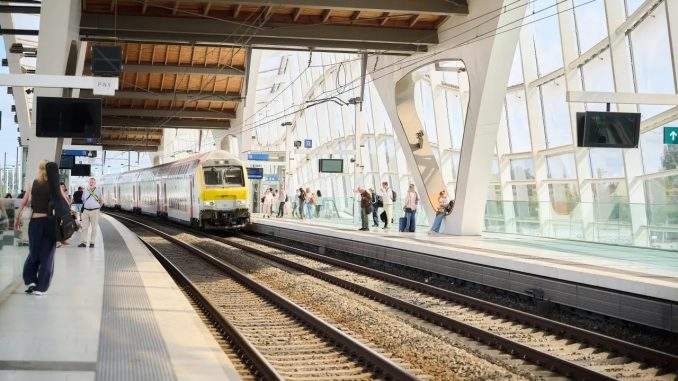
SNCB operates approximately 3,800 trains daily across the entire Belgian network. The fleet is being gradually modernized, including the introduction of M7 double-decker trains (scheduled for delivery by 2026), while new, more comfortable trains are being ordered. However, older trains lack air conditioning and are more prone to malfunctions during extreme heat, affecting passenger comfort as well as the working conditions of conductors and drivers. Therefore, SNCB has decided to temporarily suspend 200 trains operated by Sprinter-type vehicles—which have no air conditioning and may experience excessively high interior temperatures. About 60% of these trains will be replaced by new Desiro-type trains equipped with air conditioning.
Until Friday, P trains, primarily used for supplementary peak-hour services, will be canceled. Two commuter lines—the S5 line between Grammont and Mechelen, and the S7 line between Hal and Vilvoorde—will be reduced to one train per hour. SNCB stated that alternative routes are available for passengers on the affected lines. In total, 100 trains are canceled daily. In some cases, rescheduling may result in Desiro trains being shorter than originally planned, but the operator says this will only be done when estimated passenger loads permit.
SNCB advises passengers to check their routes using the operator's app or website before traveling, as schedule changes will be displayed there. The journey planner will also show estimated occupancy rates, the number of carriages, and whether the train is equipped with air conditioning. The operator recommends that vulnerable individuals avoid traveling during this period, and other passengers should try to avoid peak hours and carry drinking water. Approximately 100 stations have water fountains where passengers can refill their bottles for free. For groups with bookings on trains affected by the changes, SNCB will provide assistance, including alternative options such as buses if necessary.
Similar issues are occurring in France and the United Kingdom. France's national railway company (SNCF) has canceled some Intercités trains due to high temperatures and temporarily suspended older trains prone to air conditioning problems. In the UK, passengers are advised to avoid non-essential travel on certain lines, with some services suspended or reduced during the hottest parts of the day. High temperatures not only affect in-train comfort but also impact railway infrastructure (tracks, signaling systems, and overhead lines). On electrified railway networks, high temperatures can cause overhead contact wires to expand, and speed restrictions may be implemented on some sections to reduce risks.
Heatwaves are putting increasing pressure on European railway networks, many of which were designed when extreme temperatures were rarer or shorter in duration. Some trains still in service are not adapted to increasingly hot summers, with those lacking air conditioning or using older systems becoming more difficult to use under heatwave conditions. Operators are trying to limit the impact through fleet modernization, schedule adjustments, increased infrastructure inspections, and preventive cancellations when necessary. For travelers, it is recommended to check schedules before departure, avoid peak hours, and choose less crowded trains when alternatives are available.
This article is compiled by Wedoany. All AI citations must indicate the source as "Wedoany". If there is any infringement or other issues, please notify us promptly, and we will modify or delete it accordingly. Email: news@wedoany.com