Peking University Team Achieves 240 μW Low-Threshold Optical Tristability on a 20 μm Chip
en.Wedoany.com Reported - A research team led by Professor Peng Chao from the School of Electronics at Peking University, in collaboration with Harbin Engineering University and ITMO University in Russia, published a paper titled "Optical multistability in a compact microcavity enabled by near-exceptional coupling" in Nature Nanotechnology. By designing nearly degenerate ultra-high quality factor resonant modes to achieve non-Hermitian near-exceptional coupling, they successfully obtained low-threshold optical tristability on a silicon-based chip with a diameter of only 20 micrometers, providing a novel fundamental unit for multi-valued optical storage and optical neural networks.
Multistability refers to the existence of multiple stable states in a system under the same external conditions. It is a core feature of complex nonlinear systems and a key element for realizing multi-valued optical storage. However, optical nonlinear effects are relatively weak, making it challenging to achieve optical multistability at the micro- and nanoscale. Starting from the symmetry of photonic crystal microcavities, the research team constructed degenerate modes using Brillouin zone folding and introduced non-Hermitian coupling through shared radiation channels via structural perturbations. As the system approaches the exceptional point, the two eigenmodes undergo coupled hybridization, producing hybrid modes with nearly equal wavelengths and linewidths. This state, termed "near-exceptional coupling (NEC)," enables the microcavity to efficiently exchange energy with the radiation channel while maintaining stable intermodal interactions, laying the foundation for the generation of optical multistability.
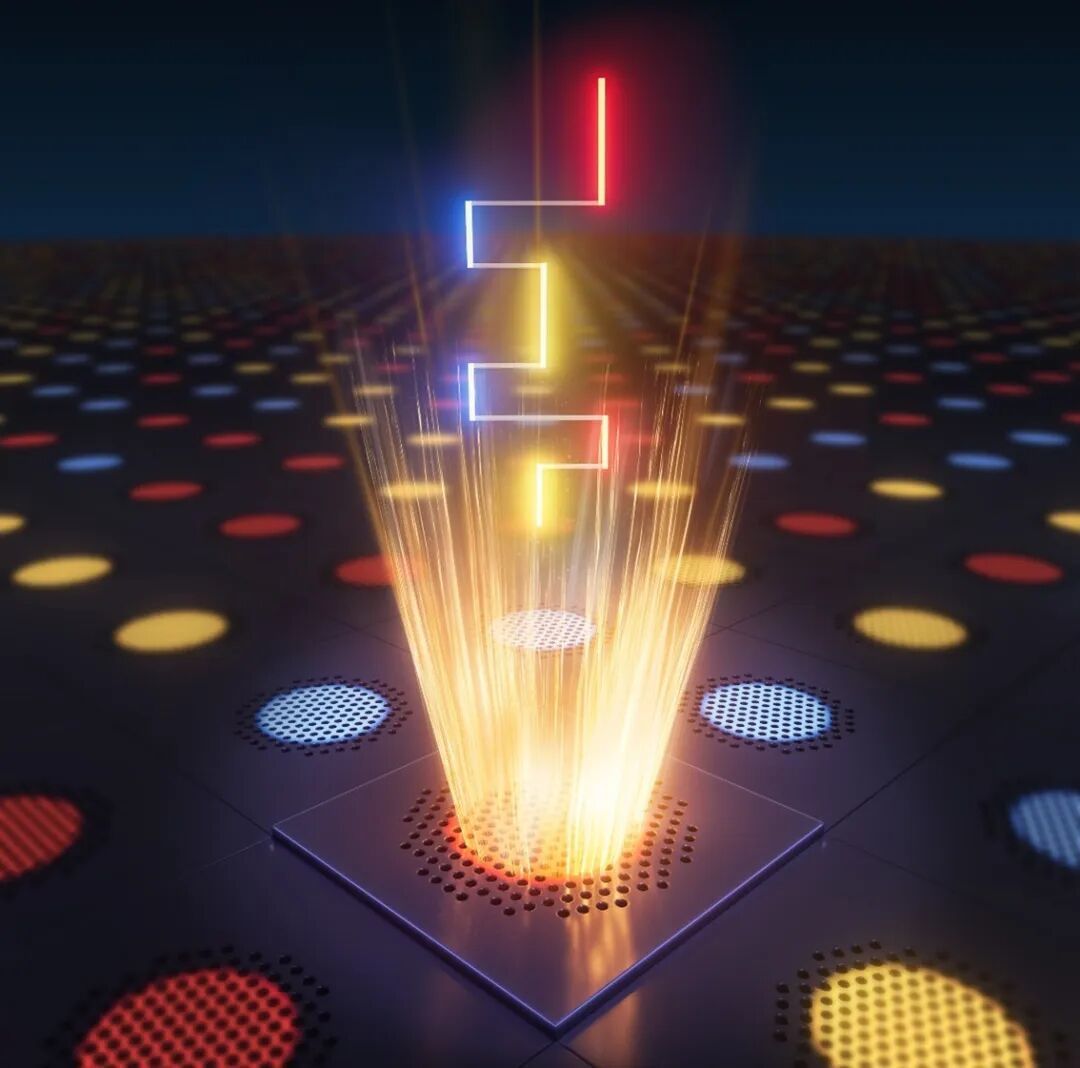
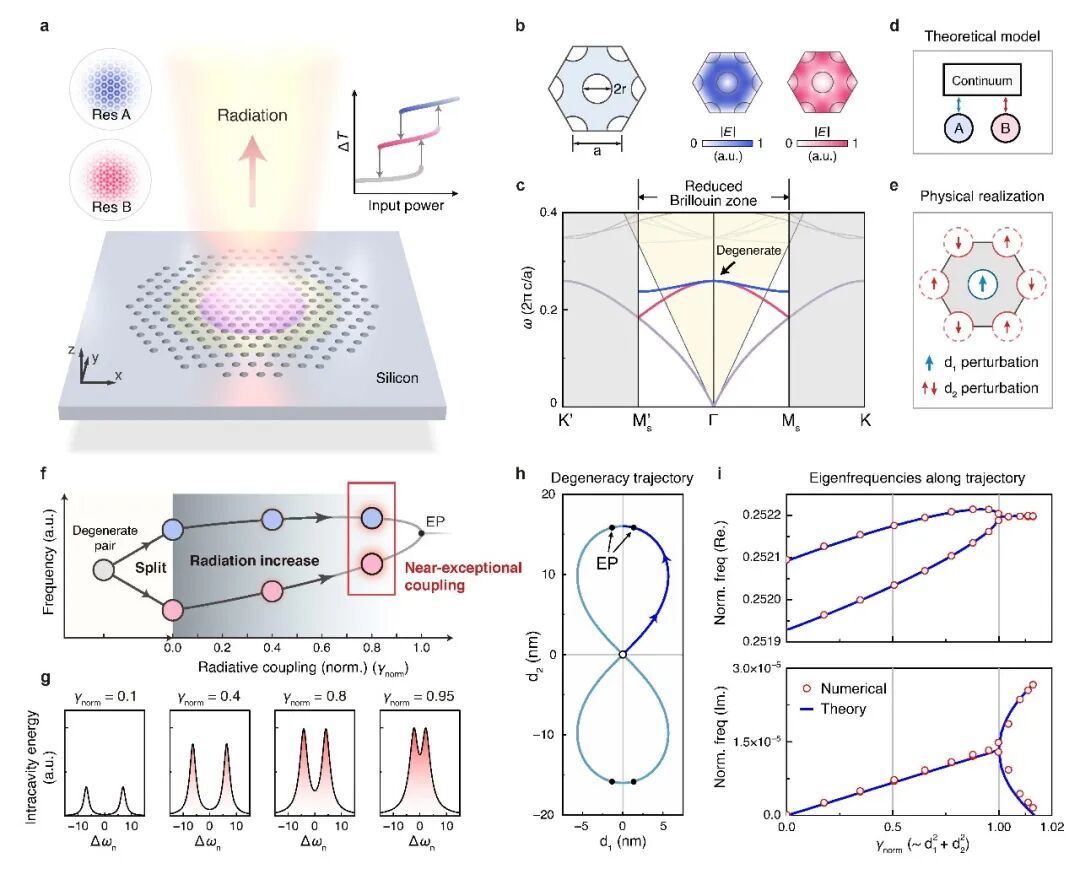
In the experiment, the team achieved resonant modes with a quality factor as high as 10⁶ within a silicon-based photonic crystal microcavity only 20 micrometers in diameter. Benefiting from the extremely high Q-factor and the dual-mode intracavity field enhancement enabled by the NEC mechanism, the system exhibited tristable characteristics based on thermo-optic nonlinearity. The experimentally observed hysteresis loops showed that the system could switch among three stable states at an extremely low input power of only 240 μW.
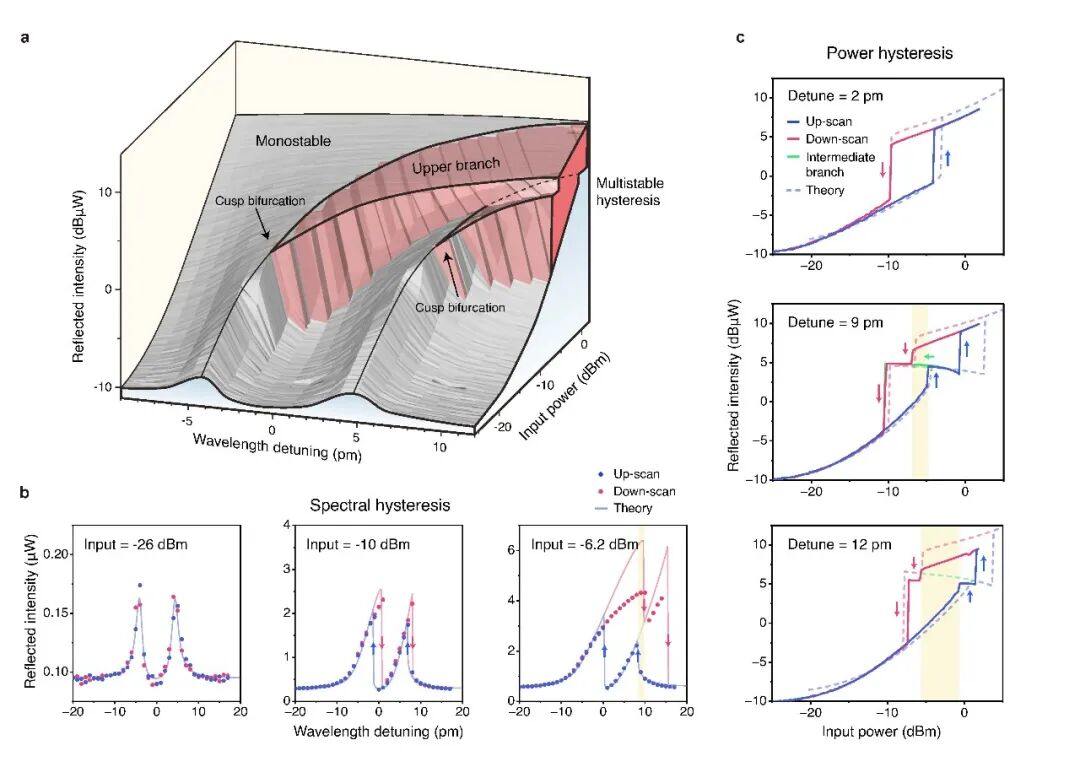
Based on this discovery, the research team demonstrated a prototype multi-valued optical memory device. By modulating the input optical power or wavelength, the system could rapidly and reliably switch among three stable intensity states. This achievement validates the feasibility of using non-Hermitian physics to control optical nonlinearity and provides a novel fundamental building block for developing scalable and reconfigurable optical neural networks and neuromorphic computing processors. The study reveals a general strategy for achieving robust multistability in compact photonic systems by controlling mode radiation coupling.
The related results were published in Nature Nanotechnology on June 16, 2026. Liu Zhen, a doctoral student at the School of Electronics, Peking University, is the first author. Dr. Wang Feifan and Professor Peng Chao from the School of Electronics, Peking University, and the National Key Laboratory of Photon Transmission and Communication, are the co-corresponding authors. This work was supported by the National Key Research and Development Program of China and the National Natural Science Foundation of China.
This article is compiled by Wedoany. All AI citations must indicate the source as "Wedoany". If there is any infringement or other issues, please notify us promptly, and we will modify or delete it accordingly. Email: news@wedoany.com
Related Products

Conveyor Belt Intelligent Monitoring System
LUO YANG WIRE ROPE INSPECTION TECHNOLOGY CO., LTD.

Automatic Aiming Laser Remote Obstacle Removal Robot
Pinggao Group Weihai High-Voltage Apparatus Co., Ltd.
Mine Explosion-proof and Intrinsically Safe Industrial Ethernet Ring Network (10 Gigabit/Gigabit)
Chongqing Mas Sci&Tech Co., Ltd.




Industrial and Commercial Point-Type Gas Detector
Jinan Benan Technology Development Co., Ltd.

MUX Series Communication Interface Device for Security and Stability Control System
Nanjing NR Electric Co., Ltd.