Brazil's Ministry of Communications Deploys 4G Signals in Over 50 Rural Areas in Piauí
en.Wedoany.com Reported - The Brazilian Ministry of Communications (MCom) has deployed 4G signal coverage in over 50 rural areas in the state of Piauí over the past three years, benefiting hundreds of Brazilians living in remote regions far from major cities. This expansion, led by the Ministry of Communications, has been implemented in 2,902 locations across Brazil.
Among Brazil's regions, the Northeast has seen the fastest progress in rural 4G expansion, with 956 locations connected since 2023. The Southeast region follows with 749 locations, the South ranks third (571), the North (426) and Central-West (200) come in fourth and fifth, respectively.
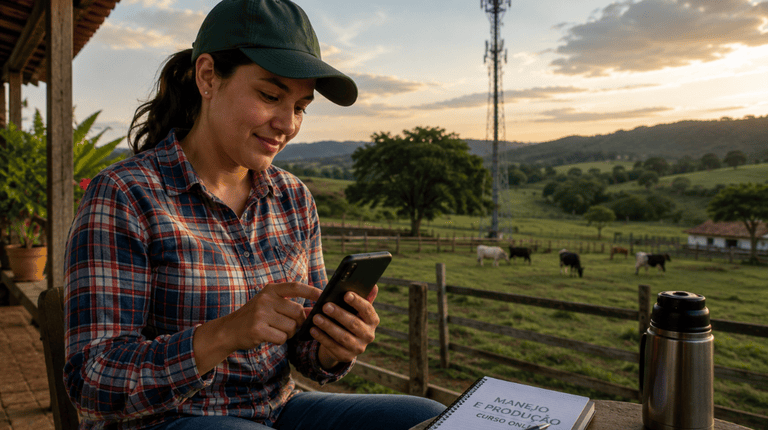
Minister of Communications Frederico de Siqueira Filho stated that bringing 4G signals to rural areas is a crucial effort for achieving digital inclusion nationwide. He emphasized that connecting rural areas is part of the larger challenge of integrating all Brazilians into the digital world, aiming to bring people closer to basic public services, telemedicine, and distance education, while enabling small producers to access banking and government platforms directly via mobile phones without leaving their land.
On an operational level, deploying 4G signals in a rural area requires complex engineering work. The process includes identifying suitable locations, building infrastructure, and completing administrative steps for installing mobile communication towers. Phases cover authorization for radio frequency use, radio station licensing with precise geographic coordinates for tower installation, and obtaining municipal environmental permits. After these steps are completed, structures reaching nearly 32 meters in height are erected to expand signal coverage.
This 4G expansion is part of telecommunications public policy, included in obligations pledged in the 5G auction. Additionally, actions coordinated by the Digital Television Implementation Group (Gired) aim to ensure efficient spectrum use, accelerating mobile connectivity coverage to rural and remote areas. With the activation of new base stations, residents of regions, settlements, and traditional communities can directly access high-speed internet on their mobile phones, facilitating document processing, distance education, banking services, and local agricultural economic development.
In the auction phase, operators select one or more locations from a list through a reverse auction model, submitting a single bid for each location that is lower than the maximum value specified in the tender documents. The company requesting the minimum subsidy amount for each location wins the right to build there. The Ministry of Communications is a member of the Digital Television Implementation Group (Gired), which also includes the National Telecommunications Agency (Anatel), broadcasters, and representatives of telecom operators, responsible for managing the guidelines of Seja Digital/EAD.
This article is compiled by Wedoany. All AI citations must indicate the source as "Wedoany". If there is any infringement or other issues, please notify us promptly, and we will modify or delete it accordingly. Email: news@wedoany.com
Related Products


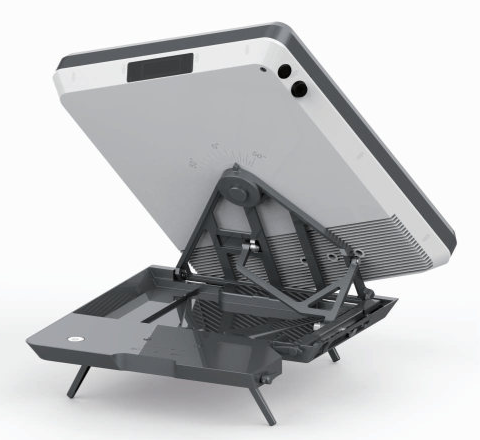
Flat Portable Satellite Terminal 0.35m Aperture Manual Portable Terminal
China Starwin Science & Technology Co., Ltd.
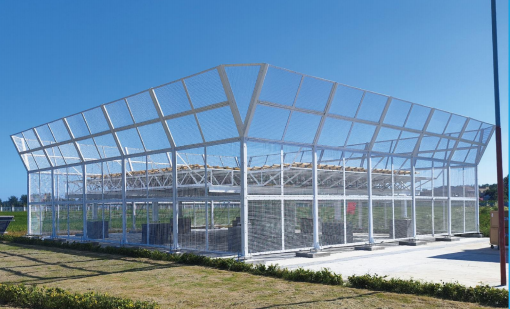
TWP16 P-Band Tropospheric Wind Profile Radar
China Huayun Meteorological Technology Group Co., Ltd.


20 Inch 1600*900 Full HD 60Hz TFT LED Monitor with VGA and DP Interfaces for Desktop Computers-Business Use
Guangzhou Zanying Optoelectronics Technology Co., Ltd.
GYTA Type Non-Self-Supporting Aerial/Duct Optical Cable
TONGDING INTERCONNECTION INFORMATION CO., LTD.