Donghan Semiconductor's 10-Billion-Yuan Base Breaks Ground in Guangzhou
en.Wedoany.com Reported - Guangzhou's power semiconductor materials industry has welcomed a 10-billion-yuan project. On the morning of June 25, Donghan Semiconductor's Guangzhou base officially broke ground in the Future Industry Innovation Core Area of Guangzhou Private Science and Technology Park. The project's total planned investment exceeds 10 billion yuan, with Phase I primarily producing AMB ceramic substrates, a key foundational material for power semiconductor modules. This phase involves an investment of approximately 2.3 billion yuan and is expected to generate an annual output value exceeding 3 billion yuan upon reaching full production.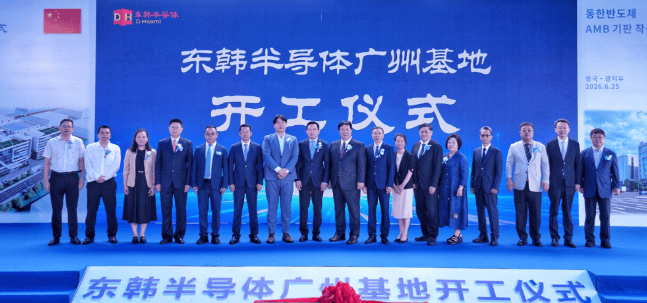
Donghan Semiconductor's Guangzhou base, located in Guangzhou's Baiyun District, aims to strengthen the industrial chain for upstream materials in power semiconductors. AMB ceramic substrates, fully known as active metal brazing ceramic substrates, are key foundational materials in power semiconductor modules, primarily serving functions such as chip carrying, heat dissipation, insulation, and electrical connection. As demand for high-power, high-reliability, and high-heat-dissipation devices grows in fields such as new energy vehicles, smart grids, 5G communications, and aerospace, the performance of ceramic substrates directly impacts the stability of power modules under high voltage, high current, and complex temperature environments.
The Phase I project, which has now broken ground, focuses on building AMB ceramic substrate production capacity. Power semiconductor modules are typically used in motor drives, power conversion, inverter control, and high-voltage power electronic systems, with applications including main drive inverters for new energy vehicles, charging piles, photovoltaic inverters, energy storage converters, rail transit traction systems, industrial frequency converters, and smart grid equipment. As wide-bandgap semiconductors like silicon carbide and gallium nitride enter larger-scale application stages, the requirements for thermal conductivity, thermal cycle reliability, and insulation strength of substrate materials in power devices continue to rise, increasing the importance of AMB ceramic substrates.
The project's parent company, South Korea's STI Co., Ltd., founded in 1997, is a manufacturer of silicon carbide semiconductor equipment and ceramic substrates. It has strong industrial expertise in the AMB ceramic substrate field and has long been part of the supply chain for global semiconductor companies such as Samsung Electronics and SK Hynix. The groundbreaking of this Guangzhou base signifies the establishment of a manufacturing base for power semiconductor materials in South China, helping to connect the material manufacturing capabilities of an overseas company with the demands of the Guangdong-Hong Kong-Macao Greater Bay Area in electronic information, new energy vehicles, smart equipment, and advanced manufacturing.
Guangzhou is accelerating efforts to fill key gaps in the semiconductor industry chain. While the city has a strong foundation in the electronic information industry, it still requires more major projects to support key areas such as integrated circuit materials, manufacturing, packaging and testing, and critical equipment. Once completed, the Donghan Semiconductor Guangzhou base will synergize with existing semiconductor design, manufacturing, packaging, testing, and end-use application companies in Guangzhou, helping to build a more complete "design + manufacturing + packaging and testing" industrial ecosystem. For Baiyun District, this project will also enhance the capacity of Guangzhou Private Science and Technology Park to host future industries and advanced manufacturing projects.
The Phase I investment of approximately 2.3 billion yuan and projected annual output value of over 3 billion yuan upon full production indicate that this project is not merely about factory construction but has clear goals for capacity release and industrial chain driving. The production of AMB ceramic substrates involves processes such as powder materials, ceramic sintering, metal brazing, pattern processing, surface treatment, precision inspection, and reliability verification, requiring high standards for equipment, processes, yield control, and customer certification. If the project successfully reaches full production, it will drive supporting demand for upstream materials, precision processing, automation equipment, inspection equipment, cleanrooms, and downstream power module customers.
Power semiconductors are fundamental components in the energy transition and electrification process. Electric drive systems in new energy vehicles require efficient power modules, photovoltaic and energy storage systems need highly reliable inverters and converters, smart grids rely on numerous power electronic devices for regulation and protection, and industrial automation depends on frequency conversion and servo control. AMB ceramic substrates are at the foundational material level of these application chains. Although not directly facing end users, they affect the heat dissipation, lifespan, and reliability of power modules, making them a critical node in building a domestic supply chain for high-end power devices.
Following the groundbreaking of the Donghan Semiconductor Guangzhou base, subsequent construction will focus on plant construction, production line equipment installation, process debugging, customer certification, and production ramp-up. Semiconductor material projects typically require a long verification period from construction to stable full production, especially when targeting high-reliability scenarios such as new energy vehicles, smart grids, and aerospace, where customers demand higher batch consistency, long-term reliability, and quality systems. Whether the project can release capacity as planned will depend on construction progress, equipment delivery, process stability, and the speed of downstream customer adoption.
For Guangzhou, the landing of a 10-billion-yuan semiconductor materials project not only increases the scale of individual industrial investment but, more importantly, integrates the key foundational material segment of power semiconductors into the local industrial landscape. As the construction of the Donghan Semiconductor Guangzhou base progresses, Guangzhou's Baiyun District is expected to form a new industrial fulcrum in new energy, power electronics, and advanced semiconductor materials, providing closer material support capabilities for the electronic information and new energy industry chains of the Guangdong-Hong Kong-Macao Greater Bay Area.
This article is compiled by Wedoany. All AI citations must indicate the source as "Wedoany". If there is any infringement or other issues, please notify us promptly, and we will modify or delete it accordingly. Email: news@wedoany.com
Related Products


20 Inch 1600*900 Full HD 60Hz TFT LED Monitor with VGA and DP Interfaces for Desktop Computers-Business Use
Guangzhou Zanying Optoelectronics Technology Co., Ltd.

Comprehensive Mining Automation Control System
Beijing Tianma Intelligent Control Technology Co., Ltd.
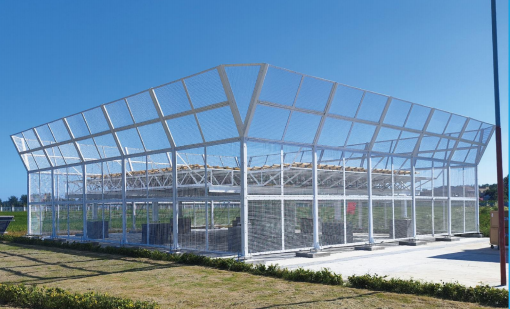
TWP16 P-Band Tropospheric Wind Profile Radar
China Huayun Meteorological Technology Group Co., Ltd.
Mine Explosion-proof and Intrinsically Safe Industrial Ethernet Ring Network (10 Gigabit/Gigabit)
Chongqing Mas Sci&Tech Co., Ltd.


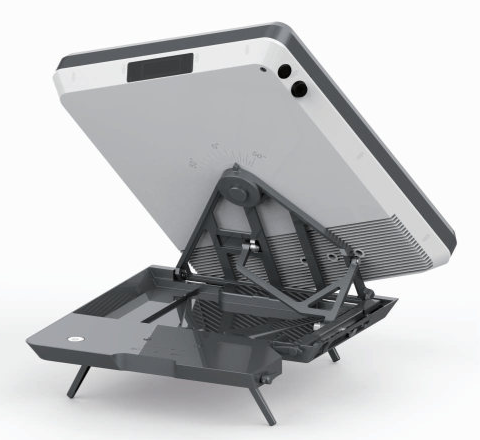
Flat Portable Satellite Terminal 0.35m Aperture Manual Portable Terminal
China Starwin Science & Technology Co., Ltd.