Former SpaceX Engineer Founds Eclipse to Build Mega Constellations
en.Wedoany.com Reported - A former SpaceX engineer has founded a startup called Eclipse Space, aiming to provide mega constellation construction services for government and commercial clients. The company emerged from stealth mode on June 26. Led by Derek Huerta, a former SpaceX satellite payload engineering manager, the company was founded a year ago in Redmond, Washington, which is also the location of Starlink's primary satellite production facility.
Eclipse is preparing to deliver its first customer hardware later this year, including a prototype phased array and a telemetry, tracking, and command radio, in preparation for an integrated demonstration spacecraft planned for 2027. Unlike SpaceX's tightly controlled, vertically integrated Starlink structure, the startup adopts a fabless production model, which Huerta likens to Apple's iPhone manufacturing approach. Eclipse will handle satellite design, intellectual property, and the establishment of manufacturing processes, but will collaborate with regional partners for assembly, allowing clients to gain more control and ownership without first building an organization of SpaceX's scale.
Huerta co-founded Eclipse shortly after leaving SpaceX. Earlier this month, SpaceX went public on the Nasdaq, with its initial public offering generating windfalls for many current and former employees. Huerta stated via email to SpaceNews that he holds equity and that the IPO has been good to him, while adding that Eclipse is not a self-funded venture. He noted that early investors include Space Capital, Tectonic, and Ubiquity, with external investments undisclosed. He said the company has sufficient funding to execute its roadmap, including hardware deliveries and demonstration missions this year, and while specific figures will not be disclosed at this stage, more news on financing will come soon. Eclipse was co-founded by Kyle Leveque, who also co-founded remote sensing satellite manufacturer Aquila Space, now part of Astro Digital.
Huerta mentioned that about half of Eclipse's roughly 30 employees come from the Starlink project, with 13 of them having been members of the broadband constellation's early phase, then known as the satellite development division. He said these employees developed Starlink's phased array and built the supply chain, taking it from prototype to producing dozens of satellites per week, and were also involved in power systems, software, modems, and other manufacturing processes tied to the record-breaking launch cadence of the Falcon 9.
Huerta noted that with over 10,000 Starlink satellites operating in low Earth orbit, SpaceX has demonstrated how to mass-produce satellites at an unprecedented scale and cost. However, he believes the world is heading toward a future controlled by a few networks and a handful of companies and governments, where most people on Earth will have to lease access on others' terms, a prospect he finds unsettling. Eclipse's target clients include commercial companies seeking proprietary connectivity and other satellite services, as well as governments for whom building space infrastructure on their own is prohibitively expensive.
To accelerate satellite design and engineering, Eclipse acquired the engineering team behind Agent Studio, an AI development platform from technology company Rendered.ai, while also securing an exclusive license to develop the software and an option to purchase the underlying technology in the future. This deal gives Eclipse an in-house AI engineering team that can collaborate with its satellite, mechanical, electrical, and RF engineers to build tools.
Eclipse has already used the platform across its entire engineering efforts, including its first spacecraft. The demonstration satellite uses a satellite platform weighing under 100 kilograms and is designed to validate key technologies, after which Eclipse will move to larger, operational "Starlink-class" models. The demonstrator will not include the phased array that Eclipse plans to add to operational spacecraft, but it is designed to have the satellite platform work with two internally built instruments: a total ionizing dose sensor for measuring the radiation environment, and a Langmuir probe for characterizing local plasma.
Huerta said operational Eclipse satellites will feature dual S-band phased arrays, E-band backhaul, V-band inter-satellite links, and 8 kilowatts of power, with over 20 satellites designed to be stacked and launched on a single Falcon 9 rocket. Eclipse's initial focus is on direct-to-device services, partly because tackling one of the hardest engineering challenges in satellite communications forces the company to develop core technologies that can later be applied to broadband and other capabilities, including orbital data centers. Eclipse envisions a future where every country and most major enterprises will want their own constellations, as satellite networks become increasingly critical infrastructure.
This article is compiled by Wedoany. All AI citations must indicate the source as "Wedoany". If there is any infringement or other issues, please notify us promptly, and we will modify or delete it accordingly. Email: news@wedoany.com
Related Products
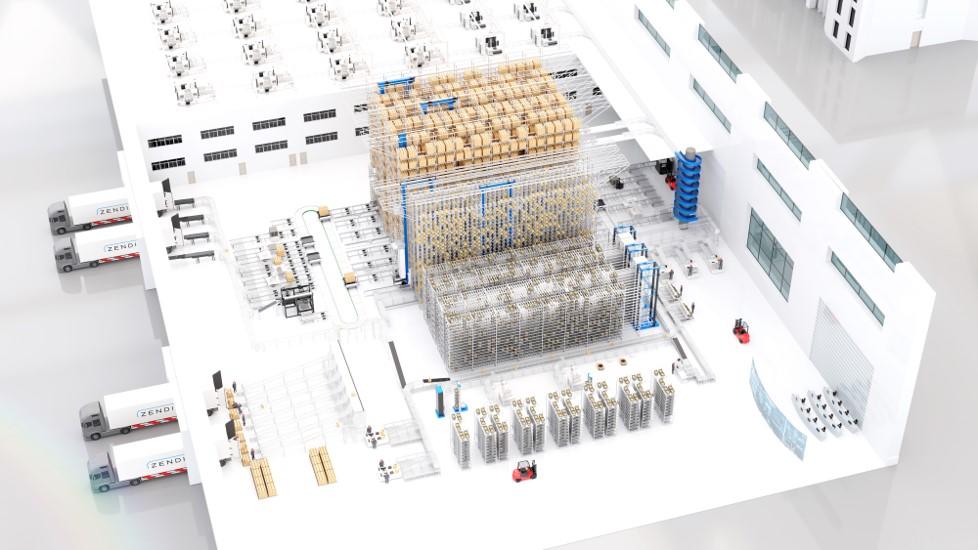

One-Stop Steward Service for the Entire Logistics System Integration Chain
Zhongding Intelligent (Wuxi) Technology Co., Ltd.

G.652.D Wavelength-extended Non-dispersion Shifted Single-mode Optical Fiber
HONGAN GROUP CO., LTD.
GYTA Type Non-Self-Supporting Aerial/Duct Optical Cable
TONGDING INTERCONNECTION INFORMATION CO., LTD.

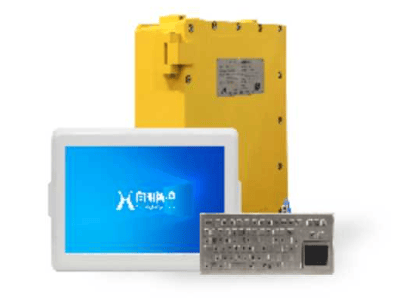
KJD127(A) Mining Explosion-Proof and Intrinsically Safe Computer
Taiyuan Xiangming Intelligent Control Technology Co., Ltd.
Conveyor Belt Intelligent Monitoring System
LUO YANG WIRE ROPE INSPECTION TECHNOLOGY CO., LTD.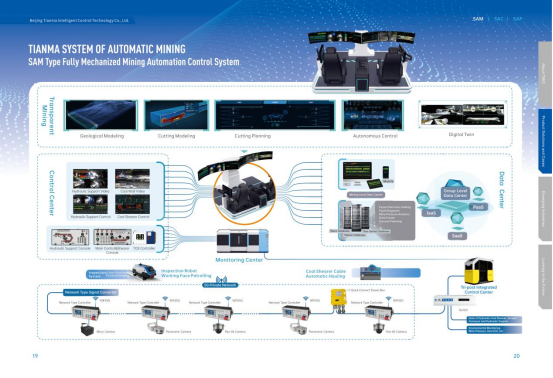
Comprehensive Mining Automation Control System
Beijing Tianma Intelligent Control Technology Co., Ltd.


Automatic Aiming Laser Remote Obstacle Removal Robot
Pinggao Group Weihai High-Voltage Apparatus Co., Ltd.