Huawei: Leveraging 5G-A Full-Stack IoT Technology to Win a New Space for Hundreds of Billions of Intelligent Connections
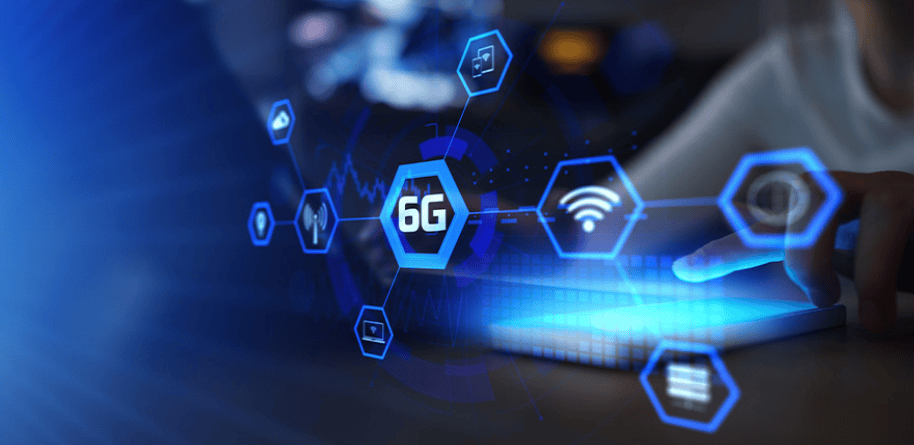
en.Wedoany.com Reported - Zeng Chuang, President of Huawei's Wireless FDD Product Line, recently stated at the GSMA IoT Summit that AI and IoT are mutually empowering, driving the transition from the Internet of Everything to the Intelligent Internet of Everything. The industry needs to rely on 5G-A full-stack IoT technology innovation to achieve "one network, multiple capabilities," building differentiated IoT capabilities on a single network to meet the diverse IoT needs of all scenarios, enabling the connection of all elements, and winning a new space for hundreds of billions of intelligent connections.
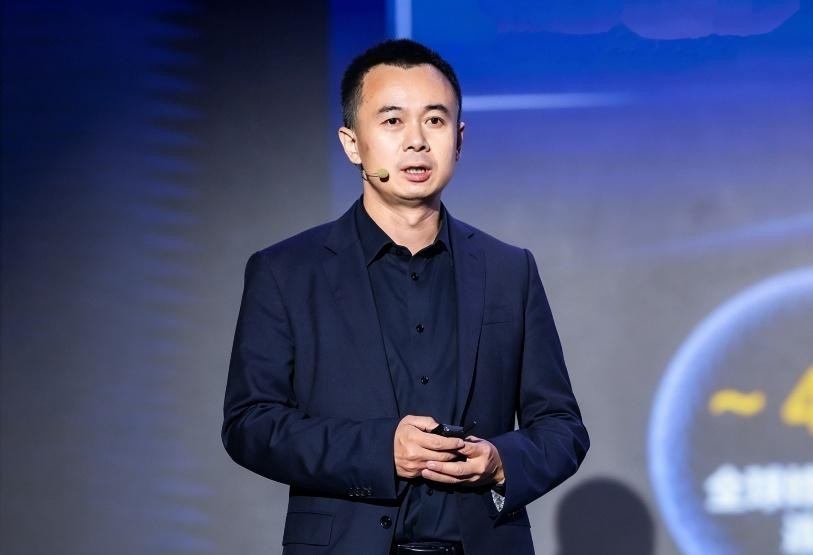
Currently, the mobile IoT is developing rapidly, with connection scale and commercial value growing simultaneously. Data shows that in 2025, the global cellular IoT connection scale reached 4.7 billion; China's "mobile connections exceeding human population" ratio has surpassed 60%, and the comprehensive revenue of mobile IoT exceeded 50 billion yuan. In the mobile AI era, as AI accelerates its integration into terminals, the value of IoT is extending from data transmission to intelligent interaction, moving from a pure "Byte" data transmission model to a "Byte+Token" model. This transformation has generated all-scenario, hundred-billion-level connection demands, requiring networks to possess more diverse capabilities.
The 5G-A IoT technology system covers multiple levels, including high speed, low power consumption, low cost, and even ultra-low power consumption and ultra-low cost, ranging from active to passive, capable of matching IoT needs in different scenarios. Achieving ubiquitous coverage and simplified deployment is a key path to promoting the large-scale development of IoT.
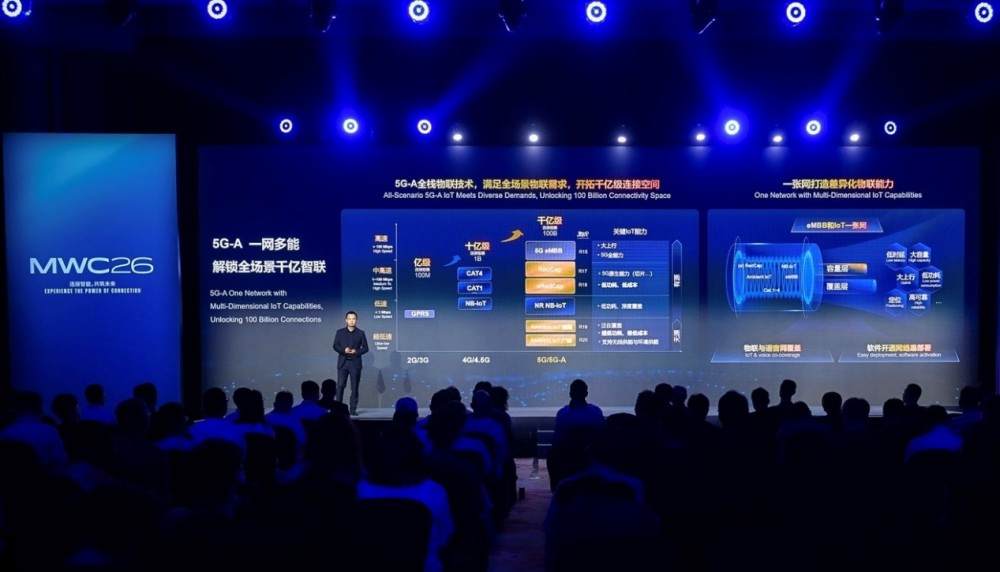
The 5G lightweight (RedCap) industry has entered a phase of explosive growth. Major chip manufacturers have all launched products, module costs continue to decline, and the connection scale has exceeded ten million. RedCap applications not only cover vertical industries but have also expanded to consumer fields such as smart cockpits and smart watches. Global operators are accelerating commercial deployment. Leveraging the world's largest 5G network, China has achieved nationwide continuous RedCap coverage and is seizing market opportunities through services like eSIM "one number, dual terminals." A continuously covered 5G network provides the foundation for the large-scale rollout of RedCap, and the industry is moving towards a "billion-level" connection stage. For the next-generation eRedCap technology, the R18 standard has been frozen, with commercial deployment expected in 2026. The next step is to accelerate the incubation of end-to-end elements, leveraging lower costs, lower power consumption, and stronger uplink capabilities to mature the ecosystem and expand intelligent connection scenarios.
Cellular passive IoT (Ambient IoT), as a key technology for digital twins, is accelerating its maturity due to advantages such as being battery-free and having ultra-low cost. For local area scenarios, the 3GPP R19 standard has been frozen, and over 20 global pilots have completed verification in high-value scenarios like manufacturing, warehousing, and logistics, enabling unmanned intelligent management. The world's first end-to-end solution has been released. For wide area scenarios, the R20 standard, addressing the demand for full-domain visibility and manageability, is progressing orderly and is expected to be frozen in the first half of 2027. Through innovations like solar power supply and AI-enhanced positioning, the goal of wide area passive IoT is to build a 10x generational competitiveness, achieving coverage comparable to cellular, ultra-low power consumption (mW level) for tags, ultra-low cost, and meter-level positioning. In the future, wide area passive IoT will enter scenarios such as supply chain logistics, asset sensing, and people/object finding, opening up new connection spaces.
Huawei stated that it will collaborate with chip and module partners to enrich the ecosystem, work with operators to build differentiated "one network, multiple capabilities" and explore new business models, and cooperate with industry customers to explore new AI intelligent connection applications. MWC Shanghai 2026 will be held from June 24 to June 26, with Huawei's exhibition area located in Hall N1 of the Shanghai New International Expo Centre.
This article is compiled by Wedoany. All AI citations must indicate the source as "Wedoany". If there is any infringement or other issues, please notify us promptly, and we will modify or delete it accordingly. Email: news@wedoany.com
Related Products

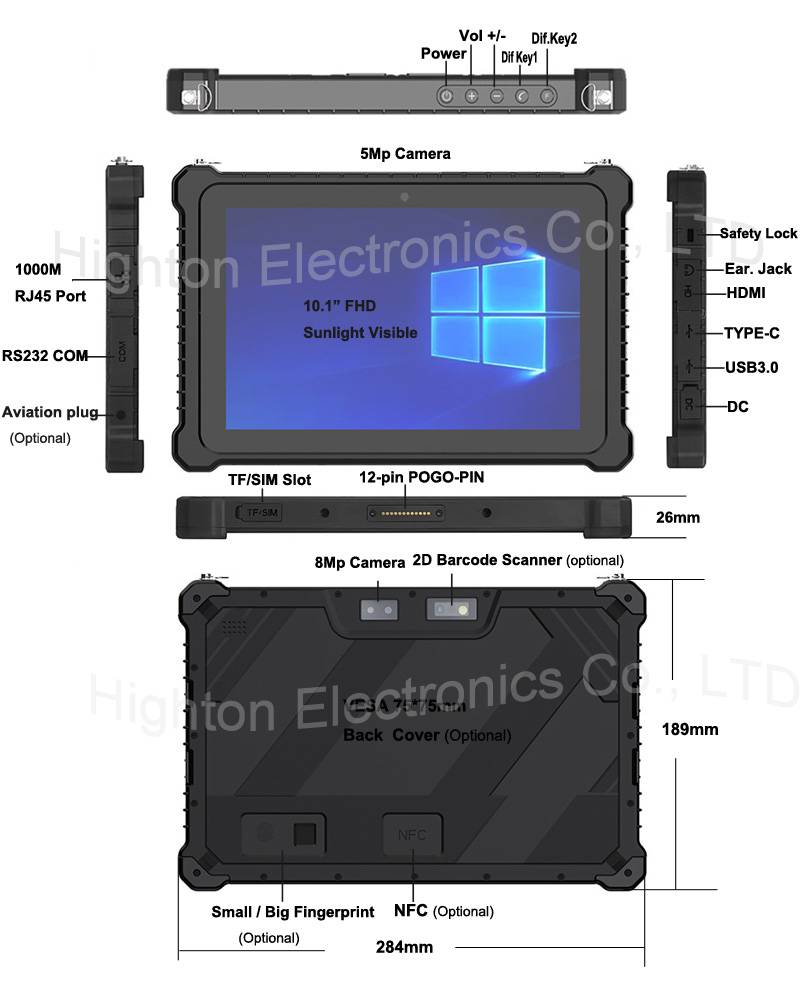
Hot Selling 10 Inch Intel N5100 I5 I7 FHD 8 +128GB 16+256GB Win10 Pro Win11 Pro 4G 5G Rugged Tablet PC Pad with NFC Barcode
Highton Electronics Co., Ltd.
Mine Explosion-proof and Intrinsically Safe Industrial Ethernet Ring Network (10 Gigabit/Gigabit)
Chongqing Mas Sci&Tech Co., Ltd.
20 Inch 1600*900 Full HD 60Hz TFT LED Monitor with VGA and DP Interfaces for Desktop Computers-Business Use
Guangzhou Zanying Optoelectronics Technology Co., Ltd.
G.652.D Wavelength-extended Non-dispersion Shifted Single-mode Optical Fiber
HONGAN GROUP CO., LTD.


Industrial and Commercial Point-Type Gas Detector
Jinan Benan Technology Development Co., Ltd.
Multi-function Marine Monitoring Low-altitude Detection Radar Sea-air Boundary Ocean Dynamic Environment Measurement
Chengdu Dixin Technology Co., Ltd.