Wistron invests NT$15.5 billion in the US, Taiwan, and other regions to expand AI server capacity
en.Wedoany.com Reported - Wistron is increasing AI server rack capacity in California, Taiwan, Vietnam, and Malaysia. This expansion reflects enterprise infrastructure pressure rather than supplier optimism. The Taiwanese original design manufacturer (ODM) is following demand for Nvidia-related systems and global cloud operators, while warning that CPUs and other components remain tight enough to temporarily slow deliveries.
The board's actions show what AI infrastructure buildout looks like when it moves from keynote slides to factory planning. Wistron approved an investment of approximately $150 million in its California subsidiary, WisLab EMS, bringing the subsidiary's total investment to about $212.1 million. California's proximity to major AI customers, engineering teams, validation workflows, and US political preferences for domestic technological capabilities makes this move commercially useful and strategically necessary, but costly. The broader plan covers new facilities and capacity expansions in Taiwan and Southeast Asia: Hsinchu receives NT$1.672 billion, Kaohsiung receives NT$4.786 billion, and Vietnam and Malaysia receive $24.5 million and $22.7 million, respectively. The total approved capital increases and facility expansions amount to approximately NT$15.5 billion. This is not huge by hyperscale cloud provider standards, but it is significant for an ODM that must purchase capacity before knowing how long the demand curve will last.
AI server demand still exceeds supply. Wistron says it sees no evidence of a demand bubble, but infrastructure buyers may interpret this differently. If CPUs, accelerators, network components, memory, power systems, and rack integration remain constrained, delivery timelines become a negotiation tool: large cloud providers get priority, smaller operators wait, and enterprise private AI projects are repriced, delayed, or simplified. The mention of CPU shortages is noteworthy because AI infrastructure discussions mostly focus on GPUs, but AI servers require host CPUs, firmware validation, thermal engineering, liquid cooling in some configurations, high-speed networking, power distribution, and field support. Any weak link can extend lead times.
Nvidia CEO Jensen Huang recently identified Wistron as a key partner, which matters because the AI server market increasingly operates through tight supplier relationships rather than open procurement. The ties between OEMs, ODMs, chip suppliers, cloud operators, and colocation providers are becoming closer, which helps speed but also narrows options. For enterprise buyers, the risk is that AI hardware roadmaps may depend on a small number of manufacturing and integration partners. For regulators, the geographic factor is hard to ignore: adding capacity in the US and allied Asian markets aligns with industrial policy, supply chain resilience planning, and export control politics, but it does not eliminate exposure to component shortages or demand concentrated among a few large customers.
The troubling question is utilization. AI servers are currently selling faster than manufacturers can produce them, but factory investments are long-term, and AI demand forecasts are not conservative. Wistron is effectively adding capacity in a market where buyers insist everything must arrive immediately, while suppliers are aware that budget cycles, power availability, data center permit approvals, and model economics can all shift rapidly. Still, doing nothing is riskier. Nvidia's ecosystem needs manufacturing partners capable of supporting higher volumes, faster configuration changes, and regional deployment demands. Wistron wants to be one of the companies closest to the order flow. Factories will reveal the truth before forecasts do.
Wistron's investment in California may shorten deployment cycles for some US-related AI systems, but higher-cost manufacturing could be reflected in pricing, support contracts, or allocation terms. Buyers should focus most on component availability, because even if accelerator supply improves, CPU, network, memory, thermal, and power bottlenecks could still delay projects. This expansion only partially reduces supply chain risk. Geographic diversification helps resilience, but dependence on a few chip suppliers, server integrators, and hyperscale buyers remains significant. Smaller cloud and colocation operators may face weaker allocation priority than hyperscale cloud providers, making AI infrastructure procurement slower, more expensive, and commercially harder to predict. For investors, adding capacity while AI demand is strong carries risk, but if enterprise deployment slows or hardware cycles normalize, utilization could weaken.
Related Products

Flat Portable Satellite Terminal 0.35m Aperture Manual Portable Terminal
China Starwin Science & Technology Co., Ltd.
Industrial and Commercial Point-Type Gas Detector
Jinan Benan Technology Development Co., Ltd.
Comprehensive Mining Automation Control System
Beijing Tianma Intelligent Control Technology Co., Ltd.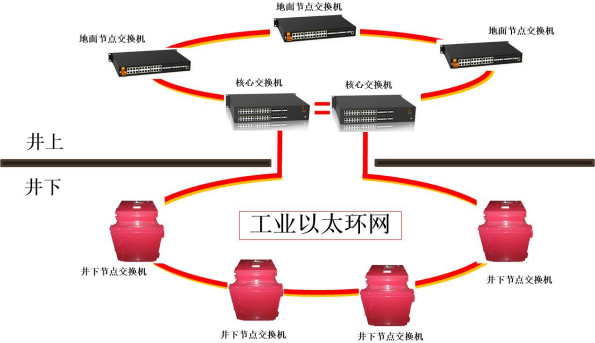
Mine Explosion-proof and Intrinsically Safe Industrial Ethernet Ring Network (10 Gigabit/Gigabit)
Chongqing Mas Sci&Tech Co., Ltd.
20 Inch 1600*900 Full HD 60Hz TFT LED Monitor with VGA and DP Interfaces for Desktop Computers-Business Use
Guangzhou Zanying Optoelectronics Technology Co., Ltd.


Conveyor Belt Intelligent Monitoring System
LUO YANG WIRE ROPE INSPECTION TECHNOLOGY CO., LTD.