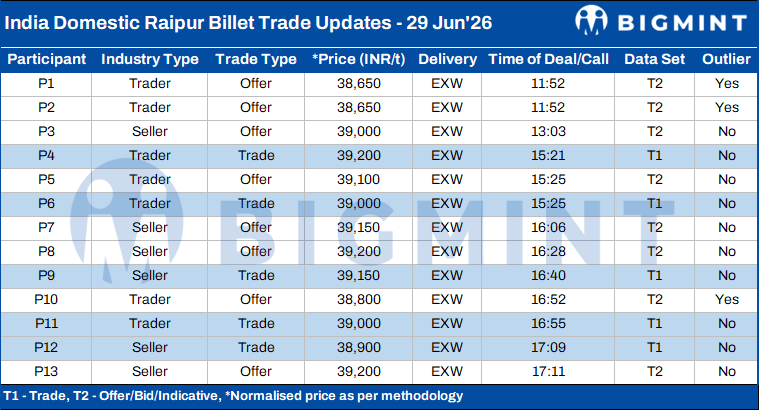
en.Wedoany.com Reported - On June 29, 2026, Iranian domestic billet prices rose by 7,000 rials/kg (approximately $5/ton) week-on-week to 585,500 rials/kg (approximately $398/ton). This price increase was primarily supported by improved export expectations following the resumption of shipping through the Strait of Hormuz, the anticipated restart of import order registration, and rising inflation expectations. Meanwhile, Iranian domestic rebar prices fell by 10,000 rials/kg (approximately $7/ton) week-on-week to 660,000 rials/kg (approximately $449/ton).
Iran is one of the world's major billet exporters, and its steel market trends significantly impact steel trade in the Middle East and Asia. The rise in billet prices occurred against the backdrop of resumed shipping through the Strait of Hormuz. This strait is one of the world's most critical chokepoints for oil and steel and bulk cargo transport, and shipping had previously been disrupted due to geopolitical conflicts, limiting Iranian billet exports. With shipping restored, Iranian billet exporters have re-entered the international market, boosting export sentiment. According to market sources, Iranian billet CFR offers to Saudi Arabia have rebounded to around $470-475/ton, with several major Saudi billet consumers currently in procurement negotiations with Iranian suppliers. On the FOB export side, most Iranian mills are targeting offers of $414-415/ton, with tradable levels for standard 3SP billet maintained at $410-412/ton.
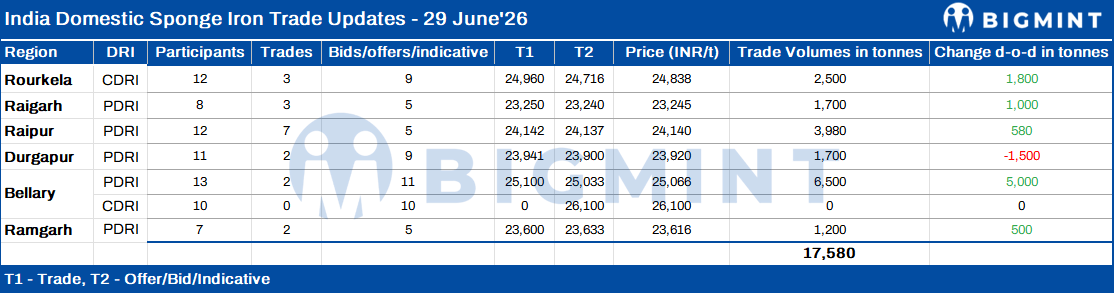
In contrast to the billet market, Iran's domestic rebar market has shown weakness. Factors such as sluggish construction demand, liquidity shortages, disrupted bank payments, and financing constraints continue to suppress long steel consumption. Increased supply and slower trading activity have further pressured long steel prices. In the previous week, Iranian rebar prices had already fallen by 15,000 rials/kg due to weak construction demand, mid-year trading slowdowns, and liquidity constraints. Iranian domestic billet prices, however, received some support from cost pressures, with the benchmark price for direct reduced iron (DRI) remaining high at 240,000 rials/kg (approximately $176/ton).
The resumption of Iranian billet exports has had a certain impact on the global billet trade landscape. As Iranian supply returns to the market, billet export offers from China and the Commonwealth of Independent States (CIS) region have undergone varying degrees of adjustment. Some procurement orders in the Middle East have shifted from other sources to Iran due to its clear price advantage. The price trend in the Iranian billet market reflects a dynamic balance between supply recovery and the revival of export demand. Meanwhile, the persistent weakness in the domestic construction sector continues to suppress consumption of long steel products like rebar, creating a divergence in market trends between semi-finished and finished steel products.