en.Wedoany.com Reported - Ramelius Resources (ASX:RMS) has announced the sale of its Edna May gold mine in Western Australia, including the mine's processing infrastructure and satellite tenements.
The acquirer will pay Ramelius A$200 million upfront and A$100 million in equity. The company stated that since the Edna May gold mine is currently in care and maintenance, this transaction allows it to realize value from non-core assets and further concentrate resources on its core business.
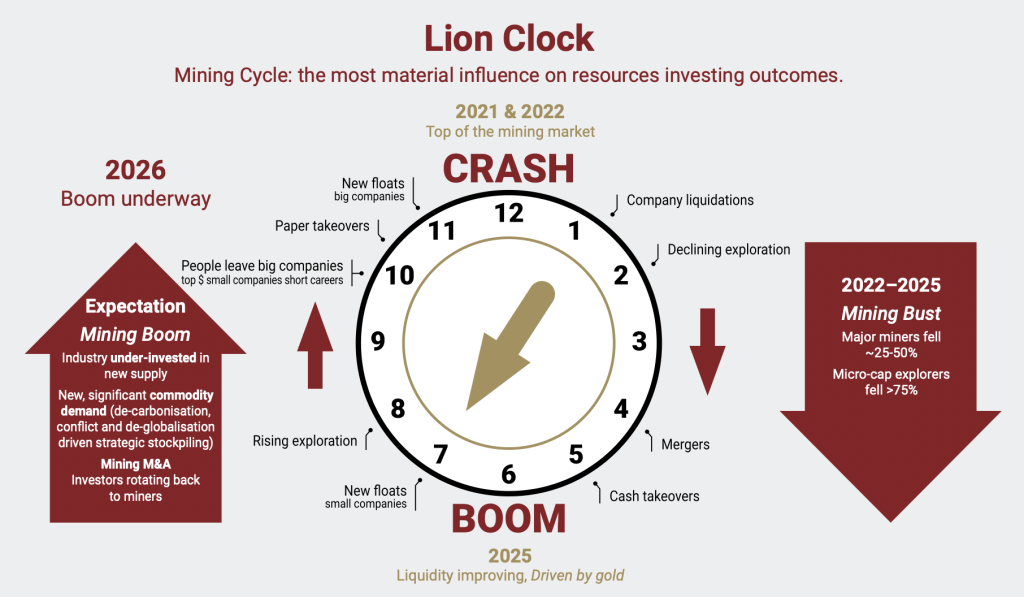
This sale is viewed by market observers as part of an overall upward trend in the mining sector, consistent with the cycle described by the Lion Selection Group Mining Clock. This mining cycle theoretical framework depicts the industry's evolution from boom to bust. During the boom phase, investors can benefit from resource-related stocks, while caution is required during the bust phase. Lion Selection Group uses this clock to guide its asset allocation decisions. A note on the Lion Selection Group Mining Clock states: "Liquidity improving. Gold-driven."
Lion Selection Group Chief Investment Officer Hedley Widdup issued a risk warning as early as 2022, based on the mining clock being in the "crash" phase. Subsequently, the resource sector indeed experienced a correction as indicated by the clock. Around 2024, the clock's hand began to shift toward a period suggesting accumulating resource exposure.
Over the past two years, the Australian gold sector has been the first metal in the natural resources industry to break out, with robust profits and cash flow. Lithium and copper followed later. Despite a recent pullback, the gold price in Australian dollars remains at A$5,897 per ounce. The high gold price sustains strong market investment interest, enabling companies like Ramelius to sell non-core assets to a robust buyer market. Analysts believe that the current gold price represents a profitable strategy for buyers and offers a favorable selling price for sellers.
The fifth phase on the Lion Selection Mining Clock is marked as "Cash Takeovers." As smaller resource companies become targets for acquisitive firms, this trend is expected to persist. Just last year, Ramelius itself completed the acquisition of peer Spartan Resources, with a transaction valuation of A$2.4 billion. The message conveyed by the mining clock indicates that the mining cycle remains in a structural upward trend. Two main factors driving this trend include underinvestment in the resource industry over the past 15 years and the return of increased liquidity in China. Against this backdrop, the market expects more mergers and acquisitions to occur in the foreseeable future.