Chinese Team Develops Pyrene-Imidazole Molecular System Achieving 13.22% Efficiency in Deep-Blue OLEDs
en.Wedoany.com Reported - Chinese researcher Ying Fu and their team have developed a structurally regulated pyrene-imidazole molecular system that enhances the electroluminescent performance of deep-blue organic light-emitting diodes (OLEDs) through precise excited-state engineering. Without introducing entirely new molecular frameworks, the study employed a linkage position regulation strategy within a donor–π–acceptor framework, synthesizing and directly comparing the para-linked isomer p-PyI-PBO and the meta-linked isomer m-PyI-PBO, which share identical donor and acceptor units. This established a clear structure–photophysics–device relationship, elucidating the impact of linkage position on molecular conformation, local excited/charge transfer (LE/CT) balance, HLCT characteristics, and exciton utilization efficiency.
Theoretical calculations revealed that p-PyI-PBO exhibits mixed LE/CT characteristics in the T₃ and T₄ states, with S₁–T₃ and S₁–T₄ energy gaps of 0.12 eV and 0.16 eV, respectively. In contrast, m-PyI-PBO shows HLCT characteristics in the T₂ state, with a smaller S₁–T₂ energy gap of 0.09 eV, indicating a more favorable reverse intersystem crossing (RISC) channel. Spin-orbit coupling (SOC) analysis further confirmed these findings: p-PyI-PBO exhibited ⟨T₃|ĤSOC|S₁⟩ and ⟨T₄|ĤSOC|S₁⟩ values of 0.1204 cm⁻¹ and 0.0860 cm⁻¹, respectively, while m-PyI-PBO showed a ⟨T₂|ĤSOC|S₁⟩ value of 0.1308 cm⁻¹, indicating stronger singlet–triplet coupling. Meanwhile, the large S₁–T₁ energy gaps (approximately 0.64–0.91 eV) for both compounds effectively ruled out the conventional thermally activated delayed fluorescence (TADF) mechanism.
Femtosecond transient absorption (fs-TA) spectroscopy measurements (with an excitation wavelength of 320 nm) revealed the kinetic processes of m-PyI-PBO in solution: ground-state bleaching signals appeared in the 320–370 nm range, stimulated emission from the S₁ state was observed at 400–460 nm, and excited-state absorption signals were located above 460 nm, confirming that the dynamics are dominated by the S₁ state. Kinetic analysis at 544 nm yielded two decay components: τ₁ of 8.97 ps, attributed to ultrafast excited-state relaxation, and τ₂ of 4.09 ns, corresponding to fluorescence decay. Transient features in the 560–600 nm range indicated the presence of higher excited states, potentially involving rapid S₁→Tₙ intersystem crossing or singlet–triplet equilibrium, confirming that emission primarily originates from directly populated singlet states with HLCT characteristics.
In device testing, a non-doped m-PyI-PBO OLED achieved a maximum external quantum efficiency (EQE) of 9.52%, with deep-blue emission and minimal efficiency roll-off at high luminance. The performance of doped devices was further enhanced, achieving a maximum EQE of 13.22%, deep-blue CIE coordinates of (0.16, 0.06), an exciton utilization efficiency of approximately 79.7%, and exhibiting preferential horizontal dipole orientation.
The researchers noted that this achievement represents a significant advancement in pyrene-imidazole (PyI)-based luminescent materials without extending π-conjugation or introducing heavy-atom effects. This study highlights the effectiveness of precise linkage position regulation in activating previously underutilized excited-state pathways. By enabling hot-exciton-assisted triplet-to-singlet conversion while maintaining deep-blue purity and device stability, this strategy provides a generalizable molecular design approach for efficient deep-blue fluorescent OLEDs.
Related Products


Industrial and Commercial Point-Type Gas Detector
Jinan Benan Technology Development Co., Ltd.


CAP1400 main feedwater flow nozzle flowmeter.
Jiangsu Hongda Instrument Technology Co., LTD.
Steel Plates for Chemical Pressure Equipment
Gansu JISCO Group Hongxing Iron and Steel Co., Ltd.
Quick-Change Single-Seat Control Valve / Quick-Change High-Pressure Single-Seat Control Valve
Beijing Consen Automation Technology Co., Ltd.
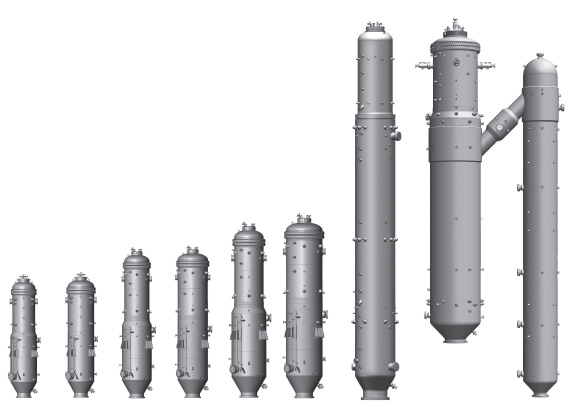
Gasification Furnace Series: Freely Combinable Aerospace Furnace
CHANGZHENG ENGLINEERING CO., LTD.