U.S. Municipal Completes First PFAS Liability Divestiture Transaction
en.Wedoany.com Reported - Municipal Intermediate, Inc., a supplier of critical safety equipment, executed the first publicly reported PFAS (per- and polyfluoroalkyl substances) liability divestiture transaction in January 2026, transferring related obligations to a specialized liability management company, offering a new solution for manufacturing and industrial companies to permanently resolve such liabilities.
Through this structured liability divestiture, companies can transfer their PFAS-related obligations, including anticipated obligations, to a specialized liability management company, which assumes full responsibility for the defense, settlement, and remediation of claims. After the divestiture, companies can focus their capital and management efforts on core business operations, free from the burden of legacy environmental and product liability risks. While previous liability divestiture transactions have involved asbestos, talc, and environmental liabilities, Municipal's divestiture marks the first such transaction in the PFAS field, potentially having a transformative impact on industries facing the fastest-growing contingent liability category in modern corporate history.
PFAS have been widely used since the 1940s in non-stick coatings, water-repellent treatments, firefighting foams, and semiconductor manufacturing. Known as "forever chemicals" due to their extreme resistance to environmental degradation, they have become the subject of a wave of litigation whose scope and cost are considered potentially comparable to the asbestos crisis. As scientific understanding of health and environmental impacts deepens and regulatory frameworks tighten, any company with historical or current ties to PFAS faces multifaceted risks. Regardless of whether a company has already been sued, it may face the risk of future lawsuits.
The PFAS liability landscape comprises two equally dangerous aspects. Companies that incorporate PFAS into their products face product liability claims; companies that use or dispose of PFAS in their manufacturing processes face environmental claims, including liability under the Comprehensive Environmental Response, Compensation, and Liability Act (CERCLA) and similar state superfund laws. The financial risks are enormous, litigation is protracted, and reputational damage is severe.
In terms of product liability, consider 3M Company (3M), which produced PFAS-containing products for decades and faces thousands of lawsuits. In June 2023, 3M agreed to pay $10.3 billion to $12.5 billion over 13 years to settle claims from public water suppliers nationwide. This settlement did not resolve the company's ongoing risk of personal injury claims. Beyond direct financial costs, 3M has also suffered negative media coverage, reputational damage, and ultimately announced a complete exit from PFAS manufacturing by the end of 2025.
In terms of environmental liability, footwear manufacturer Wolverine Worldwide, whose brands include Hush Puppies and Merrell, is a typical case. Due to its use of 3M's Scotchgard at its tannery in Rockford, Michigan, and the disposal of PFAS-containing waste in the surrounding area, the company became the target of regulatory enforcement and class action lawsuits after contamination was discovered in 2017. Wolverine ultimately agreed to settlements exceeding $100 million with the state of Michigan and affected residents, with the final cost of ongoing obligations still uncertain. Reputational and operational losses were equally severe, as the company was publicly linked to contamination of community drinking water.
Against this backdrop, liability divestiture has emerged as a transactional solution, offering what traditional insurance and litigation management cannot achieve: permanence. Unlike settlements that resolve only specific claims or insurance subject to coverage disputes, liability divestiture completely and permanently removes obligations from the transferor's balance sheet. The mechanism is conceptually simple: the divesting party identifies the liability category to be transferred, a specialized acquirer conducts due diligence and negotiates a purchase price, and liability is transferred upon completion of the transaction. Crucially, the divestiture must be properly structured to withstand legal challenges, ensuring the divested entity is adequately capitalized. The landmark transaction in this field is Municipal Intermediate, Inc.'s divestiture of its PFAS-related liabilities, establishing proof of concept and subsequently attracting significant interest from other companies burdened by PFAS risks.
For companies evaluating this option, the value proposition extends beyond immediate financial terms. Divestiture eliminates the uncertainty that PFAS liabilities impose on corporate valuations, allows management to focus on core business, provides reputational relief, and is permanent. The divesting company will not face future claims, regulatory developments, or scientific discoveries reopening exposure. PFAS liabilities represent an intergenerational challenge for manufacturing and industrial companies, and the emergence of liability divestiture offers a permanent, certain, and future-focused path forward.
Related Products

Hongxing Steel Chemical Pressure Vessel Steel Plate
Gansu JISCO Group Hongxing Iron and Steel Co., Ltd.

High Thermal Conductivity Encapsulating Resin
Nantong BESALL Sealing Technology Company.,Limited
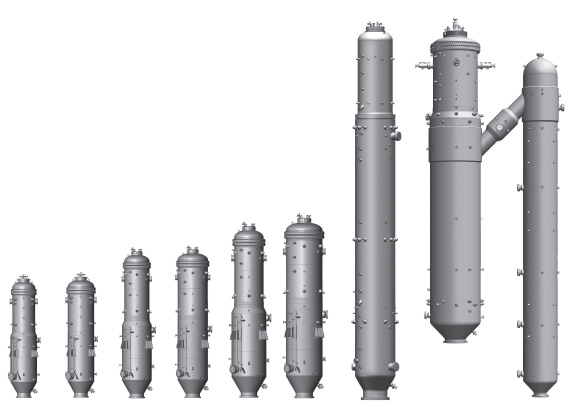
Gasification Furnace Series: Freely Combinable Aerospace Furnace
CHANGZHENG ENGLINEERING CO., LTD.
New Environmentally Friendly Green Potassium Salt Collector
Chonfar Engineering and Technology Co., Ltd.
Industrial and Commercial Point-Type Gas Detector
Jinan Benan Technology Development Co., Ltd.