China's Eight Departments Propose Deepening Integration of AI and Industrial Internet
en.Wedoany.com Reported - On June 30, eight Chinese departments, including the Ministry of Industry and Information Technology, issued the "Implementation Opinions on Promoting High-Quality Development of the Industrial Internet," proposing to deepen the integrated application of artificial intelligence and the industrial internet. The document calls for supporting enterprises and research institutions in leveraging the ubiquitous connectivity and data aggregation capabilities of the industrial internet to train large models for the industrial sector and small models for specific scenarios, and to develop model interconnection interfaces to enhance collaboration efficiency between different models.
This task pushes the industrial internet further from a "connection platform" to an "intelligent foundation." In the past, industrial enterprises focused primarily on equipment networking, data collection, platform access, and system integration. Now, a wealth of production line data, process data, quality data, equipment status data, and maintenance data has been accumulated, and AI models are beginning to enter stages such as design, pilot testing, production, service, and operations. The industrial internet is responsible for connecting equipment, systems, platforms, and data, while artificial intelligence converts data into capabilities for identification, reasoning, optimization, and execution. When the two are integrated, industrial systems no longer merely display data but can generate plans, allocate resources, optimize processes, and assist decision-making around production goals.
The document specifically mentions large models for the industrial sector and small models for specific scenarios. Large models are better suited for handling cross-system knowledge queries, complex process analysis, plan generation, fault attribution, and multi-task coordination. Small models are more appropriate for high-frequency, stable, and well-defined industrial scenarios such as quality inspection, predictive equipment maintenance, energy consumption optimization, parameter control, and visual recognition.
The collaboration between large and small models is a key pathway for the deployment of industrial AI. Manufacturing sites have high requirements for real-time performance, accuracy, and safety boundaries, and not all tasks can be handed over to general-purpose large models. Large models can handle knowledge understanding, task planning, and complex reasoning, while small models are deployed on the edge, on production lines, or in specific process units, responsible for rapid response and stable execution. The proposal for model interconnection interfaces indicates that policy has already focused on the collaboration issues between industrial AI systems. In the future, a factory may simultaneously have equipment models, process models, quality inspection models, scheduling models, energy consumption models, and maintenance models. Without unified interfaces, this would lead to redundant construction, data fragmentation, and model silos. Only when models can interconnect can point-based intelligence be connected into production line-level, workshop-level, and enterprise-level intelligent systems.
The document proposes carrying out innovative applications such as generative design, human-computer interaction, and production network optimization, accelerating the promotion of industrial intelligent agents, and enhancing the intelligent perception and decision-making execution capabilities of industrial systems.
Generative design will impact industrial R&D and product development processes. After engineers input constraints such as structure, materials, weight, strength, cost, and processing methods, AI can generate multiple design options and, combined with simulation, verification, and process evaluation, shorten the design cycle. Human-computer interaction concerns how frontline workers, engineers, and managers use AI systems. In the future, industrial software, control systems, equipment terminals, and maintenance platforms may all introduce natural language, graphical operations, and intelligent Q&A. Production network optimization addresses the complex coordination between orders, equipment, personnel, materials, energy, and logistics. AI can help enterprises find better combinations among scheduling, inventory, energy consumption, delivery, and quality.
Industrial intelligent agents are the part of this policy most worthy of attention from the industry side. It is not just a Q&A model but an industrial intelligent system capable of calling tools, reading data, understanding tasks, generating plans, and triggering execution. Placed in a factory, it can become an equipment maintenance agent, quality inspection agent, scheduling agent, energy consumption agent, process optimization agent, and supply chain coordination agent. After the promotion of industrial intelligent agents, the value of the industrial internet platform will also change. The platform will not only aggregate equipment and data but also host models, agents, industrial software interfaces, and business process execution.
This policy will directly impact industrial internet platform providers, industrial software companies, automation vendors, industrial AI companies, edge computing equipment providers, and the digital departments of manufacturing enterprises. Platform companies need to enhance capabilities in model training, model deployment, data governance, and application development. Industrial software companies need to integrate systems such as CAD, CAE, MES, ERP, PLM, and SCADA with AI models. Automation and equipment companies need to equip control systems, sensors, robots, and production line equipment with stronger data interfaces and intelligent adaptation capabilities. Manufacturing enterprises need to organize their own process knowledge, equipment data, and business processes so that AI models can be used in real scenarios rather than remaining at the demonstration level.
After the integration of artificial intelligence and the industrial internet, industrial intelligence will move from partial pilot projects to full-process transformation. The design end can use AI to generate plans, the pilot testing end can use simulations and models to reduce trial and error, the production end can use agents to optimize parameters and scheduling, the service end can use equipment data to predict faults, and the operations end can use models to assist in decisions on orders, inventory, costs, and supply chains. By incorporating these tasks into the high-quality development document for the industrial internet, the eight departments indicate that industrial AI has been placed within the overall construction framework of industrial internet infrastructure, platform capabilities, and industry applications.
Related Products


Industrial and Commercial Point-Type Gas Detector
Jinan Benan Technology Development Co., Ltd.

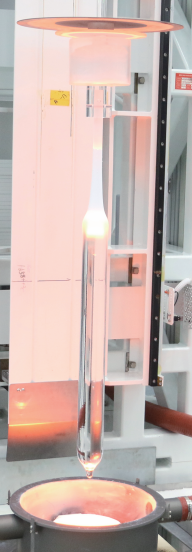
G.652.D Wavelength-extended Non-dispersion Shifted Single-mode Optical Fiber
HONGAN GROUP CO., LTD.
Comprehensive Mining Automation Control System
Beijing Tianma Intelligent Control Technology Co., Ltd.
Multi-function Marine Monitoring Low-altitude Detection Radar Sea-air Boundary Ocean Dynamic Environment Measurement
Chengdu Dixin Technology Co., Ltd.
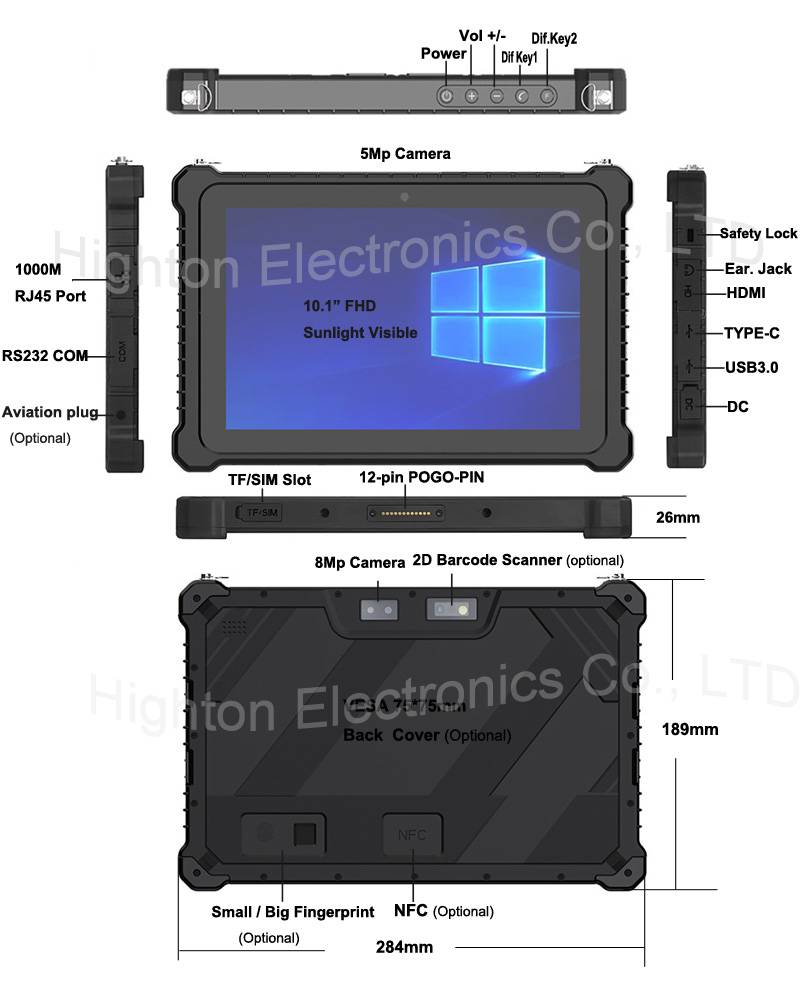
Hot Selling 10 Inch Intel N5100 I5 I7 FHD 8 +128GB 16+256GB Win10 Pro Win11 Pro 4G 5G Rugged Tablet PC Pad with NFC Barcode
Highton Electronics Co., Ltd.