China Enhe Technology Develops BPL Language, Experimental Compilation Pass Rate Reaches 98.6%
en.Wedoany.com Reported - Enhe Technology (Bota Biosciences) has developed a compilable biological protocol language, BPL, along with its code auto-generation tool, BPL-COGEN, aiming to enable artificial intelligence to truly understand and execute biological experiment workflows.
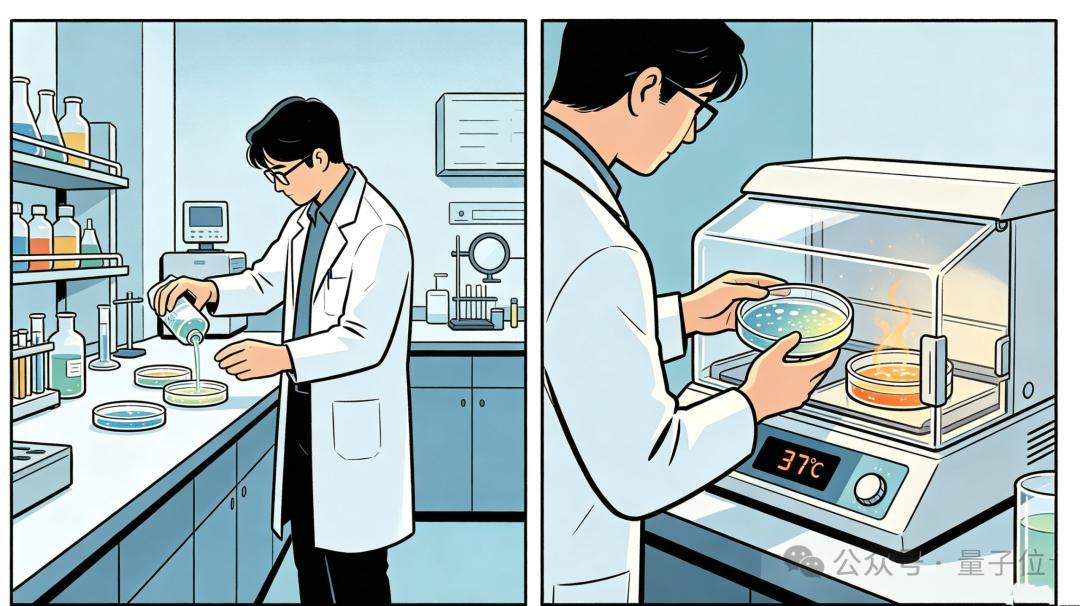
In the biomanufacturing sector, laboratory operations demand extremely high precision. Actions such as pipetting, temperature recording, and culture dish transfer can lead to experiment failure if unit errors, parameter deviations, or step reversals occur. While AI can assist scientists in designing experimental protocols, it struggles to actually enter the lab and perform operations. This is primarily because biological experiments inherently lack standardization: different experimenters have different operating habits, equipment interface formats vary, and data structures are inconsistent. A vast amount of experimental experience exists only in human minds, making experiments difficult to reproduce, data hard to accumulate, and automation challenging to close the loop.
Previously, the academic community attempted standardization solutions such as BioCoder, Autoprotocol, Antha, and LabOP, but these faced issues like limited expressiveness, binding to specific equipment, or high barriers to entry. Enhe Technology recently published a related research paper on the life science preprint platform bioRxiv, proposing a compilable and verifiable biological description language, BPL.
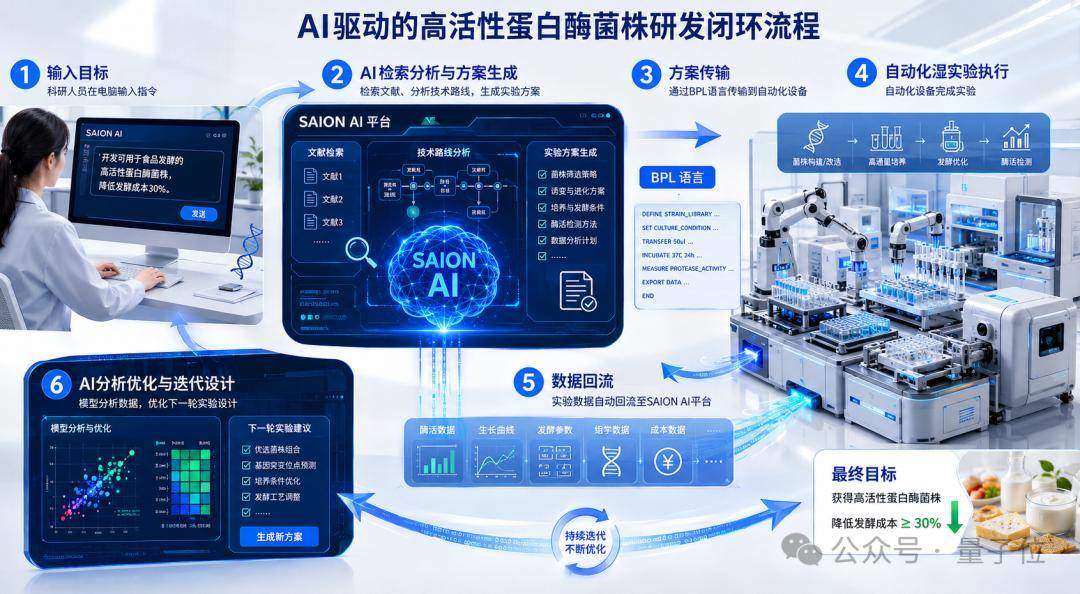
BPL is not just a description language but also a compilable language. Before an experiment begins, the system performs software-level experimental simulation, checking whether units are correct, reagents exist, container capacity is not exceeded, and there are no logical conflicts between steps. If issues are detected, the system directly reports errors, rather than waiting for the experiment to fail before reworking. Based on BPL, Enhe Technology further developed the BPL-COGEN tool, which automatically translates experimental requirements described in natural language into standardized BPL code. This code then enters the compiler verification stage, undergoing an iterative process of error detection, automatic repair, re-verification, and re-repair until the code passes compilation and simulation validation. The system then synchronizes compliant instructions to the laboratory to initiate physical experiments.
To evaluate the accuracy of experimental protocol generation, the research team selected 30 classic experimental protocols from Nature Protocols, covering fields such as molecular biology, cell culture, and biochemical analysis, and specifically constructed a benchmark test dataset. This benchmark adopted a combined model of large-model review and compiler objective verification, scoring from three dimensions: content matching, protocol effectiveness, and experimental completeness. Results showed that when the same experiment was repeatedly generated 10 times, 98.3% of the results were completely consistent, with a comprehensive score of 95.1 points, of which the protocol effectiveness score reached 98.7 points. In terms of compiler verification, the benchmark detected a total of 343 issues, including unit mismatches, container overloads, and undefined reagents. The first-round code generation compilation pass rate was 82.3%, and after a maximum of three rounds of automatic repair, the overall pass rate reached 98.6%, with only 1.4% of issues being irreparable.
The Enhe team also completed two wet-lab validations. First, the same BPL code was converted into a manual operation guide and an automated pipetting robot execution script; sequencing and fluorescence detection results from the two systems showed no significant differences. Second, in a liquid chromatography experiment, the system automatically converted the original 32-minute analysis process into a 2.1-minute ultra-high-performance scheme, achieving baseline separation for all five fat-soluble substances, with the separation order completely consistent with the original method.

Based on the BPL language, Enhe Technology launched the Physical AI platform SAION AI, targeting the biomanufacturing field. Positioned as an AI scientist, the platform consists of a three-layer architecture: the cognitive layer is responsible for understanding scientific problems and generating experimental protocols, the control layer handles BPL compilation, verification, and task orchestration, and the execution layer drives real experimental equipment to complete operations. In strain engineering scenarios, SAION AI can improve the efficiency of a single R&D project from approximately 500 strain experiments per year in the traditional model to 300,000 experiments per project in the same period, achieving fully automated experimental execution and data feedback without human intervention.
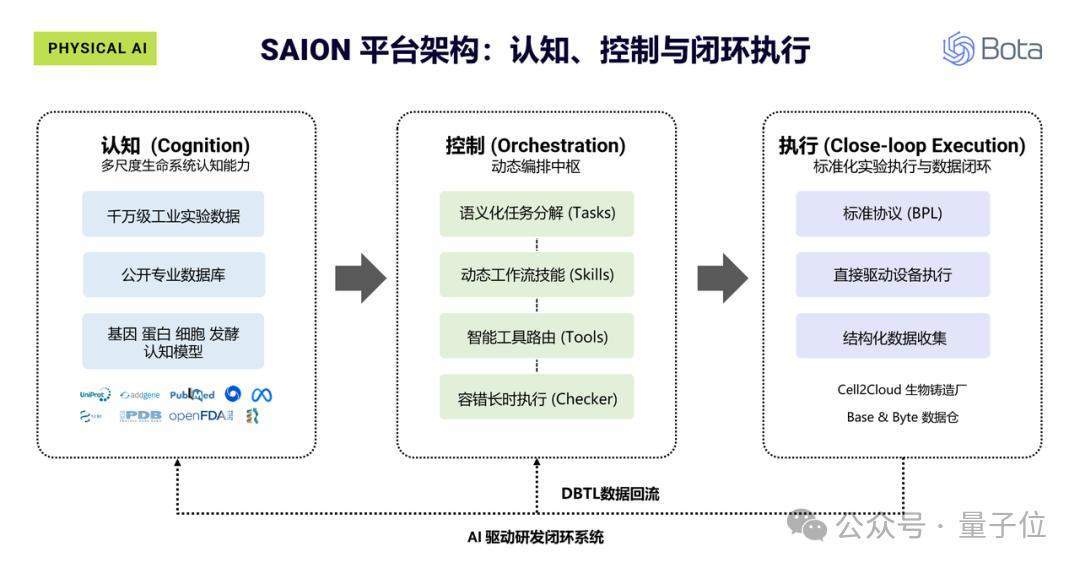
Founded in Hangzhou in 2019, Enhe Technology early on built a Physical AI-driven biofoundry, Cell2Cloud, covering the entire process from strain engineering and process development to large-scale production. This system continuously generates tens of millions of real experimental data points and connects millions of literature and patent knowledge points. The company's founder and CEO, Cui Hao, holds a bachelor's degree from the University of Toronto, Canada, and a Ph.D. in Medical Engineering and Medical Physics jointly trained by Harvard Medical School and MIT. During his Ph.D., he published papers as first or core author in journals such as Science, Nature Nanotechnology, and PNAS, and holds patents related to synthetic biology and automated experimentation.
In 2021, Enhe Technology completed a $100 million Series B financing round, with investors including Sequoia China, 5Y Capital, Source Code Capital, Baidu, Meituan, BASF, and Matrix Partners. The company has since collaborated with enterprises such as NHU, SYENSQO, Yili, BASF, Proya, and Pechoin in fields like food, nutrition and health, and personal care.
The industry draws an analogy between BPL and Electronic Design Automation (EDA) in the semiconductor industry. Before EDA, chip design heavily relied on engineer experience, with high verification costs and long trial-and-error cycles; EDA's value lies in transforming chip design into describable, verifiable, and simulatable digital assets. BPL plays a similar role in biomanufacturing—it is not just a tool to improve experimental efficiency but a foundational infrastructure for the industry's future, enabling AI to transition from merely providing reasoning suggestions for experiments to becoming an AI scientist capable of autonomously performing wet-lab operations.
Related Products


20 Inch 1600*900 Full HD 60Hz TFT LED Monitor with VGA and DP Interfaces for Desktop Computers-Business Use
Guangzhou Zanying Optoelectronics Technology Co., Ltd.

MUX Series Communication Interface Device for Security and Stability Control System
Nanjing NR Electric Co., Ltd.
Mine Explosion-proof and Intrinsically Safe Industrial Ethernet Ring Network (10 Gigabit/Gigabit)
Chongqing Mas Sci&Tech Co., Ltd.
Multi-function Marine Monitoring Low-altitude Detection Radar Sea-air Boundary Ocean Dynamic Environment Measurement
Chengdu Dixin Technology Co., Ltd.


Hot Selling 10 Inch Intel N5100 I5 I7 FHD 8 +128GB 16+256GB Win10 Pro Win11 Pro 4G 5G Rugged Tablet PC Pad with NFC Barcode
Highton Electronics Co., Ltd.