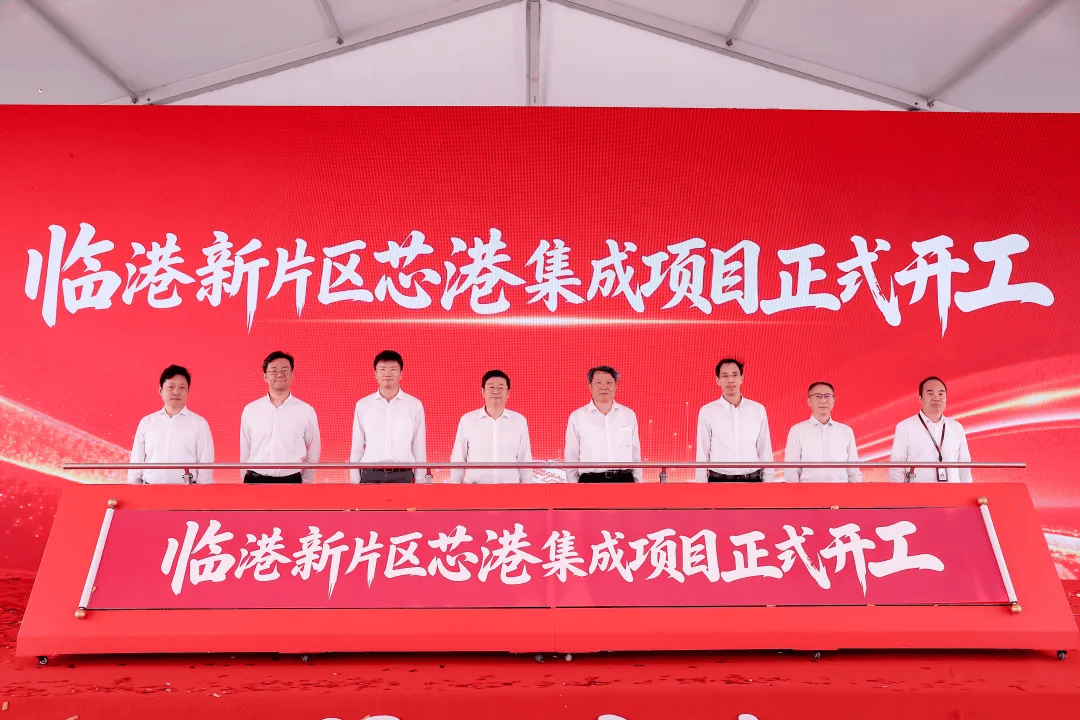
en.Wedoany.com Reported - On June 30, China Telecom Jiangsu Company officially launched the Zhiyun TokenHub, a one-stop integrated Token service platform. This platform is a core capability product for Jiangsu Telecom to deepen its "Zhiyun Jiangsu" strategy and accelerate the transformation towards Token operations, aiming to make Token a measurable, manageable, and operable service asset.
Token is becoming the unit of measurement for AI value. In 2025, the total Token calls in China's public cloud MaaS market exceeded 194.4 trillion, a year-on-year increase of 16 times; by 2026, the average daily Token calls have surpassed 140 trillion, with an estimated annual consumption of 40,000 trillion. The competitive focus of internet companies is fully shifting towards Token operations. After surveying hundreds of medium and large enterprises in Jiangsu Province, Jiangsu Telecom found that businesses commonly face obstacles in AI implementation, such as difficulty in model selection, lack of Token cost control, high integration barriers across multiple platforms, and higher actual total costs for low-price models. "Buying a model is just the first step; managing Token effectively is the real necessity," said a representative from Jiangsu Telecom.
At the computing power level, Jiangsu Telecom leverages its provincial edge nodes and intelligent scheduling system to achieve elastic supply. At the network level, it continues to promote continuous 5G-A coverage and 10G optical network deployment. By the end of 2025, the "Zhiyun Jiangsu" brand and the one-stop AI service platform "Zhiyun Store" were launched successively. The release of Zhiyun TokenHub marks its leap from "AI capability aggregation" to "value operations."
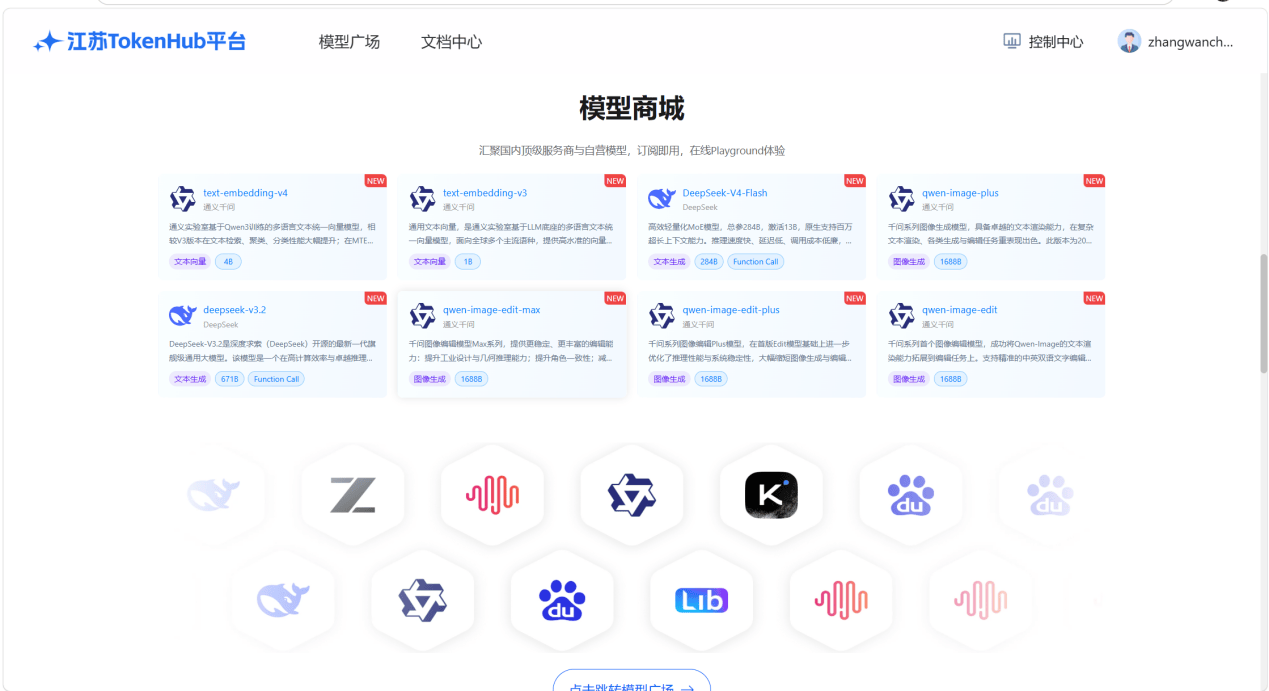
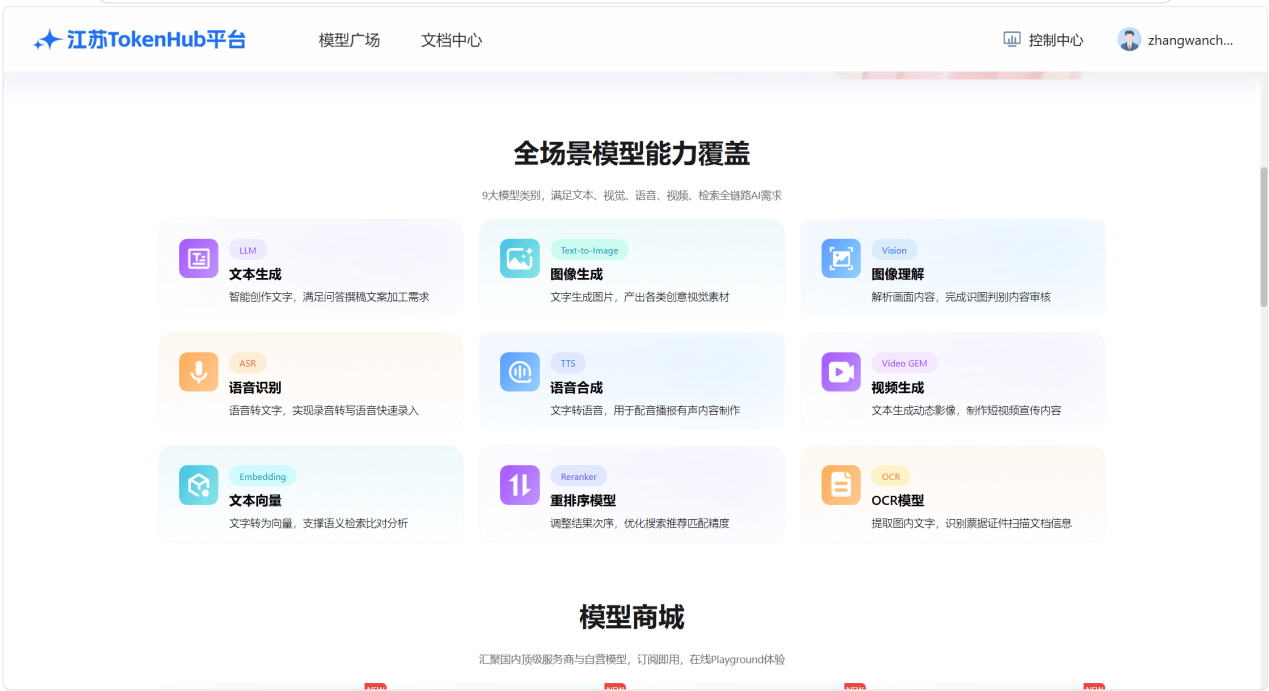
Zhiyun TokenHub is positioned as a neutral Token service platform, aggregating self-built computing power, Tianyi Cloud edge computing power, and third-party ecosystem Token services. In terms of model supply, the platform connects channels such as OpenAI, Tianyi Cloud, Alibaba Cloud Bailian, and SiliconFlow, integrating over 180 mainstream models including DeepSeek, Tongyi Qianwen, Kimi, GLM, Doubao, and Seedance, covering full categories such as text generation, image understanding, and video generation. The platform enables multi-vendor model access through a unified interface and employs three proprietary cost-reduction technologies—semantic caching, prompt trimming, and semantic routing—which can reduce Token costs by 30% for simple scenarios.
In terms of enterprise-level management, Zhiyun TokenHub provides a multi-tenant hierarchical account system, multi-level budget control, full-chain auditing, and real-time circuit breaker mechanisms, allowing each billing transaction to be traced. For security and compliance, it offers millisecond-level full-modality content detection for high-demand industries such as government and finance, with security audit logs encrypted and stored for no less than 180 days, and supports automatic desensitization of sensitive information.
The advantages of Zhiyun TokenHub are based on three core capabilities: first, a neutral stance, not tied to any model vendor; second, leveraging China Telecom's over 2,800 edge nodes and 5G-A/10G optical networks to support multi-line access including the internet, dedicated lines, and SDWAN; third, a localized FDE professional team providing full on-site services from solution customization to continuous empowerment. The platform offers formal telecom VAT invoices, streamlining the financial accounting process for enterprise Token procurement.
In terms of application ecosystem, Zhiyun TokenHub covers four core scenarios. In the AI programming field, models like DeepSeek, GLM, and Qwen are deeply integrated with tools such as TRAE and Cursor, with AI handling over 60% of basic coding workloads. In the AI agent field, the platform combines OpenClaw to create a 24/7 online personal assistant, supporting file reading/writing, code execution, and multi-step task orchestration. In the AIGC content creation field, the proportion of AI short dramas has jumped from 8% in January 2025 to 28% in May 2026, with average production costs dropping from 50,000 yuan to 13,000 yuan per episode; video models like Seedance 2.0 and Kling 3.0 enable one-stop production from script to finished film. For enterprise OPC services, it provides hierarchical management from headquarters to individuals, unified access, and operational monitoring solutions.
Industry validation data shows that after a major film and television group adopted Seedance 2.0, the short drama production cycle was shortened from weeks to days, improving efficiency by over 5 times; a rural commercial bank saw development efficiency increase by over 50%; a clothing group achieved unified management and compliant invoicing for multimodal models; an airport, using a digital human kiosk combined with large model Tokens, handles over 1,000 passenger inquiries daily. Currently, the platform aggregates over 180 mainstream models, and users can apply for a free trial quota upon activation. The trial address is token.telecomjs.com.
Looking ahead, Jiangsu Telecom stated that it will continue to iterate the Zhiyun TokenHub platform, enrich the Token product matrix and ecosystem services, promote the upgrade of Token from resource invocation to a schedulable and operable intelligent service carrier, and collaborate with partners to build an open and win-win AI industry ecosystem.