South Korea Plans to Invest 392 Trillion Won in Building a Semiconductor and AI Data Center Cluster in the Central Region
en.Wedoany.com Reported - On July 2, the South Korean government announced a 392 trillion won industrial investment plan for the Chungcheong region, focusing on AI data centers, HBM, NAND, and advanced packaging, which are key components of computing infrastructure. Companies under South Korea's Samsung Group plan to invest approximately 140 trillion won, SK Hynix plans to invest around 100 trillion won, and about 150 trillion won will be directed toward AI data center construction.
The focus of this plan should be on the AI computing power foundation, rather than being broadly interpreted as regional industrial investment. The investment by Samsung Group companies includes HBM wafer fabs, advanced packaging, and high-performance packaging substrates for AI servers. SK Hynix plans to invest approximately 100 trillion won in NAND and advanced packaging facilities. HBM is directly related to the data throughput capabilities of GPUs, AI accelerators, and high-performance computing platforms, serving as a key memory component in large model training and inference systems. NAND, on the other hand, addresses the large-capacity storage needs of AI data centers, as training data, model parameters, log files, inference results, and enterprise application data all drive up storage system usage. The role of advanced packaging is also growing, as it connects memory, logic chips, and AI accelerators, affecting inter-chip bandwidth, power consumption, latency, and system integration efficiency. By concentrating these projects in the Chungcheong region, South Korea is effectively building a more complete computing power industry chain centered around AI servers, memory chips, and data centers.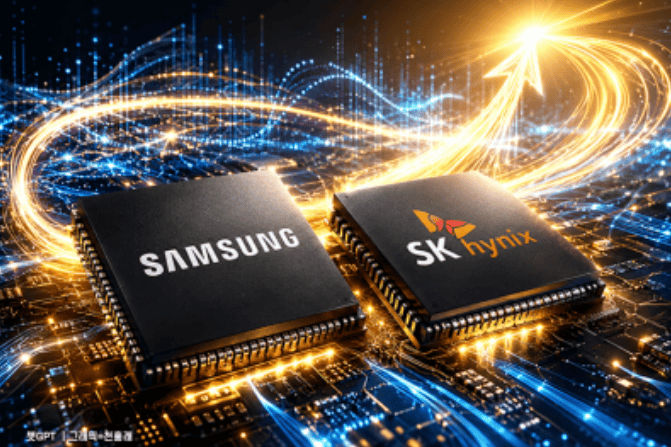
The allocation of approximately 150 trillion won to AI data centers is the most noteworthy part of this plan. AI data centers are not simply expansions of ordinary server rooms; they are high-intensity infrastructure composed of server clusters, GPUs or AI accelerators, HBM, NAND, switches, power systems, cooling systems, UPS, transformers, and operations platforms. Large model training requires concentrated computing power, model inference demands long-term stable operation, and enterprise AI applications continuously consume storage, network, and power resources. If the Chungcheong region simultaneously hosts memory chip, advanced packaging, and AI data center projects, it can create a synergistic relationship between "chip manufacturing" and "computing power consumption" within the same area. For South Korea, this can reduce the dependence of AI infrastructure on a single region or external supply chains, while also extending its memory advantages into data center construction and enterprise-level AI application services.
The South Korean government has pledged to provide financing, tax incentives, regulatory support, and infrastructure matching, aiming to move these large-scale investments from planning to construction. The co-location of AI data centers and semiconductor factories imposes high demands on land, electricity, water resources, communication networks, equipment supply, and professional talent. In particular, AI data centers consume large amounts of electricity, while advanced packaging and memory manufacturing also require stable power, clean environments, and highly reliable supply chains. The government has proposed arrangements such as an "investment support booster" and "super special zones," focusing on addressing obstacles for companies in site selection, approvals, power supply, water usage, financing, and talent acquisition. What truly needs to be monitored going forward is not the total of 392 trillion won itself, but whether AI data centers can commence construction in phases, whether HBM and NAND-related production capacity can translate into actual supply, whether advanced packaging capabilities can keep pace with AI chip demand, and whether the related power and cooling infrastructure can support long-term operations.
This investment plan for South Korea's Chungcheong region essentially aims to strengthen the combined capabilities of "memory chips + packaging + data centers" in the AI era. AI competition is not only among model companies but also in HBM supply, NAND storage, advanced packaging, server clusters, power systems, and data center operations. If Samsung Group, SK Hynix, and related data center investors successfully advance their projects, they will further solidify South Korea's position in AI memory and computing infrastructure. For equipment suppliers, potential demand may emerge in areas such as semiconductor equipment, packaging equipment, servers, switches, power equipment, liquid cooling systems, UPS, transformers, and data center engineering construction.
Related Products


Industrial and Commercial Point-Type Gas Detector
Jinan Benan Technology Development Co., Ltd.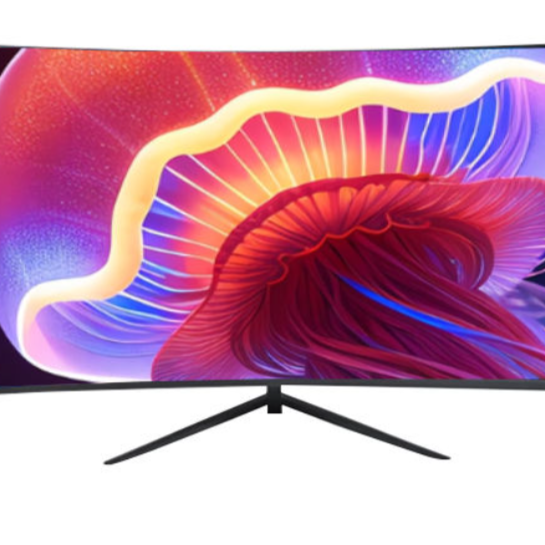
20 Inch 1600*900 Full HD 60Hz TFT LED Monitor with VGA and DP Interfaces for Desktop Computers-Business Use
Guangzhou Zanying Optoelectronics Technology Co., Ltd.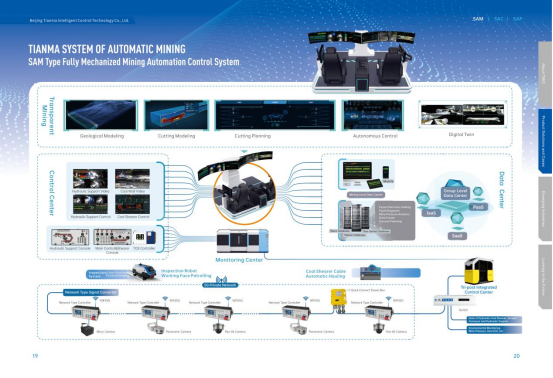
Comprehensive Mining Automation Control System
Beijing Tianma Intelligent Control Technology Co., Ltd.
TWP16 P-Band Tropospheric Wind Profile Radar
China Huayun Meteorological Technology Group Co., Ltd.
Mine Explosion-proof and Intrinsically Safe Industrial Ethernet Ring Network (10 Gigabit/Gigabit)
Chongqing Mas Sci&Tech Co., Ltd.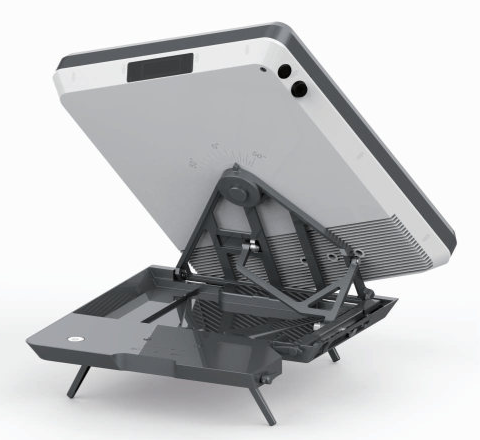
Flat Portable Satellite Terminal 0.35m Aperture Manual Portable Terminal
China Starwin Science & Technology Co., Ltd.