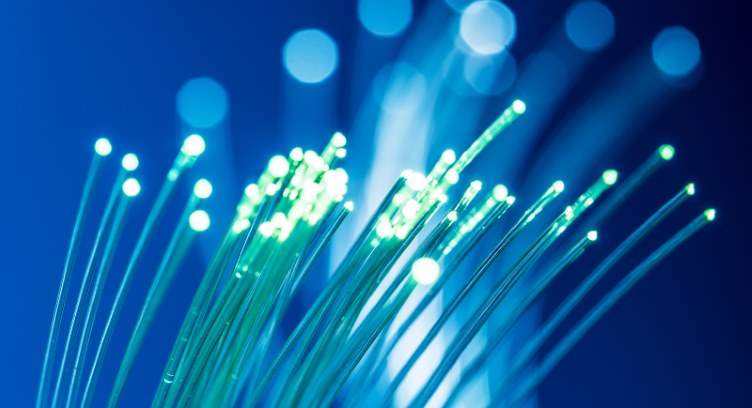
Ireland's €2.7 Billion National Broadband Plan Boosts Rural Internet Speeds by 13.5 Times
en.Wedoany.com Reported - Ireland's National Broadband Plan (NBP), costing €2.7 billion (approximately $3.1 billion), is significantly transforming rural connectivity. Analysis by Ookla confirms that this government-backed investment has effectively improved broadband speeds and narrowed the country's digital divide.

Since the project's launch in November 2019, National Broadband Ireland (NBI) has covered over 490,000 premises, representing 87% of its planned deployment target of 566,000 homes and businesses. This wholesale-only fiber network now covers the entire intervention area, making it one of Europe's largest rural broadband infrastructure investment projects.
Download speeds in the intervention area have increased from 11.60 Mbps in 2019 to 156.99 Mbps by mid-2026, a 13.5-fold increase. Upload speeds have risen from 4.67 Mbps to 49.48 Mbps. The XGS-PON fiber technology, capable of delivering 10 Gbps broadband services, is key to this speed improvement.
The broadband project is supported by government subsidies capped at €2.7 billion, comprising a €2.1 billion base investment, €500 million in contingency funds, and €100 million allocated for VAT. Deploying fiber in Ireland's sparsely populated rural areas requires building over 100,000 kilometers of fiber infrastructure, serving fewer than six premises per kilometer. Official estimates place government subsidies per premises between €3,569 and €3,946, with the subsidy cap reaching nearly €4,800 per connection.
Unlike many European deployments based on older GPON technology, Ireland's network uses Nokia XGS-PON technology, enabling 10 Gbps services. Retail providers initially launched 500 Mbps broadband, followed by 2 Gbps services in January 2022, and 5 Gbps products are now available on the market.
The analysis found that broadband performance changes almost immediately once fiber becomes available. For nearly two years before service activation, download speeds remained around 27 Mbps; within 12 months of deployment, speeds exceeded 150 Mbps, a 5.7-fold increase. Tracking the same households before and after connection showed a 10.3-fold improvement in broadband performance. By mid-2026, download speeds reached 156.99 Mbps, upload speeds increased to 49.48 Mbps, the proportion of households with speeds below 30 Mbps dropped from 84% to 14%, 62% of connections exceeded 100 Mbps, and approximately 25% reached over 300 Mbps.
The urban-rural broadband gap in Ireland has also narrowed significantly. In 2019, urban download speeds were 4.8 times higher than rural ones, but by 2026 this gap had shrunk to just 1.6 times. Rural upload speeds now slightly exceed urban broadband performance, reflecting the advantages of modern fiber infrastructure. NBI reports an average customer adoption rate of approximately 37% in completed areas, with adoption rates exceeding 60% in locations where fiber has been available the longest.
The study also highlights the critical role of broadband hardware in determining customer experience. By the second quarter of 2026, approximately 70% of installed devices from Digiweb had been upgraded to Wi-Fi 6 or later, with Vodafone reaching a 40% adoption rate. During the same period, Eir surpassed the 50% threshold, while Sky still had 73% of customers using older Wi-Fi 5 devices, limiting achievable home speeds despite identical fiber infrastructure.
The research also demonstrates the impact of fiber deployment on satellite broadband demand. In rural areas still awaiting fiber, Starlink accounted for 14.3% of fixed broadband test devices by mid-2026. However, in communities connected to the NBI fiber network since 2021 and 2022, Starlink's share remained below 2% over five years, indicating that once high-speed fiber is available, demand for satellite broadband largely disappears.
In terms of operator performance, Digiweb leads in Wi-Fi modernization, with 70% of its customer base using Wi-Fi 6 or newer routers by the second quarter of 2026, achieving 50% adoption about a year earlier than larger competitors. Eir surpassed 50% Wi-Fi 6 adoption in the second quarter of 2026. Vodafone maintained Wi-Fi 6 adoption at around 11% between 2022 and 2024, increasing to 40% by the second quarter of 2026. Sky lags in customer equipment upgrades, with 73% of installed devices still relying on Wi-Fi 5 routers by the second quarter of 2026. The report also notes that Sky historically routed some traffic through the UK, leading to higher application latency and occasional IP geolocation issues. All operators are served through the same 10 Gbps Nokia XGS-PON infrastructure provided by National Broadband Ireland, but customer experience increasingly depends on each retail provider's router upgrades, home Wi-Fi technology, and core network design.
Related Products


Conveyor Belt Intelligent Monitoring System
LUO YANG WIRE ROPE INSPECTION TECHNOLOGY CO., LTD.

Industrial and Commercial Point-Type Gas Detector
Jinan Benan Technology Development Co., Ltd.
G.652.D Wavelength-extended Non-dispersion Shifted Single-mode Optical Fiber
HONGAN GROUP CO., LTD.
20 Inch 1600*900 Full HD 60Hz TFT LED Monitor with VGA and DP Interfaces for Desktop Computers-Business Use
Guangzhou Zanying Optoelectronics Technology Co., Ltd.



Automatic Aiming Laser Remote Obstacle Removal Robot
Pinggao Group Weihai High-Voltage Apparatus Co., Ltd.
Hot Selling 10 Inch Intel N5100 I5 I7 FHD 8 +128GB 16+256GB Win10 Pro Win11 Pro 4G 5G Rugged Tablet PC Pad with NFC Barcode
Highton Electronics Co., Ltd.