Chelyabinsk Region Plans to Increase Winter Sowing Area to 60,700 Hectares by 2027
en.Wedoany.com Reported - Agricultural workers in the Chelyabinsk Region have decided to expand the winter crop sowing area, planning to increase it to 60,700 hectares for the 2027 harvest season, a significant rise from the 32,200 hectares already sown for the 2026 harvest.
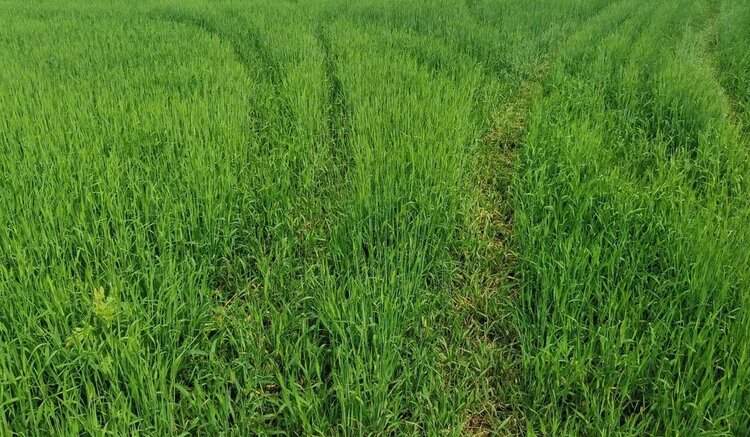
According to Yevgeny Litvinov, First Deputy Minister of Agriculture of the Chelyabinsk Region, land preparation work has already begun in the Troitsk and Uisk districts. The region has sufficient seed reserves, with producers currently offering over 10,000 tons of seeds for sale, allowing farmers to immediately sign quantity contracts. For farmers planning to use their own seeds, the current priority is to timely implement crop pest and disease control measures and conduct variety sowing certification to obtain official documents proving sowing quality.
The planned structure for the 2026 winter sowing has been determined. Of the total 60,700 hectares, wheat accounts for 94% (57,200 hectares), rye for 4% (2,300 hectares), and triticale for 2% (1,200 hectares). The main production areas are located in the Verkhneuralsk, Troitsk, Chesma, Uisk, and Varna municipal districts, which will account for over 64% of the region's total winter sowing area.
For the 2026 harvest season, 32,200 hectares of winter crops have already been sown, with the majority (95%) being winter wheat, the remaining 3% winter rye, and 2% triticale. In the Uvelsky district, 90 hectares of winter rapeseed were sown for the first time as an experimental project. Experts assess that due to abundant precipitation during the emergence period, the current crop condition is generally good, with winter grains having entered the heading stage.
The advantage of winter crop cultivation lies in moisture accumulation through autumn and winter rainfall, allowing for active biomass growth in spring with reduced risk of drought. Winter-sown crops mature 10-15 days earlier than spring-sown crops, facilitating earlier harvesting and reducing dependence on late-season weather conditions. Over the past three years, winter crop yield data shows continuous growth: 15.3 quintals per hectare in 2023, increasing to 26 quintals per hectare in 2024, and reaching an average yield of 29.6 quintals per hectare in 2025. Some municipalities have yields exceeding the regional average, with Chesma District reaching 42 quintals per hectare, Uisk District 40.5 quintals per hectare, Oktyabrsky District 37.8 quintals, and Kunashak District 35.4 quintals. According to agricultural enterprise data, individual plots have yields ranging from 50 to 80 quintals per hectare.
Related Products



714CD Series C-Band Weather Radar
Chengdu Zhongdian Jinjiang Information Industry Co., Ltd.


Industrial and Commercial Point-Type Gas Detector
Jinan Benan Technology Development Co., Ltd.

4HS-8 High-efficiency Peanut Inverted-laying Harvester
Hebei Yongfa Hongtian Agricultural Machinery Manufacturing Co., Ltd.