Beihang University and Heguang Zhicheng Jointly Establish AI Materials Synthesis Laboratory
en.Wedoany.com Reported - On June 28, the "Beihang·Heguang Zhicheng AI Materials Synthesis Joint Laboratory," jointly established by Beihang University and Beijing Heguang Zhicheng Technology Co., Ltd., was officially inaugurated in Beijing. Concurrently, Heguang Zhicheng initiated strategic cooperation with Beijing Data Group and the Zhongguancun Digital Economy Industry Alliance to jointly build vertical data infrastructure and promote the industrial ecosystem.
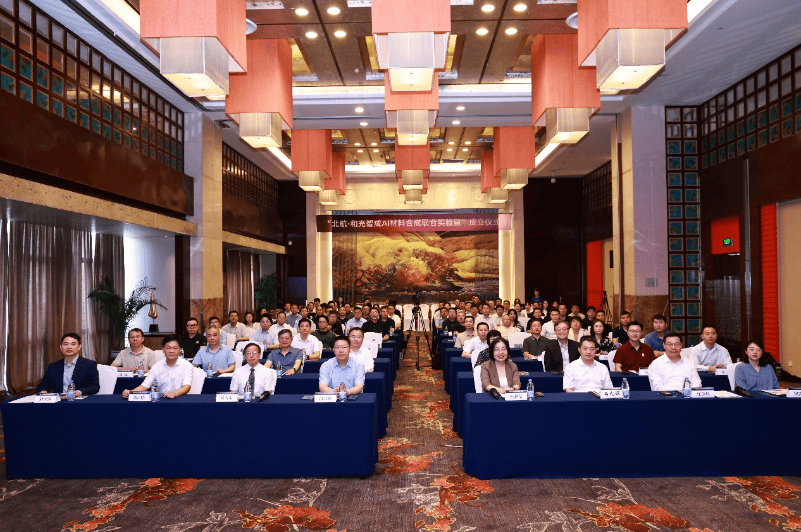
In his speech, Yang Wantai, an academician of the Chinese Academy of Sciences and director of the joint laboratory's academic committee, traced the long historical cycles of materials development, noting that humanity has undergone prolonged technological evolution from ceramics to porcelain and from bronze to iron. The core of materials science lies in understanding the "microstructure-macro performance" relationship formed by atoms and molecules through physical and chemical interactions. The "Atomic World Model" developed by Heguang Zhicheng aims to enable AI to understand underlying microscopic laws such as interatomic and intermolecular forces and chemical bond breaking, simulating the evolution process and final performance before material synthesis, thereby designing and preparing new substances with target functions.
Liu Yuzhou, director of the joint laboratory and a professor at Beihang University, believes that while the AI for Materials field is currently popular, the industry tends to "emphasize prediction over synthesis," failing to fully realize industrial value. The bottleneck in materials science lies not in prediction but in synthesis. The cycle from concept validation to scaled production for a new material can take years or even decades. The "Atomic World Model" pursued by Heguang Zhicheng seeks to bridge this gap. This model is constrained by physical laws, uses AI models as computational engines, intelligent laboratories as validation platforms, and high-quality experimental data as fuel, continuously evolving in a "prediction-validation-correction" loop.
Lyu Weifeng, a member of the Standing Committee of the Party Committee and vice president of Beihang University, pointed out that the integration of artificial intelligence and materials science is a national strategic direction. The joint laboratory will leverage Beihang's research accumulation and talent pool, combined with Heguang Zhicheng's technical closed-loop capabilities and industrial resources in the AI+materials field, to focus on cutting-edge interdisciplinary sciences, deepen industry-education integration, and create an industry-academia-research collaborative innovation platform.
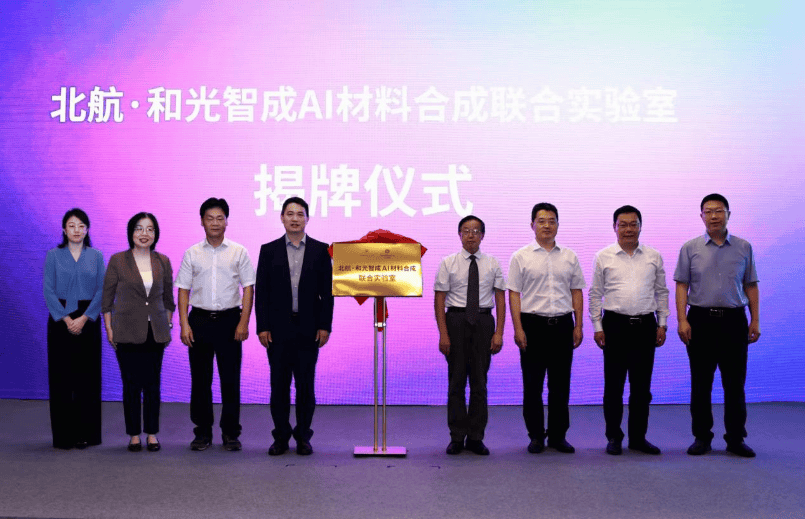
To date, Heguang Zhicheng has completed scientific research and industrial-grade deliveries in fields such as aerospace, military specialty materials, optoelectronic materials, and new energy materials, reducing the materials R&D cycle from "years" to "months." The company has achieved process breakthroughs including full automation of anhydrous and anaerobic reactions and high-precision feeding of multi-morphology solids, with molecular activation energy prediction accuracy surpassing the "chemical accuracy" threshold. Additionally, the company's accumulated hundreds of thousands of high-quality chemical datasets have passed national-level inspections.
Liu Yuzhou stated that AI-driven materials R&D must ultimately deliver industrial value. The joint laboratory aims to bridge the gap between academic research and industrial application, addressing the industry's weakness in synthesis capabilities through university-enterprise collaboration. On the day of the inauguration, Heguang Zhicheng initiated strategic cooperation with Beijing Data Group and the Zhongguancun Digital Economy Industry Alliance to jointly promote the construction of a materials data ecosystem, facilitating the large-scale and industrialized application of AI materials research achievements. Liu Yuzhou believes that in the AI for Materials field, companies that ultimately succeed will possess the ability to create industrial value for customers. The joint laboratory will serve as a core platform for technological breakthroughs and industrial implementation, strengthening engineering capabilities in synthesis and driving a paradigm shift in new materials R&D.
Related Products
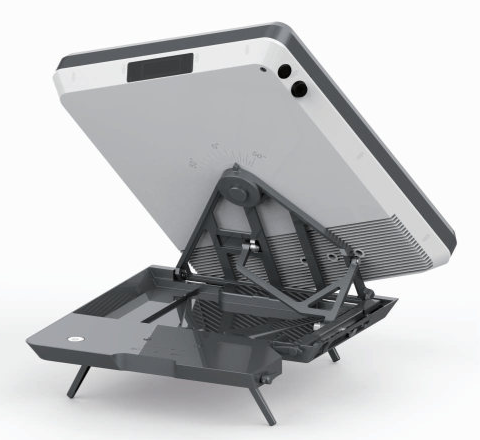

Flat Portable Satellite Terminal 0.35m Aperture Manual Portable Terminal
China Starwin Science & Technology Co., Ltd.
Industrial and Commercial Point-Type Gas Detector
Jinan Benan Technology Development Co., Ltd.
G.652.D Wavelength-extended Non-dispersion Shifted Single-mode Optical Fiber
HONGAN GROUP CO., LTD.
Conveyor Belt Intelligent Monitoring System
LUO YANG WIRE ROPE INSPECTION TECHNOLOGY CO., LTD.
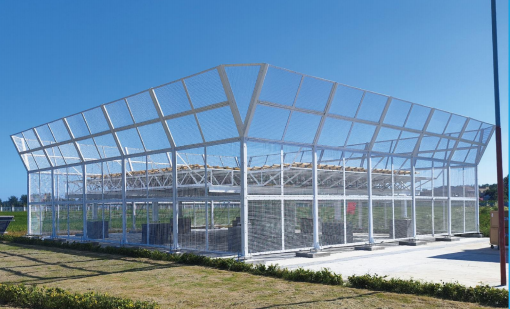
TWP16 P-Band Tropospheric Wind Profile Radar
China Huayun Meteorological Technology Group Co., Ltd.
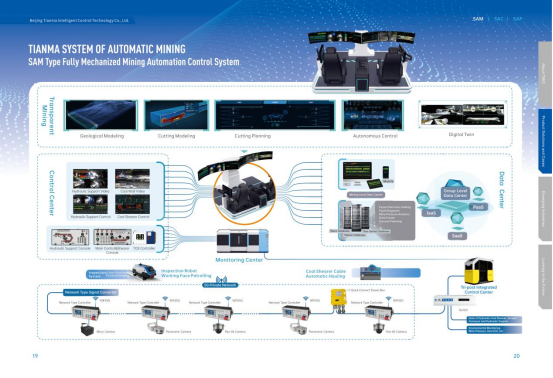
Comprehensive Mining Automation Control System
Beijing Tianma Intelligent Control Technology Co., Ltd.

MUX Series Communication Interface Device for Security and Stability Control System
Nanjing NR Electric Co., Ltd.