UC San Diego Develops Upcycling Process for Spent LFP Batteries
en.Wedoany.com Reported - A research team at the University of California San Diego has developed a recycling process that directly upcycles materials from spent lithium iron phosphate (LFP) batteries into lithium manganese iron phosphate (LMFP) cathodes, enabling the regenerated batteries to store more energy than the original products while retaining the safety and long cycle life of LFP batteries.
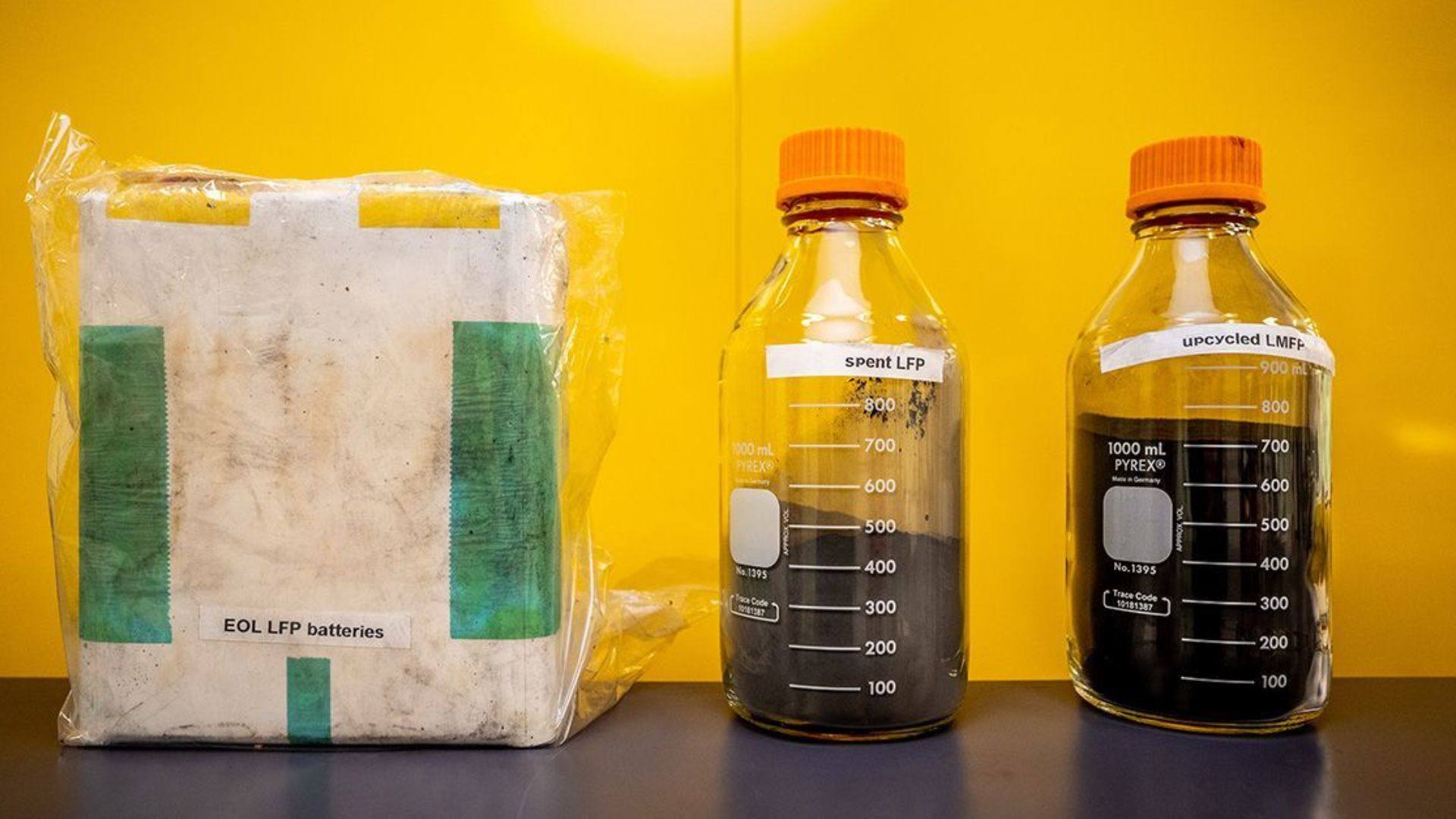
LFP batteries account for nearly half of the global lithium-ion battery market and are widely used in electric vehicles and large-scale energy storage systems. As a large number of batteries approach retirement, efficient and environmentally friendly recycling solutions are becoming urgent. Traditional recycling methods rely on high temperatures or strong chemicals, consuming significant energy and generating substantial waste and emissions. Wei Li, a postdoctoral researcher in the lab of Zheng Chen at UC San Diego and first author of the study, noted that such processes are not environmentally friendly.
The team had previously achieved the restoration of spent LFP to fresh LFP material, but the chemical composition remained unchanged. The new method upgrades the cathode to LMFP, which can store more energy, providing a higher-value end use for spent batteries. Zheng Chen, the research lead, added that this upcycling approach could make retired batteries more economically viable.
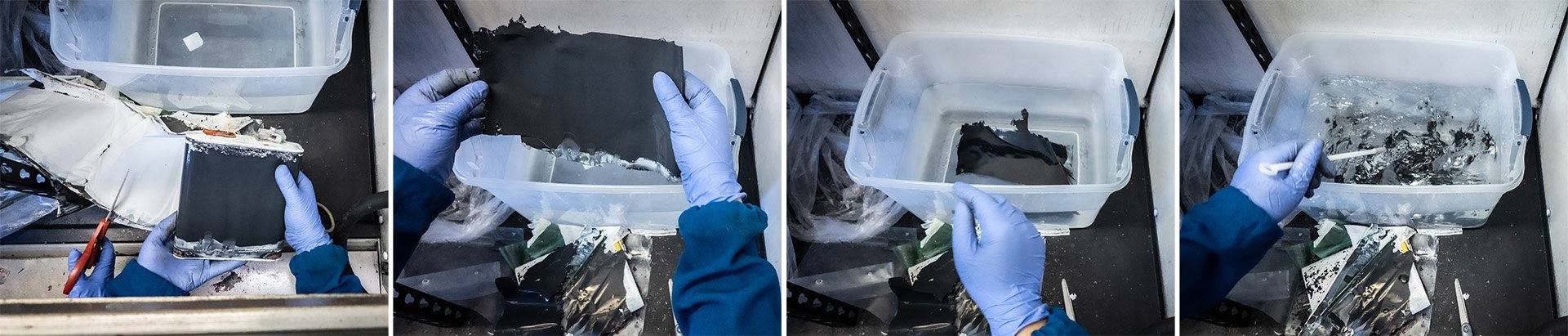
The recycling process begins with disassembling the battery pack and extracting the internal jelly roll. Researchers cut the jelly roll layers into sheets, soak them in water, and gently shake them to separate the cathode coating from the aluminum foil, which can also be recycled individually. The separated cathode material is dried and ground into a fine black powder, to which lithium, manganese, and phosphate are added as precursors for LMFP.
The main challenge was that the added salts were incompatible with the crystal structure of the original LFP material; direct mixing would result in uneven atomic distribution and degraded electrochemical performance. To address this, the team first prepared an intermediate compound, lithium manganese phosphate (LMP), whose crystal structure is similar to that of LFP. After finely grinding and mixing the powders and heating them, LMP forms first and mixes uniformly with LFP, with manganese atoms gradually replacing some iron atoms to generate a uniform LMFP structure. A thin carbon layer also forms on the surface of each particle, enhancing conductivity and protecting the material during repeated charge-discharge cycles.
The upgraded LMFP material performed well in both laboratory coin cells and pouch cells simulating real-world applications, with the latter more closely resembling conditions in electric vehicles and large-scale energy storage systems. Researchers tested the process using spent LFP batteries from different manufacturers and scaled it up to the kilogram level. The team plans to further improve process efficiency, material composition, and structure in preparation for large-scale recycling.
The study was published in the journal Joule.
Related Products



40.5kV-1100kV Gas Insulated Metal-Enclosed Switchgear (GIS)
Henan Pinggao Electric Co., Ltd.
Standard Nozzle Flowmeter
Jinggong Automatic Control Instrument Complete Technology Development Company

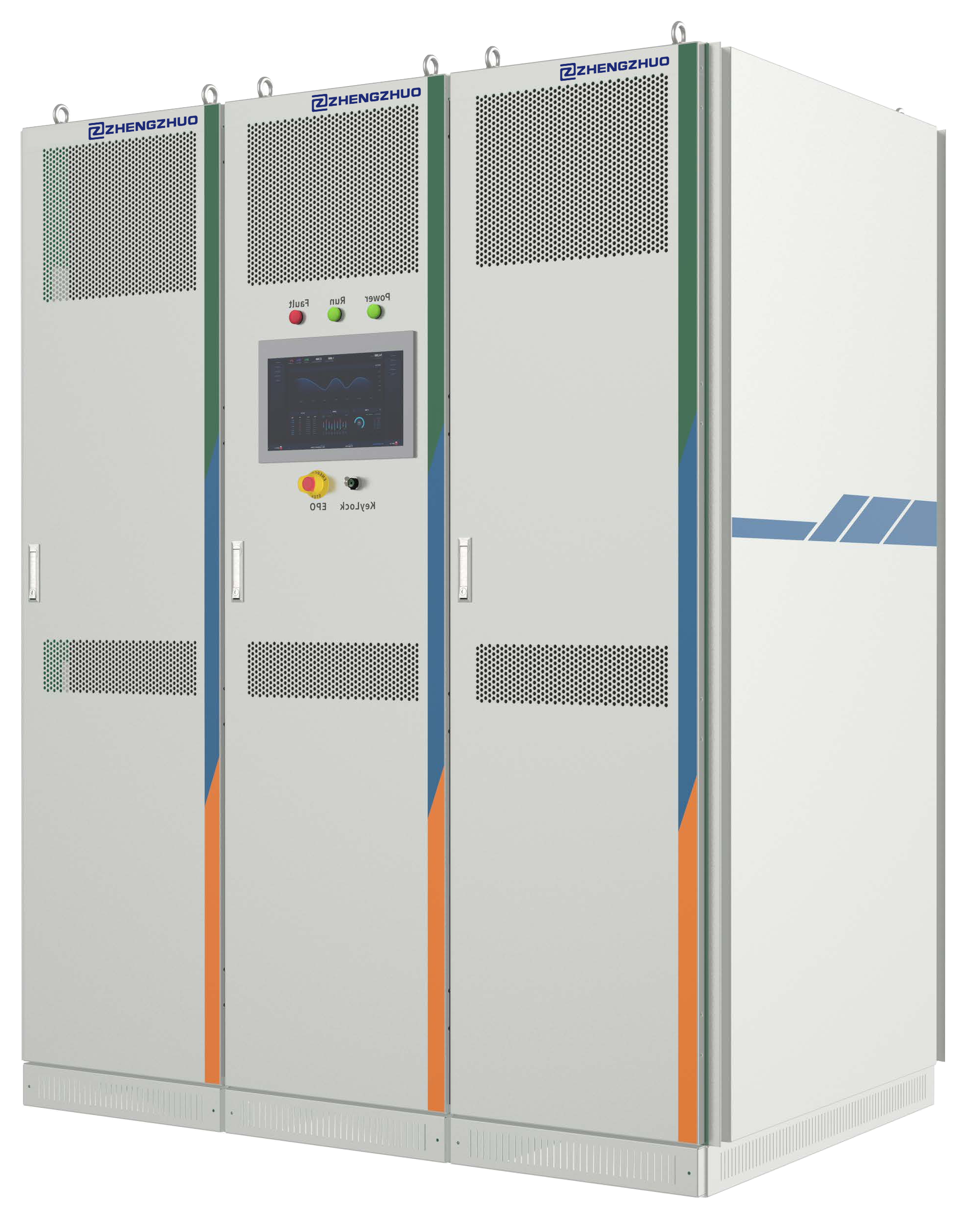
IGBT Hydrogen Production Power Supply - High Power Air Cooling
Beijing Zhengzhuo Engineering Technology Co., Ltd.
Oil-immersed Amorphous Alloy Core Distribution Transformer
Pinggao Group Smart Electric Co., Ltd.
IS(B)□-M·RL Series Oil-immersed 3D Transformer (Planar / 3D Wound Core)
Guangdong Kehua Electric Power Technology Co., Ltd.